
Pup Joints, Crossover Subs and Casing Accessories: What Each One Is, and Where It Is Threaded and Made Up
The short items in a casing or tubing string do a lot of the work: pup joints space the string out, crossover subs change its thread or size, and casing accessories keep the pipe centred, float it in and hold the cement. This page explains each one, sorts the threaded from the clamped, and shows…
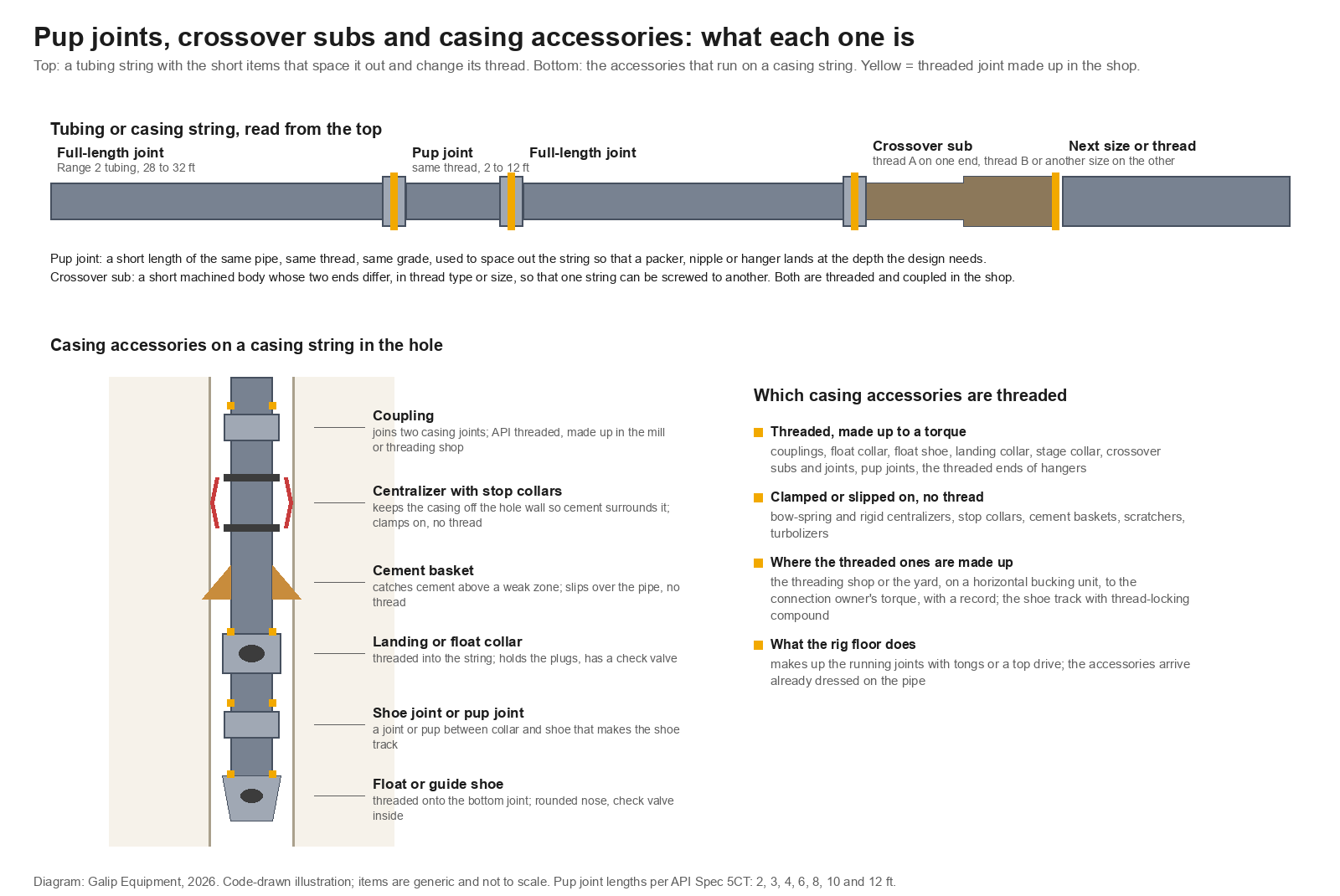
A pup joint is a short length of casing or tubing, the same size, grade and thread as its string, used to space the string out so that components land at the planned depth. A crossover sub joins two different threads or sizes. Casing accessories are the centralizers, baskets, float equipment and collars run on casing. The threaded ones are made up in the shop, to a torque.
At a glance
| Pup joint | A short joint of the same pipe as the string, made in set lengths from 2 ft to 12 ft under API Spec 5CT, used for space-out in tubing and casing strings and in the shoe track |
| Crossover sub | A short machined body with a different connection at each end, in thread type or size, so that one string or tool can be screwed to another |
| Casing accessories | Everything that runs on a casing string besides the joints and couplings: centralizers and stop collars, cement baskets, scratchers, float shoe and float collar, landing collar, stage collars, crossover joints and pup joints |
| Threaded or clamped | Couplings, float equipment, landing and stage collars, crossovers and pup joints are threaded and made up to a torque. Centralizers, stop collars, baskets and scratchers clamp or slip onto the pipe and carry no thread |
| Decision this page supports | Knowing which of the short items in a string are shop products, what the threading shop or yard does to them before the rig, and what that shop’s bench has to be able to do |
What a pup joint is
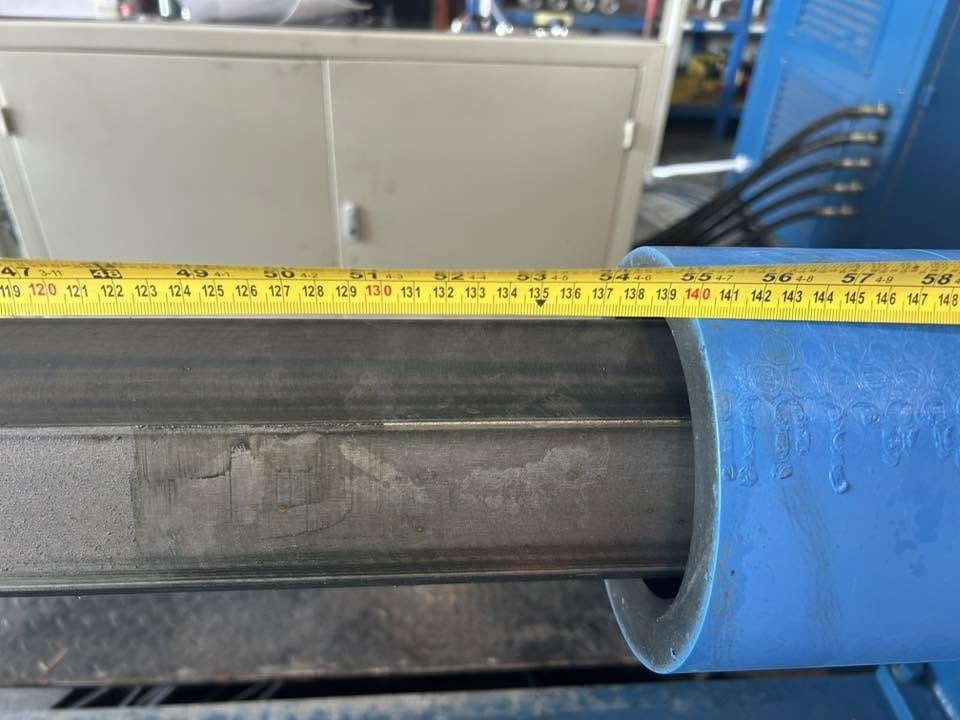
A casing or tubing string is a column of full-length joints, each roughly 30 ft or 40 ft long depending on its range, screwed together with couplings. The string’s design, though, needs certain things to sit at certain depths: a packer at the top of the pay, a landing nipple where a plug will later be set, a safety valve a set distance below the wellhead, the tubing hanger exactly at the hanger profile. Full-length joints cannot hit those depths by themselves. A pup joint is a short joint of the same pipe, same outside diameter, wall, grade and thread, inserted where the string has to be lengthened by less than a joint. API Spec 5CT, the standard for casing and tubing, covers pup joints alongside the full-length pipe they match.
Pup joints are made in standard lengths. API Spec 5CT lists them as 2, 3, 4, 6, 8, 10 and 12 ft, and a completion engineer’s space-out picks a combination of those to land the components where the design says. In a tubing string they usually sit just below the hanger and around the packer, nipples and valves. In a casing string they are used for the same space-out at the hanger, and in the shoe track, where a short joint between the float collar and the shoe is a common choice. Because a pup joint carries the string’s own connection, it is threaded and coupled like any other joint, in a threading shop, and its coupling is bucked on there. The tubing, casing and thread families it belongs to are set out in what OCTG is.
What a crossover sub is
A string does not always carry one thread and one size from top to bottom. A tapered casing string changes size part way down. A completion may carry a premium thread in the tubing and an API thread on a tool below it. A drill string steps from drill pipe connections to collar connections to the bit. Wherever two different connections have to be joined, the piece that joins them is a crossover: a short sub or joint with one connection machined on each end. The glossary describes it as a sub used to join components with different thread types or sizes (SLB Energy Glossary: crossover). In the casing world it is often a full or short joint, called a crossover joint, with a different thread cut on each end; in tubing and downhole tool strings it is a short machined sub.
A crossover sub is a machined product. It is made from heavy-wall mechanical tube or bar, bored, and threaded on each end to the two connection specifications it joins, and it has to meet the pressure and tensile rating of the weaker of the two strings it sits between. It is the one item in a string whose two ends are made up to two different torques, which the shop has to keep straight.
Pup joint vs crossover sub
The two are confused because both are short and both are threaded. The difference is what each one changes. A pup joint changes the length of the string and nothing else; both ends carry the string’s own connection. A crossover changes the connection, in type or size, and its length is whatever the machining needs. A pup joint can be cut from the string’s own pipe; a crossover has to be machined from a blank thick enough for the larger of its two ends. On the tally, a pup joint is a joint with a short length; a crossover is a change of thread and often of torque. On the bench, a pup joint gets one coupling bucked on at the string’s torque; a crossover gets two different make-ups, each to its own table.
| Item | What it changes | Where its connections are made up |
|---|---|---|
| Pup joint | Length only; same size, grade and thread as the string | Threading shop: coupling bucked on at the string’s torque, with the same record as a full joint; the free end made up on the rig floor like any other joint |
| Crossover sub or joint | Connection type or size; sometimes both | Threading shop or yard: each end to its own connection table; often made up to the tool or joint it will run with before it leaves the shop |
| Float collar and float shoe | Adds a check valve and a landing seat for the plugs at the bottom of the casing | Yard or location before the run, with thread-locking compound, as the shoe track; never backed off |
| Landing collar and stage collar | Adds a seat for plugs, or ports for a second cementing stage, part way up the string | Yard or shop, to the casing connection’s torque, then run as a joint |
| Centralizer, stop collar, cement basket, scratcher | Position of the pipe in the hole, and where the cement stays; no change to the string’s threads | Not made up: clamped, pinned or slipped onto the joint at the yard or on the pipe rack, held by stop collars or set screws |
| Hanger, with its threaded ends | Suspends the string in the wellhead | Threaded ends made up in the shop to the joint or pup below; the hanger itself lands in the wellhead on the rig |
Casing accessories: the threaded ones and the clamped ones
Casing accessories is the collective name for everything that runs on a casing string apart from the joints and their couplings. Reading up from the bottom of a typical string: a guide shoe or float shoe on the bottom joint, one or two joints or a pup above it, then a float collar, which together make the shoe track that holds the cement in place when the job is pumped; centralizers along the string wherever the design wants the pipe off the hole wall, each held by stop collars; cement baskets above weak zones that would otherwise take the cement; scratchers or wall cleaners where mud cake has to be disturbed; perhaps a stage collar for a two-stage job; crossover joints where the string tapers; pup joints for the space-out; and the hanger at the top. The glossary entries for the centralizer and the float collar describe the two commonest items. The cementing side of that list, the shoe, collar and plugs, is followed through a job in well cementing and float equipment.
The useful way to sort the list is by whether the item has a thread. Float shoes, float collars, landing collars, stage collars, crossovers and pup joints are threaded: each is a connection in the string, made up to a torque, and each one is a potential leak path or a potential back-off if the make-up is wrong. Centralizers, stop collars, cement baskets, scratchers and turbolizers are clamped on: they are held by friction, set screws or a hinge, they carry no thread, and the rig crew fits them on the pipe rack or as the joint goes into the hole. The threaded group goes through a shop. The clamped group goes through a yard. That split decides where the bench is.
Where the accessories are made up
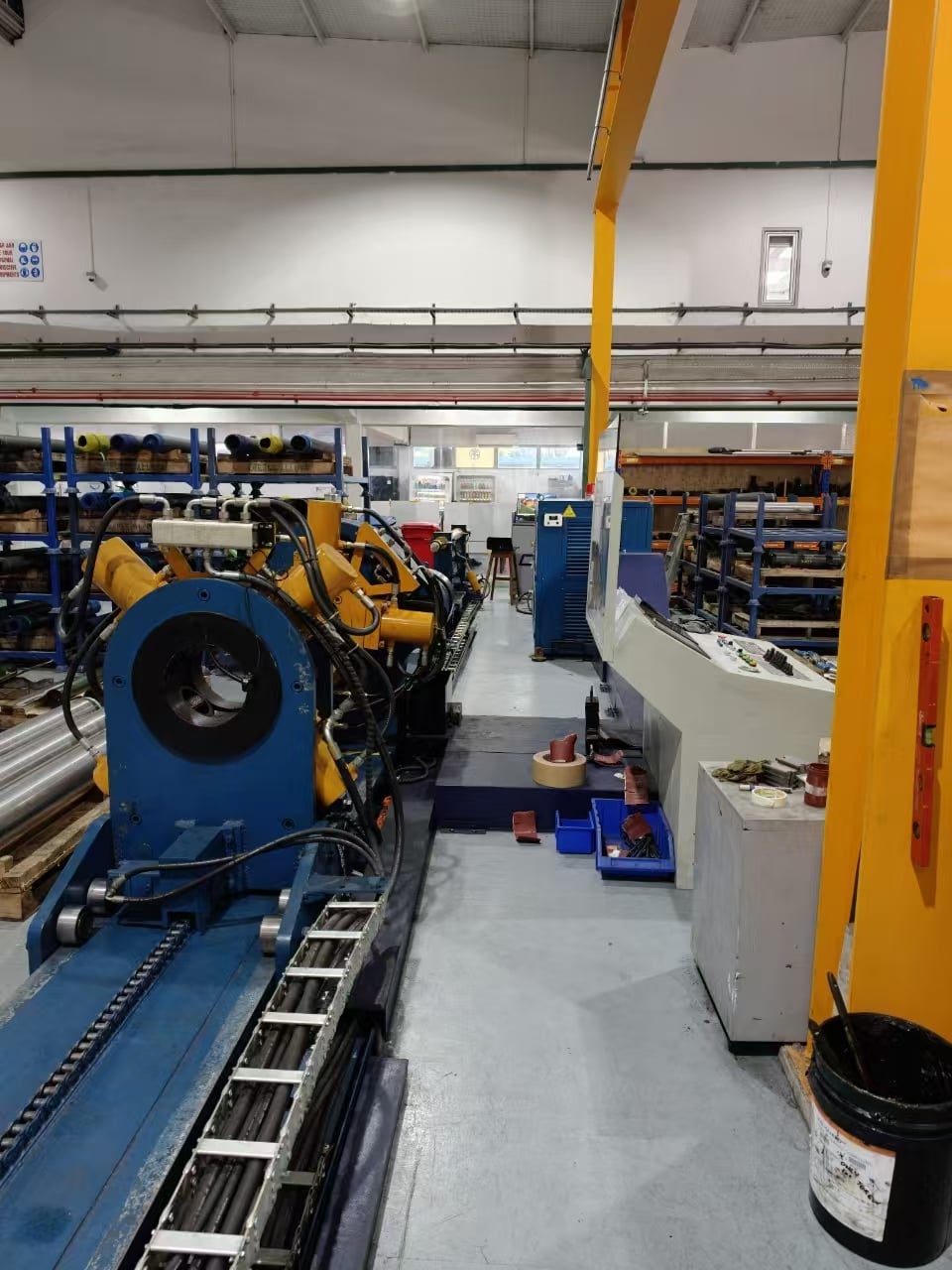
A threading shop is where pup joints and crossovers are born. The shop cuts the thread, applies the compound, and bucks the coupling on, using a horizontal hydraulic bucking unit: the joint lies on supports, a clamp holds the body, the rotational head turns the coupling onto the pin to the connection’s shoulder and torque, and the torque-turn trace is saved against the joint’s number. How that make-up is specified and checked is described in casing coupling make-up in an OCTG threading shop, and the connections themselves in buttress thread OCTG connections. A pup joint is a full joint with less of it, and the shop treats it so; a crossover is a two-torque job, and the shop keeps two records.
Float equipment is a different case. A float shoe or collar is made up to its joint before the string is run, in the yard or on location, with a thread-locking compound rather than an ordinary thread compound, so that the shoe track cannot back off when the casing is rotated or when the plugs are drilled out. The practice is set out on the cementing page; the point for this page is that the make-up is deliberate, recorded, and done away from the rig floor. Landing collars and stage collars are made up in the same way, to the casing connection’s torque. The hanger’s threaded ends are made up in the shop to the joint or pup below them, so that what arrives at the rig is a hanger assembly, run as one piece.
The rig floor does the rest. The running crew makes up joint to joint with tongs or a top drive, fits centralizers and baskets as the pipe goes in, and lands the hanger. The accessories that reach the floor are already dressed. That division, shop for threads, floor for running, is the same one described for the whole string in tubular running services; the accessories are simply the items where the shop’s share is largest.
The threading shop’s share
From a bucking unit’s side of the bench, the accessories are a particular kind of work. Pup joints are short, so the clamp and the head sit close together and the supports have to be set for a joint that may be only 2 ft long. Crossovers are short and heavy-walled, with two different connections, so the jaws have to suit two outside diameters and the torque has to be changed between the ends. Float equipment carries a valve body that the jaws must not crush, and its thread-locking compound sets, so the make-up is done once and finished. Hangers carry sealing surfaces that cannot be marked. Each of those is a job the shop’s machine has to be able to clamp, turn, and record, and each one has a connection table that the shop has to hold.
Three checks follow every one of them. The connection is drifted and gauged before make-up, as described in the casing and tubing drift test, because a pup joint with a damaged coupling is still a damaged connection in the string. The compound is the one the connection owner specifies, and for the shoe track it is the locking compound; the difference is the subject of thread compound for premium connections. And the trace is kept, by joint number, so that the running crew and later the well’s integrity file can see that each short item was made up to its table. How a connection’s integrity is tracked from the mill onward is the subject of OCTG connection integrity after the mill.
Where the accessories sit in the industry
Pup joints and crossovers are threading-shop products, sold by the OCTG distributors and accessory makers that sit between the mills and the operators in the upstream oil and gas sector. Casing accessories are a specialist trade of their own, supplied by cementing-equipment makers and fitted by the running crews. Completion accessories, the nipples, valves and mandrels that pup joints space out, are the completion tool companies’ business, and the make/break cell they keep for them is described in the completion tool service make/break cell. The strings they all end up in are described in well completion explained.
When another page is the better start
A completion engineer working out a space-out has a tally and a well schematic and does the arithmetic there; this page explains the items and adds nothing to the sums. A cementing engineer choosing float equipment and centralizer placement should start on the cementing page and the service company’s data sheets. A buyer specifying pup joints or crossovers needs the connection specification, the grade and the length list, and should take them from API Spec 5CT and the thread owner’s documents. A threading shop or distributor that already knows its connection range and its volume of short items should go to the bucking unit product page and ask about short-joint support, jaw ranges for crossovers and float equipment, and trace export by joint number.
The usual limit applies. Make-up torques, compound choices and length tolerances belong to the connection owner, API Spec 5CT and the well’s design; this page describes what each item is and where it is made up, and leaves the numbers to the documents that own them.
Frequently asked questions
What is a pup joint?
A short length of casing or tubing with the same outside diameter, wall, grade and thread as the string it goes into, used to adjust the string’s length so that components such as packers, nipples, valves and hangers land at the depth the design calls for. API Spec 5CT lists pup joints in lengths of 2, 3, 4, 6, 8, 10 and 12 ft.
What is the difference between a pup joint and a crossover sub?
A pup joint changes only the length of the string; both of its ends carry the string’s own connection. A crossover sub joins two different connections, in thread type or size, and its two ends are made up to two different torques. A pup joint can be cut from the string’s own pipe; a crossover is machined from a heavier blank.
What are casing accessories?
The items run on a casing string besides the joints and couplings: float shoe and float collar, landing and stage collars, centralizers with their stop collars, cement baskets, scratchers, crossover joints, pup joints and the hanger. The float equipment, collars, crossovers and pup joints are threaded; the centralizers, stop collars, baskets and scratchers clamp or slip onto the pipe.
Which casing accessories are threaded?
Float shoes, float collars, landing collars, stage collars, crossover subs and joints, pup joints and the threaded ends of hangers. Each of these is a connection in the string and is made up to a torque, with a record. Centralizers, stop collars, cement baskets, scratchers and turbolizers carry no thread and are clamped on by the rig crew.
Where are pup joints made up?
In the threading shop. The shop cuts the thread, applies the connection owner’s compound and bucks the coupling on with a horizontal bucking unit, to the same torque and with the same torque-turn record as a full-length joint. The free end is then made up on the rig floor like any other joint when the string is run.
Why is the shoe track made up with thread-locking compound?
Because the float shoe, the shoe joint and the float collar must never back off. The casing may be rotated while cementing and the plugs and float equipment are drilled out afterwards, both of which put left-hand torque on those connections. A locking compound that sets after make-up holds them, which is why the shoe track is made up once, before the run, and left alone.
Send the accessory list with the enquiry
A threading shop or an OCTG yard is quoted from its product list. The useful set for a bucking unit quotation is: the size and connection range of the pup joints and crossovers, the shortest joint to be clamped, the float equipment and hanger bodies to be handled, the highest make-up torque in the connection tables, whether coupling bucking and tool make-up share one machine, the record format required by the customers, the site power supply and a sketch of the make-up cell. The Galip team quotes from that list and will say where short-joint supports and a second jaw set belong.
The pup joint and casing accessory checklist
- Know what each short item changes: a pup joint changes length only, a crossover changes connection type or size.
- Take pup joint lengths from API Spec 5CT and the space-out from the completion or casing design.
- Sort casing accessories into threaded and clamped; only the threaded ones are connections in the string.
- Buck couplings onto pup joints in the threading shop at the string’s torque, with the same record as a full joint.
- Make up each end of a crossover to its own connection table, and keep both records.
- Make up the shoe track before the run with thread-locking compound, in the yard or on location, and never back it off.
- Drift and gauge every short item before make-up; a short joint with a damaged thread is still a damaged connection.
- Keep the trace by joint number so that the running crew and the integrity file can see each make-up.
Expert Consultation
Need more information on optimizing your equipment performance? Our engineering team is available for technical consultations.
Request a Quote
Tell us about your requirements and our engineering team will prepare a detailed proposal with specifications, pricing, and delivery timeline.
