
OCTG Connection Integrity: 7 Essential Checks After the Mill
OCTG connection integrity is not only a mill problem. This guide covers seven downstream control points from pipe yard receiving and thread protection to controlled make-up records before field delivery.
OCTG Connection Integrity After the Mill: Pipe Yard Inspection, Thread Protection, and Make-Up Records
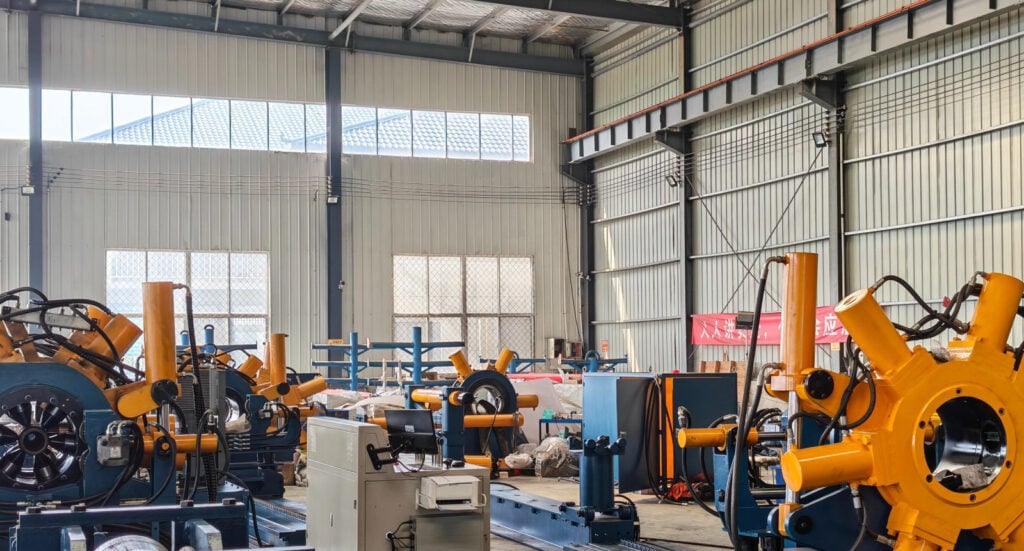
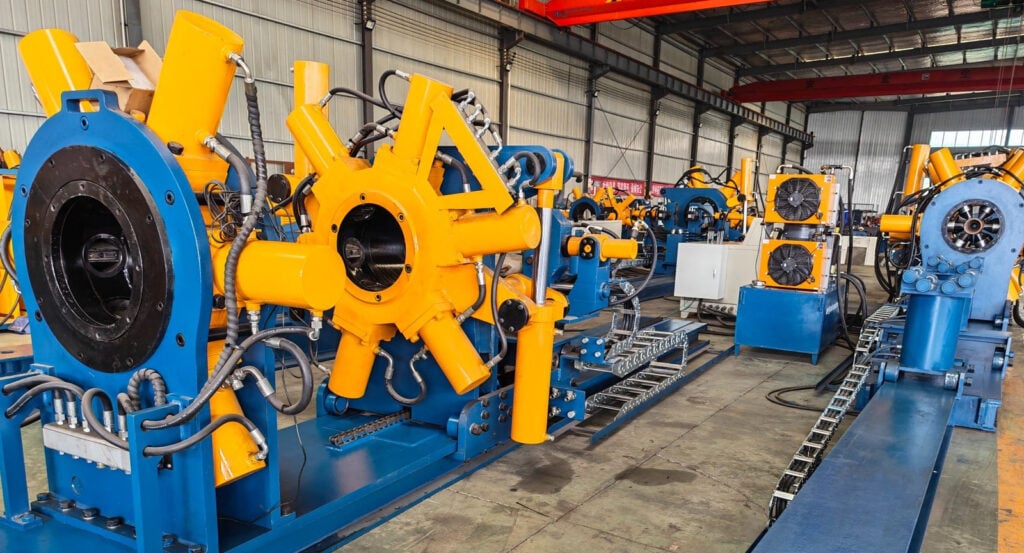
Galip workshop equipment and tubular-handling area supporting controlled OCTG connection integrity workflows.
OCTG Connection Integrity After the Mill: Pipe Yard Inspection, Thread Protection, and Make-Up Records
OCTG connection integrity does not end at the mill. Steel grade, heat treatment, wall thickness, drift, hydrotest, thread form, coating, and inspection records matter, but the quality chain continues through pipe yard receiving, storage, thread protection, cleaning, controlled make-up, and traceable handover records. A pipe can leave the mill in good condition and still arrive at the rig with a damaged thread, missing protector, dirty seal area, mixed identity, or weak make-up record.
This is the downstream side of OCTG quality. In this article, downstream does not mean refinery operations. It means everything that happens after the pipe leaves manufacturing: pipe yard receiving, storage, movement, inspection, thread protection, service-shop preparation, make-up, record keeping, and final handover to the field. For the refining sector itself, and why it has no threaded tubulars to make up, see downstream oil and gas. How those make-up records serve the well’s barrier evidence is set out in well integrity: the two barriers.
For Galip Equipment, this topic is important because the bucking unit is only one control point in a larger OCTG integrity workflow. A good make-up machine helps when the connection is ready to be made up, but the whole chain starts earlier: when the first bundle is unloaded, identified, protected, stored, cleaned, and released for work.
Quick answer: OCTG connection integrity is protected by controlling identity, handling, storage, thread cleanliness, protector discipline, make-up procedure, and traceable records. The goal is not only to prevent visible thread damage; it is to make sure every joint can be connected, inspected, documented, and defended before it reaches the rig.
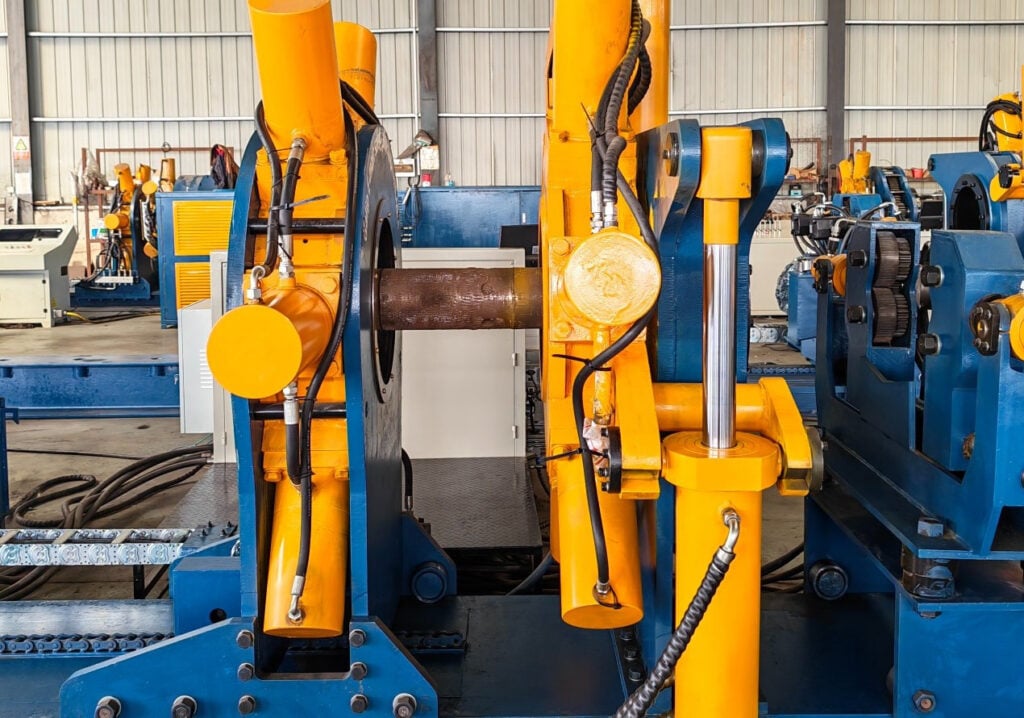
Pipe engagement and support area for controlled handling before OCTG make-up or release.
OCTG Connection Integrity Control Points After the Mill
| Control point | What should be controlled |
| 1. Receiving | Confirm delivery condition, quantities, visible damage, protectors, and paperwork. |
| 2. Identification | Keep grade, heat, connection, OD, wall, joint number, and customer job identity linked. |
| 3. Storage | Avoid thread-end impact, mud, standing water, mixed racks, and uncontrolled stacking. |
| 4. Thread protection | Protectors should be present, clean, correctly fitted, and replaced after inspection. |
| 5. Cleaning / inspection | Connection surfaces should be clean enough for visual review and procedure-compliant make-up. |
| 6. Controlled make-up | Use approved torque values, connection-owner procedures, correct compound, and suitable equipment. |
| 7. Handover record | Release the joint with make-up report, inspection note, exception log, and job folder reference. |
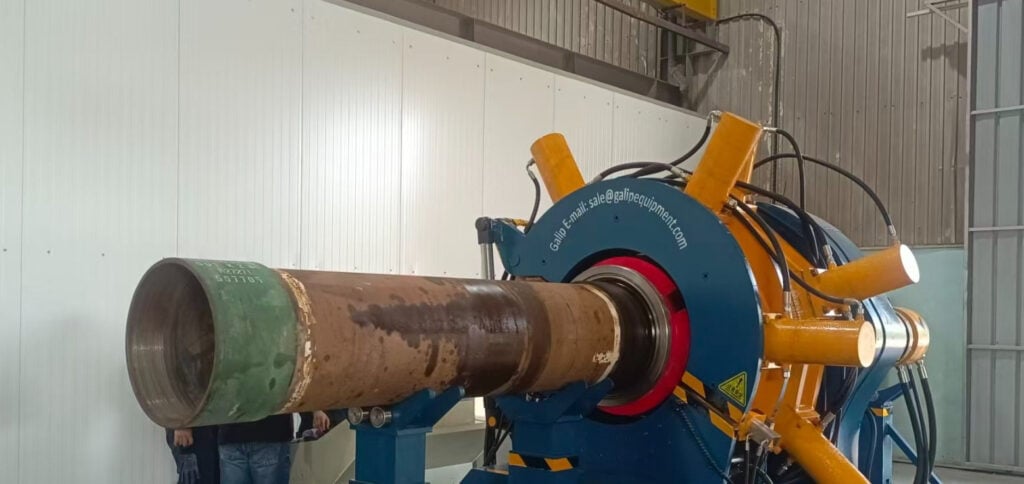
A controlled tubular work area should allow pipe support, operator access, and clear movement paths before make-up or release.
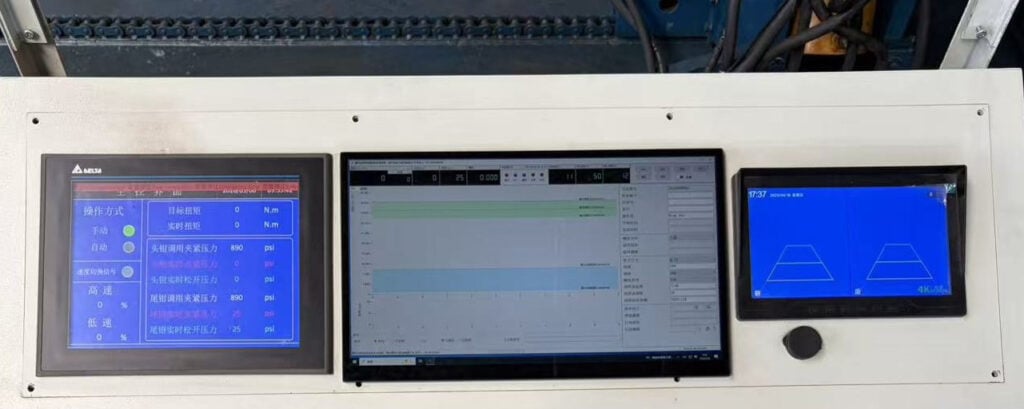
Control-console and record area: OCTG make-up records should connect the machine report to joint identity and job-folder discipline.
What to Keep in an OCTG Connection Integrity File
| Record area | What to include |
| Identity | PO, job number, customer, joint number, heat/grade, OD, wall, connection family. |
| Receiving status | Delivery condition, protector status, visible damage, quantity, quarantine decisions. |
| Preparation | Cleaning status, compound requirement, inspection notes, supervisor hold/release. |
| Make-up record | Target value reference, final result, curve/report file, operator, time, exception events. |
| Release package | QA approval, customer witness note if applicable, shipment or field handover reference. |
Why OCTG connection integrity is a downstream problem
OCTG connections carry more than mechanical load. They carry the quality history of the pipe. The connection must survive handling, storage, cleaning, compound application, make-up, transport, and field installation. When one of those steps is poorly controlled, the problem may not show immediately. It may appear later as galling, leakage, rejected joints, nonconforming records, or a delay when the rig is waiting.
Many downstream OCTG problems are not caused by the original pipe body. They are caused by yard practices. A forklift touches the wrong area. A thread protector is left loose after inspection. A premium connection is opened in a dusty yard without cleaning discipline. A pipe is moved to another rack but the heat, grade, or connection identity is not updated in the job record. The make-up looks acceptable, but the report name does not match the joint identity.
That is why OCTG quality teams should treat the downstream chain as a controlled workflow, not as a storage activity. The pipe yard, service shop, and make-up cell should all work from the same question: can we prove what happened to this joint from receiving to release?
7 Downstream OCTG Connection Integrity Control Points
A practical OCTG integrity workflow can be broken into seven control points: receiving, identification, storage, thread protection, cleaning and inspection, controlled make-up, and final record handover. Each point should have a responsible person, a simple checklist, and a record that can be found later.
Receiving confirms what arrived. Identification prevents mixing. Storage prevents corrosion and impact damage. Thread protection keeps sensitive surfaces clean. Cleaning and inspection decide whether the connection is ready. Controlled make-up creates the mechanical connection. Final handover makes the work defensible when the customer or field team asks for evidence.
The best workshops do not wait until the make-up station to think about quality. They build quality into the route the pipe takes through the yard.
Receiving Inspection: The First OCTG Integrity Checkpoint
The receiving step is where many later disputes are either prevented or created. If the pipe arrives with thread protectors missing, pipe ends exposed, water inside protectors, dents, mixed bundles, or unclear labels, the issue should be recorded immediately. Waiting until make-up to mention the problem makes it harder to separate yard damage from supplier, transport, or field damage.
A good receiving check does not need to be complicated. The team should confirm the purchase order or delivery note, quantity, OD, wall, grade, connection, heat number, joint number if available, protector condition, visible thread-end damage, coating condition, and whether any joint needs quarantine. Photos should be taken before the pipe is moved if there is visible damage or identity confusion.
The receiving record should be short enough to use every day. If the checklist takes too long, operators will skip it. The goal is to capture the facts that matter before the pipe disappears into the yard.
Storage and Movement: Protecting OCTG Connections in the Yard
OCTG is not only damaged during threading or make-up. Many connection problems start during storage and movement. A pipe end touches the floor. A bundle is dragged instead of lifted. A thread protector cracks but stays in place, hiding contamination. Pipe racks are arranged so the operator must step over joints or reach across protected ends.
Storage layout should make the correct behavior easy. Keep pipe identities visible. Separate inspected, quarantined, ready-for-make-up, and completed joints. Keep thread ends away from traffic and forklift impact zones. Avoid leaving open connections exposed to dust, rain, metal chips, or blasting residue. When a protector is removed for inspection, the team should know who is responsible for reinstalling it.
A small habit can prevent a large nonconformance: every time a protector is removed, the pipe status should change. It is either under inspection, ready for cleaning, ready for make-up, rejected, or re-protected. It should not sit in an undefined condition.
Thread Protection for OCTG Connection Integrity
Thread protectors are sometimes treated as shipping covers. In a downstream OCTG workflow, they are part of the quality system. A protector keeps damage, grit, moisture, and handling contact away from the connection until the joint is ready for controlled work.
The protector discipline should be clear: protectors stay on unless the connection is being inspected, cleaned, doped, made up, or otherwise controlled by a work instruction. If a protector is removed, it should be inspected before reuse. If it is cracked, dirty, loose, oil-soaked, or filled with debris, it should not be treated as protection.
Premium connections require even more discipline. A small scratch, trapped grit, wrong compound coverage, or rough handling step can become expensive later. The protector routine should be simple enough for operators to follow under production pressure, but strict enough to prevent open-thread exposure from becoming normal.
Cleaning and Inspection Before OCTG Make-Up
Before make-up, the connection should be clean and ready for the approved procedure. The shop should confirm that threads, seal areas, shoulders, coupling areas, and protectors are free from visible contamination that could affect make-up quality. If the connection family has specific cleaning or compound instructions, those instructions should be followed rather than replaced by general shop habits.
The inspection step should separate three outcomes: ready to make up, hold for supervisor review, or reject/quarantine. A connection that is uncertain should not move forward just because the job is urgent. Once a questionable connection is made up and sent forward, the evidence becomes harder to interpret. As general background, buyers can review the API standards program, while each job should still follow the customer specification and connection-owner procedure.
This is also where record discipline matters. A photo of a questionable connection, a short note, and a supervisor decision can protect the workshop later. Without that note, the final make-up report may look clean while the pre-existing condition is forgotten.
Where a Bucking Unit Fits in OCTG Connection Integrity
A bucking unit should not be treated as a cure for poor pipe yard discipline. It cannot make a dirty thread clean, restore a damaged seal, or fix a missing receiving record. Its value appears when the joint is already identified, inspected, cleaned, prepared, and ready for controlled make-up.
At that point, the bucking unit becomes an important control point. Stable support, suitable jaw setup, controlled rotation, defined make-up procedure, and torque-turn record output help the workshop turn a prepared connection into a documented connection. Galip hydraulic bucking units can be configured for premium connection make-up workflows that require torque-turn monitoring and traceable report output.
The key is to connect the machine record with the yard record. The make-up report should not float alone as a separate file. It should match the joint identity, customer job, connection family, operator, date, procedure revision, compound requirement, and any pre-make-up inspection note. That is what turns a machine output into a useful OCTG quality record.
The OCTG connection integrity file
For high-value OCTG jobs, the workshop should build a simple connection integrity file. This does not need to be a complicated software system. It can be a digital folder, ERP record, Excel-based job tracker, or customer-required document pack. The important thing is that the information is complete, consistent, and searchable.
At minimum, the file should connect delivery identity, inspection status, protector condition, cleaning or preparation note, make-up procedure reference, final make-up report, exception notes, and release approval. For premium connections, it should also include the correct connection-owner procedure revision and any customer-specific hold points.
When a customer asks weeks later why a joint was accepted, the answer should not depend on one operator’s memory. It should be visible in the record pack.
Common Mistakes That Break OCTG Connection Integrity
The most common downstream mistakes are not dramatic. They are ordinary, repeated, and easy to miss. The wrong joint is moved to the ready rack. A protector is removed and never replaced. A pipe is cleaned but not updated in the status board. A make-up report is saved with a generic file name. A customer witness sees the machine run but does not receive the record pack. A supervisor accepts a final torque value but never checks whether the joint identity matches the report.
Each mistake is small. Together, they weaken the chain. The goal of downstream OCTG quality is to remove these weak points before they become field problems.
A good question for every workshop is: if the customer chooses one joint at random, can we show where it came from, what happened to it, who released it, and what record proves the connection was made up according to the correct requirement?
How Galip Equipment Supports OCTG Connection Integrity
Galip Equipment supports service shops and pipe yards that need controlled make-up, break-out, and traceable reporting inside a wider OCTG quality workflow. A hydraulic bucking unit with torque-turn records for OCTG make-up helps convert prepared joints into documented connections when the yard, cleaning, and inspection steps are already controlled.
For repair, inspection, or disassembly workflows, a breakout unit for safe OCTG connection disassembly can support controlled removal without treating the connection as a general workshop task. Teams working with motor assemblies can also review Galip drilling motors and downhole tool make-up support before defining the full make-up cell.
Use this article as a practical checklist for QA managers, pipe yard supervisors, completion engineers, and workshop owners who want to protect OCTG connection integrity from receiving to field handover.
OCTG Connection Integrity Pre-Release Checklist
Before OCTG leaves the yard or service shop, the team should review the basics one final time. The checklist should not be a paperwork exercise. It should confirm that the physical joint and the digital record still match.
Confirm the joint identity. Confirm the connection type and procedure revision. Confirm protectors are installed if the pipe is not immediately run. Confirm any exception or damage note has been closed. Confirm the make-up report is saved under a searchable job name. Confirm the customer or field team knows where to find the release package.
The final handover should answer one practical question: if this joint creates a question at the rig, can the workshop respond with evidence rather than opinion?
Pre-Release OCTG Connection Integrity Checklist
| Final check | Pass condition |
| Identity confirmed | Joint number, job, grade, OD, wall, and connection are matched to the record. |
| Protector condition checked | Protectors are installed, clean, and suitable for movement or storage. |
| Inspection status closed | No open hold points, quarantine notes, or unresolved damage questions. |
| Make-up record saved | Report file name connects to the joint, job, operator, date, and customer requirement. |
| Exception log reviewed | Any abnormal curve, cleaning issue, handling event, or supervisor decision is recorded. |
| Release package ready | QA approval and customer/witness documents are stored and searchable. |
Galip production capacity supports customized bucking units and OCTG make-up equipment for service-center workflows.
Talk to Galip About an OCTG Make-Up Cell
Need a controlled make-up record inside your OCTG workflow? Galip hydraulic bucking units can be configured for OCTG, premium connection, drill pipe, BHA, mud motor, and service-center workflows that require controlled make-up, torque-turn records, and report export. Send your OD range, torque range, connection family, reporting needs, daily output target, and workshop layout through the Galip contact form for configuration review.
For the wider category these checks sit inside, see what OCTG is and how the grades work.
OCTG Connection Integrity FAQ
Is OCTG connection integrity only a mill-quality issue?
No. Mill quality is essential, but downstream handling, storage, protector discipline, cleaning, make-up, and record keeping can all affect whether a connection reaches the field in acceptable condition.
What is the difference between a pipe yard record and a make-up report?
A pipe yard record tracks receiving, identity, storage, inspection, and release status. A make-up report records the controlled connection operation. For good traceability, both records should connect to the same joint and job identity.
Should a bucking unit be the center of an OCTG quality system?
The bucking unit is an important control point, but it should not be the only control point. It works best when receiving inspection, thread protection, cleaning, and identity control are already disciplined.
Can final torque alone prove a connection is acceptable?
Final torque is only one part of the acceptance package. Connection-owner procedures, torque-turn behavior, visual condition, compound discipline, and job records all matter.
What should buyers send to Galip before asking about an OCTG make-up cell?
Send OD range, torque range, connection family, daily output target, report format, workshop layout, available power, support requirements, jaw requirements, and any damage-sensitive pipe conditions.
Expert Consultation
Need more information on optimizing your equipment performance? Our engineering team is available for technical consultations.
Request a Quote
Tell us about your requirements and our engineering team will prepare a detailed proposal with specifications, pricing, and delivery timeline.
