
What Is Upstream Oil and Gas, and Where Do Its Threaded Connections Get Made Up?
The upstream sector from seismic to abandonment, told through its threaded connections: what goes in the hole at each phase, who owns the work, and which of it happens on the rig floor and which in a workshop.
Upstream oil and gas is the exploration and production sector: finding hydrocarbons, drilling and completing wells, producing them and working them over until they are abandoned. It is the part of the industry built on threaded tubulars, so it is where drill strings, casing, tubing and downhole tools are made up and broken out, on the rig and in the workshops behind it.
\n\n
At a glance
\n
| The phases | Exploration, drilling, completion, production with its workovers, and plugging and abandonment. Every phase runs threaded pipe or threaded tools into the hole, and pulls some of it back out |
| What goes in the hole | A drill string and bottom hole assembly to make the hole; casing strings to line it; tubing, packers and a hanger to produce it; downhole tools of every kind to fix it |
| Who does the work | An operator who owns the well, a drilling contractor who owns the rig and drill string, service companies who own the tools, and the mills, threaders and workshops that prepare and repair what goes downhole |
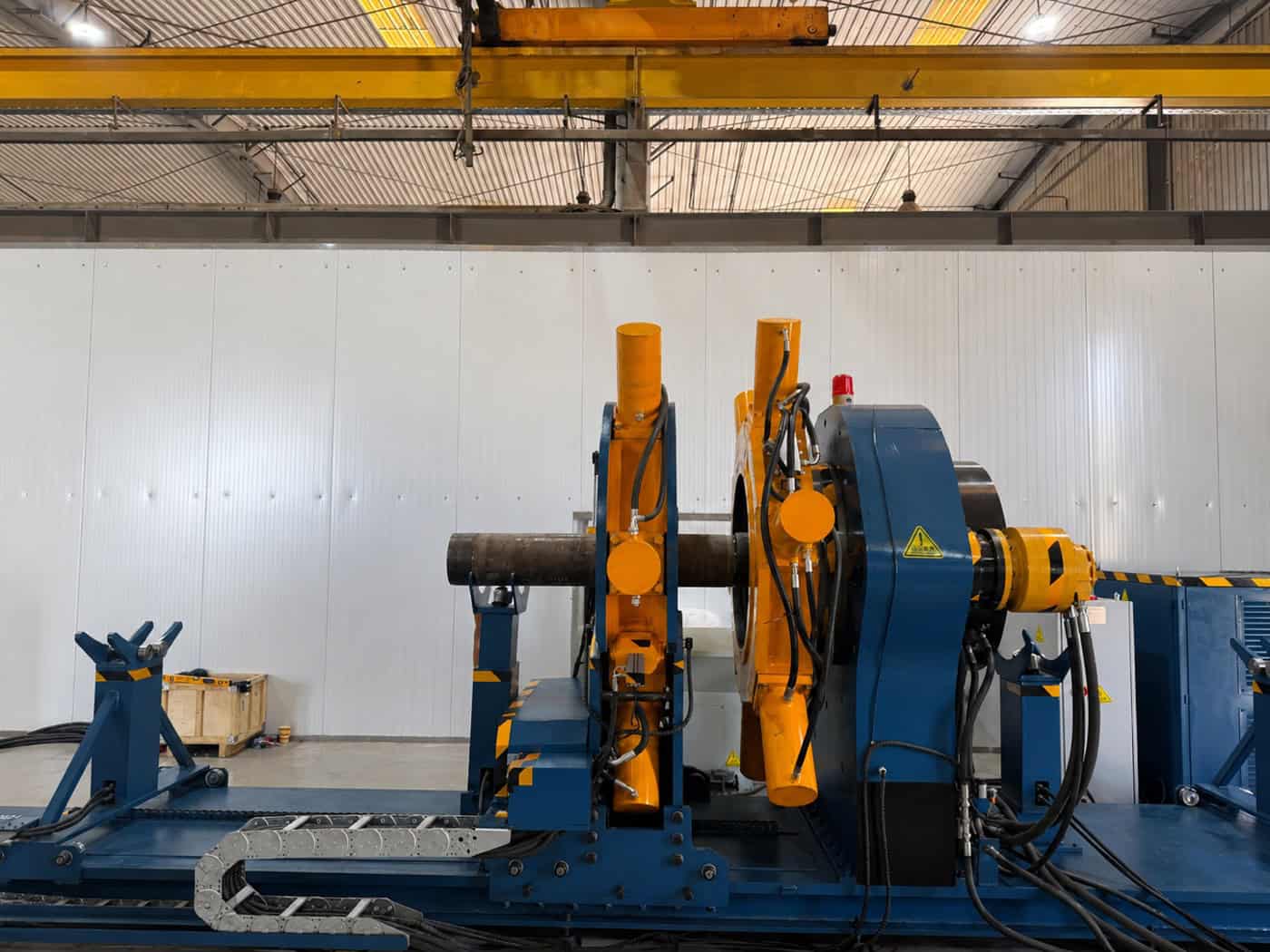
| Where the threads are made up | On the rig floor when the pipe is being run, by iron roughneck or power tong; in a workshop before and after, by a bucking unit, for couplings, BHA components, tool strings and repairs |
| Decision this page supports | Reading an upstream requirement by phase, so a workshop knows which connections it is likely to own and can specify its make-up equipment for those |
\n\n
\n
Exploration: before there is a well
\n
Upstream starts with nothing but rock and a theory. Seismic crews shoot and record; geologists and geophysicists map a structure that might hold hydrocarbons; the company that holds the licence decides whether to spend the money to find out. The finding out is an exploration well, and an exploration well is drilled with the same drill string, the same casing and the same rig-floor tools as any other. The difference is what happens afterwards. A dry hole is plugged and the rig moves on. A discovery is tested, appraised with more wells, and if the numbers work, developed. The sector is defined by that sequence, discovery through production, which is why its formal name is exploration and production and why the companies in it are called E&P companies (Profire, Upstream, Midstream and Downstream).
\n
For a workshop the exploration phase matters less for its connections than for its logistics. Exploration wells are often remote, sometimes offshore, and the pipe and tools that go to them are prepared far away. That preparation is where the shop-floor make-up happens, and it is worth keeping in mind through the rest of this page: the more remote the well, the more of its connections were made up somewhere else first.
\n\n
Drilling: the drill string and the casing strings
\n
A drilling rig turns a bit at the bottom of a string of threaded steel. Reading from the bottom up, the bottom hole assembly is the bit, a bit sub, drill collars for weight, stabilizers to keep the hole straight, perhaps a mud motor, a measurement-while-drilling tool in a non-magnetic collar, a jar in case the string sticks, then heavy-weight drill pipe as the transition and ordinary drill pipe to surface. The IADC lexicon defines the bottom hole assembly as the lower part of the drill string, from the bit up to the drill pipe, and lists the collars, stabilizers, reamers, jars and subs that make it up (IADC Lexicon, Bottom-Hole Assembly). Every one of those components is joined by a rotary shouldered connection, and how those are designed and combined is covered in bottom hole assembly design.
\n
As the hole deepens it is lined. Conductor pipe first, then surface casing to protect shallow water and hold the wellhead, then one or more intermediate strings through troublesome formations, then production casing across the reservoir. Each string is run joint by joint, each joint made up on its coupling to the casing manufacturer’s torque, then cemented in place. The strings step down in size as they go, and each one is a long run of threaded connections that has to hold pressure for the life of the well (iFluids, Oil and Gas Well Completion).
\n
Two different make-up jobs are hiding in that description. The rig floor makes up the drill pipe and the casing as they are run, vertical, one joint after another, with the string hanging in the slips. The workshop made up everything else earlier: the couplings on that casing were bucked on at the mill or the threader, and the BHA components were assembled in the drilling contractor’s yard, made up to the number in the tool joint or connection supplier’s tables. The rig floor’s own number is discussed in drill pipe make-up torque; the workshop’s number comes from the same tables but is applied under very different conditions.
\n\n
Completion: turning a hole into a well
\n
A drilled and cased hole produces nothing. Completion is the work that connects the reservoir to the surface: perforating the production casing, running production tubing inside it, setting a packer to seal the annulus, hanging the tubing in the wellhead, and fitting the valves and tree that control flow. In many wells the reservoir is also stimulated, fractured or acidised, before or after the tubing goes in. EKT Interactive’s Oil 101 describes completion as the point where the well is prepared to produce, with casing, tubing, downhole valves and the fluids pumped to prepare the formation (EKT Interactive, Well Completion).
\n
Completion strings are the most engineered threaded assemblies in the well. Below the hanger a tubing string may carry a safety valve, gas-lift mandrels, sliding sleeves, nipples, a packer and a tailpipe, all threaded, many of them premium connections with metal-to-metal seals that are unforgiving of a careless make-up. The completion tools themselves arrive from a service company’s shop, assembled and tested there, and go back to it after retrieval. A retrieved packer, for example, is stripped, inspected, rebuilt and re-tested in the shop before it is trusted again; the sequence is set out in packer redress. That shop is upstream just as surely as the rig is, and it makes up more threaded connections in a month than most rigs do.
\n\n
Production and workover: the long middle
\n
Once the tree is on, the drilling rig leaves and the well may produce for decades. The production phase is quiet on the surface, a tree, a flowline, a separator, perhaps a pumping unit or a compressor, and busy underneath. Reservoir pressure declines, water breaks through, tubing corrodes, pumps fail, sand arrives. Each of those brings a workover: a smaller rig, or a coiled tubing or wireline unit, comes back to the well to pull tubing, replace downhole equipment, clean out, re-perforate or change the lift method.
\n
Workover is the phase that feeds workshops. Tubing pulled from a well goes to a pipe yard, where it is cleaned, inspected, drifted and, if it passes, re-threaded or re-coupled and returned to stock. The tools that came out go to a service centre for redress. The tools going back in are assembled and tested there first. A producing field with hundreds of wells generates a steady flow of this work, and a shop that supports it lives on break-out torque as much as make-up, because what comes out of a well rarely comes apart easily. That is the case for a dedicated breakout unit alongside the make-up machine in a yard that handles used tubulars.
\n\n
Abandonment: the last connections
\n
A well that can no longer pay for its own upkeep is plugged and abandoned: cement plugs are set across the reservoir and at the surface, the casing is cut and pulled where it must be, the wellhead is removed and the site restored. It is upstream’s least glamorous phase and a growing part of the sector’s workload as fields age. Its connections run in reverse. Tubing and casing come out, often stuck, corroded and out of gauge, and the yard that receives them does far more breaking out than making up. Anything worth recovering is inspected and reconditioned; the rest is scrapped. A workshop serving abandonment work specifies its equipment around the worst joint it will see rather than the average. The whole programme, from the first plug to the last recovered joint, is set out in plug and abandonment.
\n\n
\n
Where the threads are made up: rig floor and workshop
\n
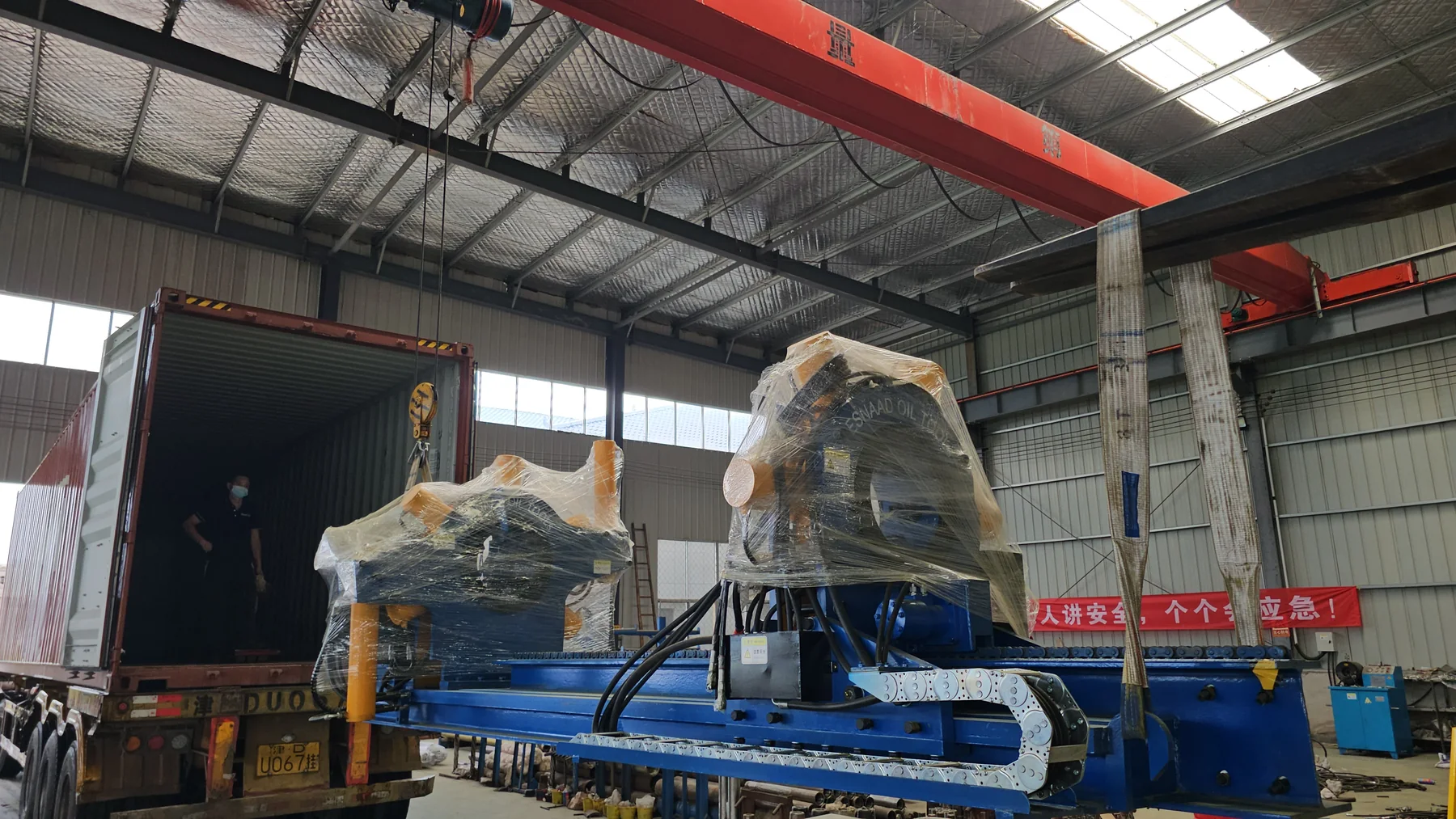
Every phase above splits its threaded work between two places, and the split decides the equipment. The rig floor makes up whatever is being run right now, vertically, under time pressure, with an iron roughneck or a power tong; the iron roughneck guide covers that side. The workshop makes up whatever has to be assembled, repaired or qualified before it goes to the rig and after it comes back, horizontally, with the connection supported and the torque-turn curve recorded. That is the job of the hydraulic bucking unit, and the table below shows how much of the well’s threaded work lands on it.
\n
| Phase | Made up on the rig floor, while running | Made up or broken out in a workshop, before or after |
|---|---|---|
| Exploration and drilling | Drill pipe joints and stands; casing joints as each string is run; the BHA as it is picked up and laid down | Couplings on every joint of casing at the mill or threader; drill collars, subs, stabilizers and MWD housings assembled in the drilling contractor’s yard; jars and motors made up and tested at the service centre |
| Completion | Production tubing joints as the string is run; the hanger landing | Completion tool strings assembled to drawing in the service shop; packers, sleeves and mandrels made up onto pup joints; premium-connection accessories bucked on and pressure tested |
| Production and workover | Tubing pulled and re-run by the workover rig; coiled tubing tools picked up at the wellhead | Recovered tubing broken out, inspected, re-coupled and returned to stock; retrieved tools redressed; replacement pumps and tool strings assembled before dispatch |
| Abandonment | Casing and tubing pulled after cutting | Recovered tubulars broken out in the yard, sorted, reconditioned or scrapped |
\n
Read down the right-hand column and a pattern appears. The rig floor sees each connection once or twice; the workshop sees it every time the component is made, serviced or reused. A shop that positions itself across two or three phases, a threader that also reconditions used tubing, or a tool service centre that also assembles completion strings, is specifying one machine for several kinds of joint, and its tubular range and torque range have to cover all of them.
\n\n
The upstream supply chain behind the well
\n
Upstream is often described as if the operator did everything. In practice the operator owns the licence, the well and the decision, and hires almost everything else. The drilling contractor brings the rig and usually the drill string. Service companies bring directional tools, logging, cementing, stimulation and completion equipment, and take their tools home afterwards. OCTG comes from a mill, often through a threader who cuts the connection and bucks on the coupling, and a distributor who stocks it. Rental companies supply BHA components and handling tools. Inspection companies check pipe and tools between jobs. Each of those businesses is upstream, and each has a workshop somewhere with a make-up machine in it.
\n
That is why the same enquiry can arrive from very different companies. A national oil company in the Middle East, a drilling contractor in Central Asia, a tool rental company in West Africa and a threading shop in South Asia can all be asking for the same class of machine for different slices of the same well. What separates them is the tubular range, the connection families, the torque and the records their own customers demand. The wider map of who sits where, including the sectors beyond upstream, is in upstream, midstream and downstream oil and gas, and the pipe itself is explained in the OCTG explainer.
\n\n
When another page is the better start
\n
This page is a phase map, and three kinds of reader will want to leave it early. A shop that already knows its phase and needs a machine should go straight to the bucking unit product page and its acceptance checklist, where the frame sizes, torque ranges and proof are set out. A drilling engineer looking for connection torque values should be in the supplier’s tables and the rotary shouldered connection references, since no page on this site publishes make-up torques for a connection it does not make. And a reader trying to place a pipeline or refinery requirement is in the wrong sector; the value chain page above will redirect them.
\n
The map also has soft edges. Some operators own their own rigs. Some drilling contractors run threading lines. Integrated service companies do most of the phases under one name. When a company straddles phases, specify by the work it does, the tubular, the connection and the torque, and not by the label on the gate.
\n\n
Frequently asked questions
\n
What is upstream oil and gas?
\n
Upstream is the exploration and production sector: locating hydrocarbons, drilling and completing wells, producing oil and gas from them, working them over during their life and finally plugging and abandoning them. It is the sector that runs on threaded tubulars and downhole tools, and therefore the sector where make-up and break-out equipment is used.
\n
What does E&P mean?
\n
Exploration and production, the formal name for the upstream sector. An E&P company holds licences, finds reserves and produces them. It usually hires drilling contractors and service companies for the physical work, so a great deal of upstream activity, including most workshop make-up, happens in businesses that are upstream without being E&P companies.
\n
What are the phases of an oil well’s life?
\n
Exploration and appraisal, drilling, completion, production with periodic workovers, and plugging and abandonment. Drilling makes the hole and lines it with casing; completion connects the reservoir to surface with tubing and downhole equipment; production runs until the well can no longer pay; abandonment seals it. Each phase makes up and breaks out threaded connections.
\n
Which upstream companies use bucking units?
\n
Any business with a workshop that assembles, repairs or reconditions threaded tubulars and tools: OCTG mills and threading shops, drilling contractors’ yards, downhole tool service centres, completion and workover shops, rental companies and pipe reconditioning yards. Rigs do not use them; the rig floor uses iron roughnecks and power tongs on vertical pipe.
\n
Is a workover upstream?
\n
Yes. A workover is intervention on a producing well, pulling tubing, replacing downhole equipment or restoring flow, and it sits inside the production phase of the upstream sector. It is also the phase that generates the most workshop make-up and break-out work, because everything it pulls goes to a yard or service centre and everything it runs was assembled in one.
\n
What is the difference between drilling and completion?
\n
Drilling makes the hole and lines it with cemented casing strings; completion turns that hole into a producing well by perforating the reservoir, running production tubing with a packer and hanger, and fitting the tree. Drilling connections are drill string and casing; completion connections are tubing and the downhole equipment threaded into it, often premium connections.
\n\n\n
Send the phase with the enquiry
\n
An upstream make-up enquiry answers itself faster when it names the phase and the owner, because they tell the supplier which connections the machine will see and which records it must produce. For a bucking unit quotation the useful set is: which phases the workshop serves (threading, drilling support, completion assembly, workover reconditioning, abandonment recovery), the tubular range by outside diameter and the connection families run, the highest make-up and break-out torque expected, whether torque-turn records must be exported to a customer, the site power supply, and a sketch of the bay the machine will occupy. The Galip team quotes from that list without a second round of questions.
\n\n
The upstream checklist
\n
- \n
- Name the phase the workshop serves: exploration and drilling, completion, production and workover, or abandonment. Most shops serve more than one.
- List the connections that phase brings to the bench: couplings, BHA components, completion accessories, recovered tubing, downhole tools.
- Separate what the rig floor makes up from what the workshop makes up. Only the second list is a bucking unit specification.
- Note the owner of each connection: operator, drilling contractor, service company, threader, rental company. The owner’s customer sets the record requirement.
- Establish the tubular range and connection families across all phases served, and size the machine for the largest and the smallest.
- Establish break-out torque as well as make-up torque; workover and abandonment work is dominated by break-out.
- Decide whether a separate breakout unit is justified by the volume of used tubulars.
- Confirm which standard the customer’s customer will audit against and that the machine’s record matches it.
\n
\n
\n
\n
\n
\n
\n
\n
\n\n
Expert Consultation
Need more information on optimizing your equipment performance? Our engineering team is available for technical consultations.
Request a Quote
Tell us about your requirements and our engineering team will prepare a detailed proposal with specifications, pricing, and delivery timeline.
