
Upstream, Midstream or Downstream: Where Does a Bucking Unit Work in Oil and Gas?
Upstream, midstream and downstream explained the way an equipment buyer needs it: which sector makes up threaded connections, who owns that work, and why torque means something different in a refinery.
Upstream, midstream and downstream are the three sectors of the oil and gas value chain: finding and producing hydrocarbons, moving and storing them, and refining them into products. Threaded tubular connections, and the bucking units that make and break them, belong almost entirely to upstream. Midstream keeps a few threaded joints on small gathering lines; downstream runs on welds and bolted flanges.
At a glance
| Upstream | Exploration, drilling, completion, production and workover. Almost every threaded tubular connection in the industry is made up or broken out here: drill string, casing, tubing, downhole tools |
| Midstream | Gathering lines, trunk pipelines, storage and gas processing. Line pipe to API 5L, mostly welded; threaded-and-coupled joints survive on small-diameter gathering lines |
| Downstream | Refining and petrochemicals. Process piping is welded and flanged; torque control still exists, but as bolt torque on flange joints rather than make-up torque on threads |
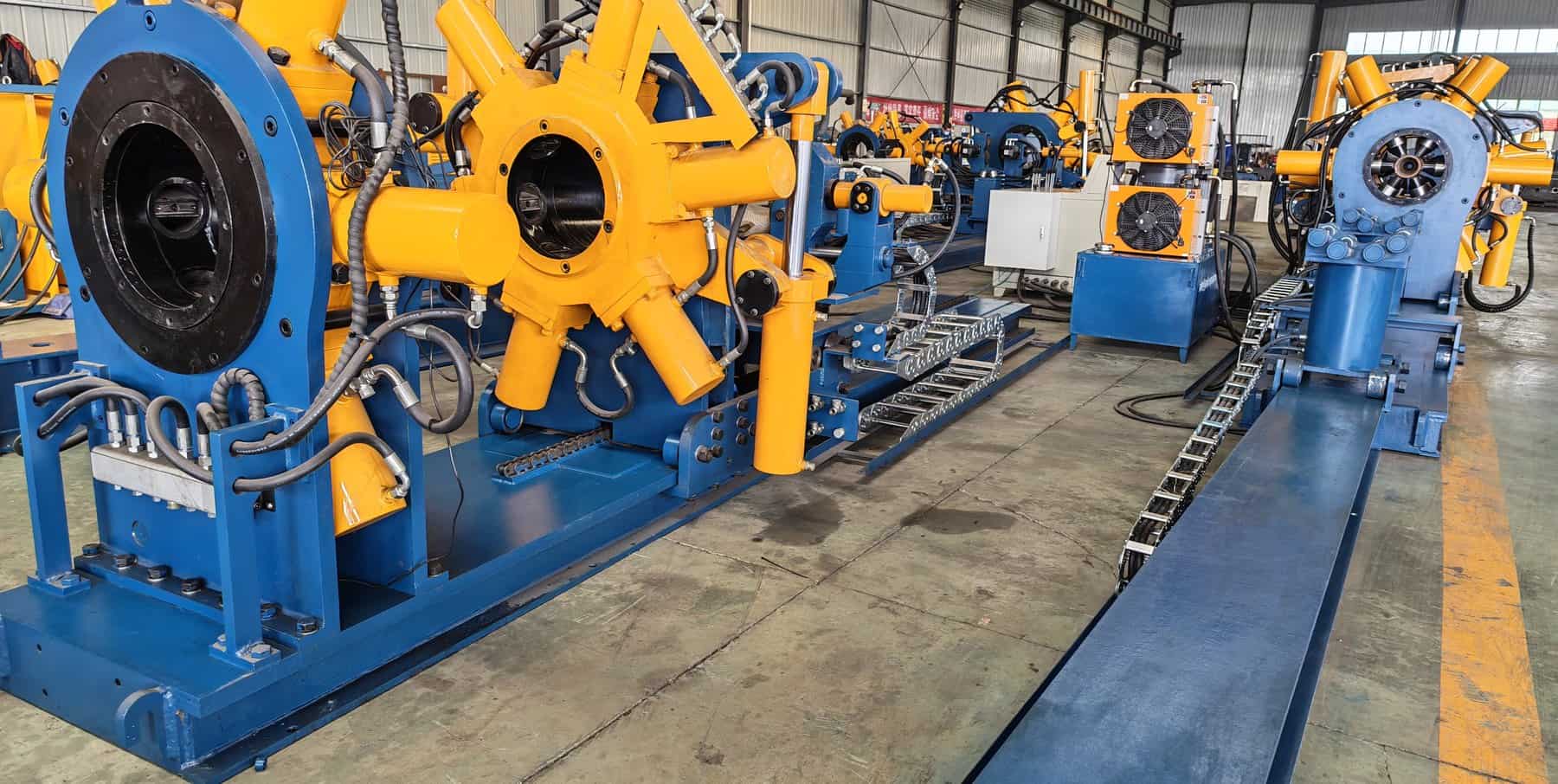
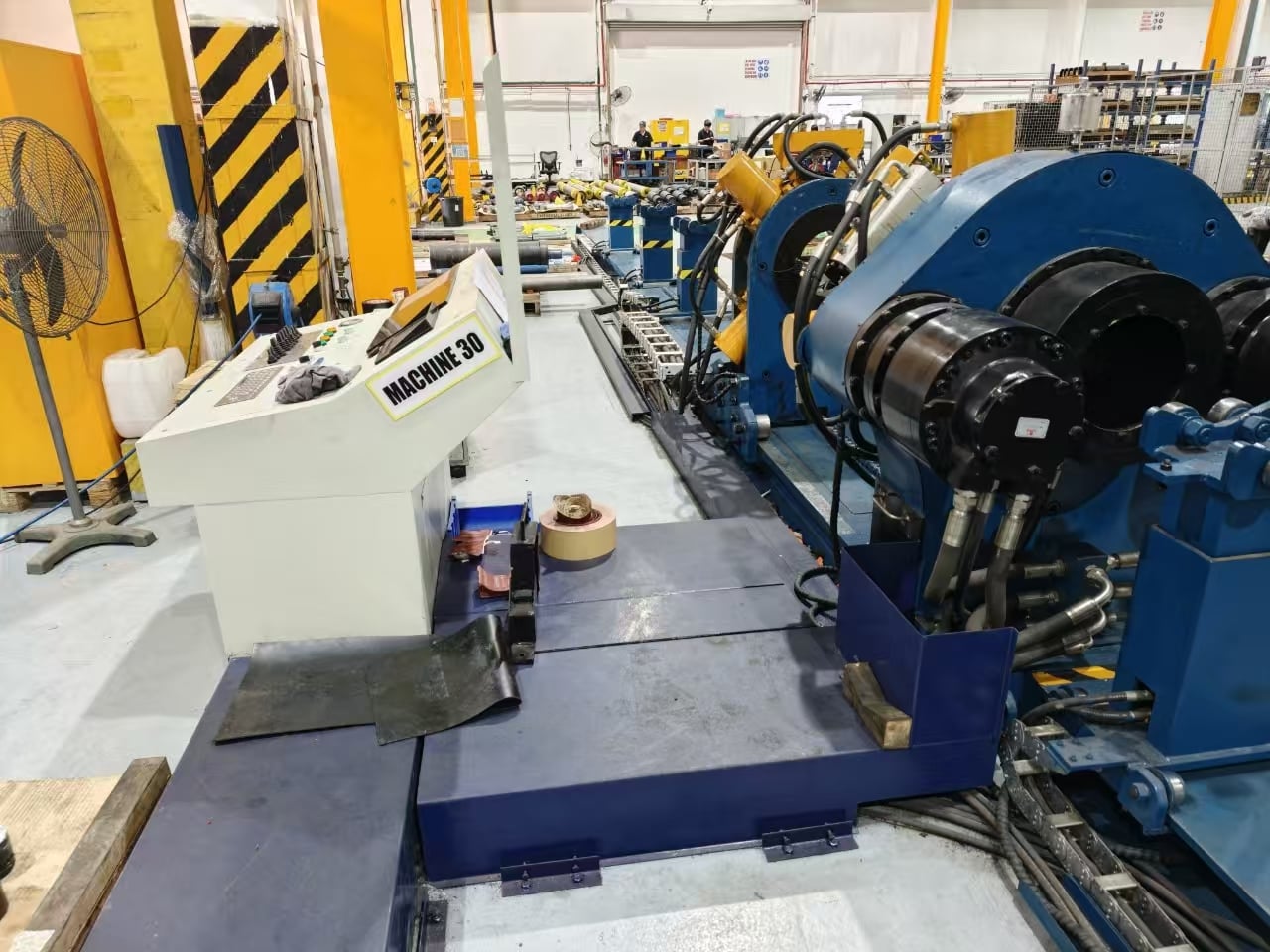
| Where the bucking unit sits | In the upstream workshop and pipe yard: OCTG threaders, drilling contractors’ yards, downhole tool service centres and completion shops, before and after the rig |
| Decision this page supports | Placing a make-up or break-out requirement in the right sector, so that the equipment, the governing standard and the supplier conversation all match the work |
The value chain in one paragraph
Oil and gas people sort the industry by where the molecule is. Upstream finds it and gets it to surface: seismic, exploration wells, development drilling, completion, production and the workovers that keep a well alive. Midstream moves and stores it: gathering systems, trunk pipelines, compressor and pump stations, tank farms, gas plants and export terminals. Downstream turns it into something a customer buys: refineries, petrochemical crackers, product terminals. Profire’s sector guide puts it plainly, with upstream as exploration and production, midstream as transport and storage, and downstream as refining and marketing (Profire, Upstream, Midstream and Downstream in Oil and Gas).
That division matters to an equipment buyer for a reason the sector guides rarely spell out. Each sector runs on a different kind of pipe, joined a different way. Upstream runs on oil country tubular goods: casing, tubing and drill pipe with threaded connections that are made up and broken out many times over their life. Midstream runs on line pipe, joined by girth welds that are never meant to come apart. Downstream runs on process piping, welded into spools and bolted together at flanges. The machine that makes up a threaded tubular therefore has one natural home, and it is upstream.
Upstream oil and gas: where the threads are
Follow a well from spud to abandonment and count the threaded connections. The drill string is nothing but threads: bit to bit sub, drill collars, stabilizers, jars, MWD housings, heavy-weight drill pipe, then drill pipe to surface, each joint a rotary shouldered connection made up to a torque the tool joint or connection supplier specifies. Casing goes in by the joint, each coupling made up to the casing manufacturer’s sheet. Tubing goes in the same way at completion, with packers, nipples, sliding sleeves and gas-lift mandrels threaded into the string. Production may run for decades, but every workover pulls that string and puts it back, joint by joint.
Some of that make-up happens on the rig floor, under time pressure, with the pipe vertical. The rest happens beforehand, in a workshop or pipe yard, with the pipe horizontal and nobody waiting on the hook. The rig-floor tools are the iron roughneck and the power tong; the workshop tool is the bucking unit, and the two are built for different jobs. The comparison in iron roughneck versus bucking unit goes through the differences one by one. For this page the short version is enough: rig-floor tools make up what is being run right now, and the hydraulic bucking unit makes up what arrives at the rig already assembled, and breaks out what comes back from it. The rig and its five systems are described in drilling rig components and types.
A surprising share of the connections a well ever sees are made up that way, off the rig. Every coupling on every joint of casing and tubing was bucked on at the mill or the threading shop. Every bottom hole assembly component was made up in the drilling contractor’s yard or the tool company’s shop before it went out. Every jar, motor and fishing tool was broken down and rebuilt in a service centre between runs. The rig floor sees each connection once or twice; the shop sees it every time it is serviced.
Who owns the make-up work upstream
Upstream is not one customer. It is an operator who owns the well, a drilling contractor who owns the rig and the drill string, a service company who owns the downhole tools, a mill or threader who owns the pipe until it ships, and a completion shop that assembles what goes in below the tubing hanger. Each owns a slice of the threaded work, and each has a different reason for putting it on a machine instead of a wrench.
| Owner | What they make up or break out | What they usually run it on |
|---|---|---|
| OCTG mill or threading shop | Couplings onto casing and tubing, pup joints, crossovers, accessories, all to the connection licensor’s sheet with a recorded torque-turn trace | A bucking unit sized for the largest casing the shop threads, with torque-turn recording; the controls are set out in casing coupling make-up for OCTG threading shops |
| Drilling contractor | Drill collars, subs, stabilizers, jars and the rest of the bottom hole assembly, made up in the yard before the rig and broken out for inspection after | A bucking unit in the yard for the heavy, high-torque assemblies; the iron roughneck on the floor for whatever is run in the hole |
| Downhole tool service centre | Jars, motors, MWD and LWD housings, fishing tools, every threaded joint on the tool during redress and testing | A bucking unit in a make/break cell, often with a tester beside it; the workflow is in the downhole tool service centre guide |
| Completion and workover shop | Tubing accessories, packers, hangers and tool strings, assembled to drawing before dispatch and stripped after retrieval | A bucking unit for controlled make-up, a breakout unit where the work is mostly breaking out stuck or corroded joints |
| Rig floor crew | Drill pipe and casing while running in and pulling out, one joint at a time, vertical, against the clock | Iron roughneck, power tong, casing running tool. Never a bucking unit; the machine is horizontal and stays in the shop |
Two things follow from that table. The first is that a bucking unit is bought by a workshop, not by a rig, so the specification is about the tubular range and the torque the shop will see, the bay it stands in and the records the customer’s customer demands. The second is that the standards which govern the work are upstream standards. API 5CT for casing and tubing, API 5B for threading and gauging, API 7-1 for rotary shouldered connections, the licensor’s own procedure for a premium connection. None of those documents will be found in a pipeline company’s office or a refinery’s.
Midstream oil and gas: pipelines, and the few threads that remain
Midstream pipe is line pipe, made to API 5L, and the vast majority of it is joined by welding. A pipeline crew bevels the ends, aligns the joints, welds the girth seam, inspects it and coats it. The joint is permanent by design; nobody plans to unscrew a trunk line. The equipment list for the sector, in a supplier’s own catalogue survey, is pipe, valves, pumps, compressors, tanks and processing units, with no make-up machine among them (Projectmaterials, Oil and Gas Equipment by Sector).
Threads do survive at the edge of midstream, in the gathering system. A flowline that takes one or two wells to the trunk line is often small-diameter, threaded-and-coupled pipe: new line pipe with API line-pipe threads, or in some fields used tubing pressed into service. API 5B is the document that covers those line-pipe threads alongside casing and tubing threads; its title says so, threading, gauging and inspection of casing, tubing and line pipe threads (API Spec 5B). The page on API 5B thread gauging and standoff covers the gauging side.
Where do those couplings get made up? Usually not by the midstream company at all. The threader who supplies the pipe bucks the coupling on in the shop, with the same bench and the same torque record as for tubing, and the pipeline crew makes up the field joint with tongs. So the bucking unit does have a midstream customer, but that customer is upstream by trade: an OCTG threader or a pipe distributor with a threading line. A midstream operator buying a bucking unit for its own yard is rare, and a supplier who claims otherwise is guessing.
Downstream oil and gas: refining, flanges and a different torque
A refinery is a chemical plant that happens to eat crude oil. Its units, crude distillation, fluid catalytic cracking, hydrocracking, reforming, alkylation, are connected by process piping designed and built under ASME B31.3, welded into spools in a fabrication shop and bolted together at flanges in the field. Threaded piping exists in small bore, sealed on the taper of the thread and made up with a wrench to an engagement rule, but it carries no recorded make-up torque and nobody owns a machine for it.
Torque control is still a serious discipline downstream. It has simply moved from the thread to the bolt. A flanged joint holds pressure because the bolts stretch and load the gasket evenly, and getting that right is a procedure: bolt lubrication, a tightening sequence, staged passes to a target, calibrated tools and a record. ASME PCC-1, Guidelines for Pressure Boundary Bolted Flange Joint Assembly, is the reference, and it ties its service categories to the fluid service definitions in B31.3 (ASME PCC-1). A refinery mechanical department knows the number on every critical flange the way a threading shop knows the number on every coupling.
What crosses the sector boundary, then, is the habit rather than the machine. Calibrated tools with a traceable certificate, a written procedure, a record that survives an audit, a defined owner for the joint. The upstream version of that discipline is the torque-turn trace; the downstream version is the flange joint record. A workshop that already runs torque-turn monitoring on tubular make-up would recognise a refinery’s bolting programme immediately, and would find nothing in it to buck.
Upstream vs downstream: the same word for two different jobs
Because both sectors talk about torque, buyers moving between them sometimes assume the equipment is interchangeable. It is not, and the reasons are worth having in a table, since they decide what a supplier can honestly offer.
| Aspect | Make-up torque on a threaded tubular (upstream) | Bolt torque on a flanged joint (downstream) |
|---|---|---|
| What the torque achieves | Seats a shoulder or seal and preloads the thread so the joint stays tight under rotation, tension and bending downhole | Stretches the bolts to compress the gasket evenly so the joint stays sealed under pressure and thermal cycling |
| What is measured | Torque against turns, as a curve; the shape of the curve is the evidence, and the final value alone can hide a bad joint | Torque, or bolt stretch, or hydraulic tension, per bolt and per pass, in a sequence around the flange |
| Governing documents | API 5B, API 5CT, API 7-1, the connection licensor’s make-up sheet | ASME B31.3 for the piping, ASME PCC-1 for the assembly procedure, the gasket maker’s data |
| The tool | Bucking unit in the shop; iron roughneck or power tong on the rig | Calibrated torque wrench, hydraulic torque tool or bolt tensioner |
| The record | Torque-turn trace per connection, tied to the joint number and the operator | Flange joint record per joint, tied to the bolt set, the gasket and the assembler |
The one place the two meet in practice is the wellhead and the production facility, where threaded tubing hangers and flanged trees sit within a metre of each other. Even there the work is split: the hanger and tubing are made up by the completion crew, the flanges by the wellhead technician, each to their own document.
When this page is the wrong place to start
A sector map is orientation, and there are three readers who should leave it quickly. A shop that already knows it is upstream and needs to size a machine should be on the bucking unit product page comparing frame sizes and torque ranges, and then on the acceptance checklist. A buyer whose real question is about the pipe, grades, wall, connection type, should be reading the OCTG explainer linked above and the API 5CT page, and can skip the sector overview. And a pipeline or refinery contractor looking for welding or bolting equipment will not find it here; that is a different supplier base, and this site does not pretend to cover it.
There is also an honest limit to the map itself. Companies straddle sectors. An integrated operator may own wells, gathering systems and a refinery; a large service company may sell downhole tools and pipeline inspection. Sector language describes the work, and it is the work, the tubular and the joint, that decides the equipment.
Frequently asked questions
What is upstream oil and gas?
Upstream is the exploration and production sector: finding reserves, drilling wells, completing them, producing oil and gas, and working the wells over during their life. It is the sector that runs on oil country tubular goods and threaded connections, and therefore the sector where bucking units, iron roughnecks and power tongs are used.
What is midstream oil and gas?
Midstream moves and stores hydrocarbons between the well and the refinery: gathering systems, trunk pipelines, pump and compressor stations, storage tanks, gas processing plants and export terminals. Its pipe is line pipe to API 5L, almost all of it welded, with threaded-and-coupled joints surviving mainly on small-diameter gathering lines.
What is downstream oil and gas?
Downstream refines crude oil and natural gas liquids into fuels and petrochemicals and markets the products. Refineries and crackers are built from welded process piping under ASME B31.3, joined at bolted flanges. Torque control there is bolt torque on flange joints, governed by ASME PCC-1, with no threaded tubular make-up involved.
Is OCTG used outside the upstream sector?
Rarely as OCTG. Casing, tubing and drill pipe are upstream products by definition. Used tubing is sometimes pressed into service as small-diameter gathering line, and threaded line pipe shares its thread specification, API 5B, with casing and tubing. Beyond that, midstream and downstream run on line pipe and process piping, which are different products under different standards.
Do refineries use bucking units?
No. A bucking unit makes up and breaks out threaded tubulars, and refinery piping is welded and flanged. The equivalent discipline in a refinery is the bolted flange joint programme: calibrated torque tools, a tightening sequence, staged passes and a joint record. Small-bore threaded piping exists downstream but is assembled with wrenches to an engagement rule, without a recorded torque.
Where does a workover rig fit in the value chain?
Firmly upstream. A workover rig pulls and re-runs tubing, replaces downhole equipment and repairs a producing well, so it lives in the production phase after the drilling rig has gone. The tubing it pulls goes to a pipe yard for inspection, and the tools it retrieves go to a service centre, which is where the bucking unit meets workover.
What is the difference between upstream and downstream oil and gas in one sentence?
Upstream gets hydrocarbons out of the ground and to the surface; downstream turns them into products people buy; midstream carries them between the two. For an equipment buyer the practical difference is the joint: threaded connections made up to a torque-turn record upstream, welds and bolted flanges downstream.
Send the sector with the tubular list
A make-up or break-out enquiry moves fastest when the sector and the owner are stated up front, because they tell the supplier which standards apply and which records the machine must produce. For a bucking unit quotation the useful set is: the type of workshop (threader, drilling yard, tool service centre, completion shop), the tubular range by outside diameter and the connection families run, the highest make-up and break-out torque expected, whether torque-turn records must be exported, the site power supply, and a sketch of the bay the machine will occupy. The Galip team answers from that list without a second round of questions.
The value chain checklist
- Name the sector and the owner: operator, drilling contractor, threader, tool service centre, completion shop, pipeline company, refinery.
- Name the pipe: OCTG under API 5CT, line pipe under API 5L, or process piping under ASME B31.3. The pipe decides the joint.
- Name the joint: threaded and made up to a torque-turn record, welded and inspected, or flanged and bolted to a joint record.
- If the joint is threaded and the work is in a workshop, the machine is a bucking unit and the conversation is about tubular range, torque and records.
- If the joint is threaded and the work is on the rig floor, the machine is an iron roughneck or a power tong, and it comes from a different supplier.
- If the joint is welded or flanged, stop looking for a make-up machine; look for a welding procedure or a bolting programme.
- Check which standard the customer’s customer will audit against, and make sure the record the machine produces is the one that standard expects.
- Where a company straddles sectors, specify by the work, not the company name.
{“@context”: “https://schema.org”, “@type”: “FAQPage”, “mainEntity”: [{“@type”: “Question”, “name”: “What is upstream oil and gas?”, “acceptedAnswer”: {“@type”: “Answer”, “text”: “Upstream is the exploration and production sector: finding reserves, drilling wells, completing them, producing oil and gas, and working the wells over during their life. It is the sector that runs on oil country tubular goods and threaded connections, and therefore the sector where bucking units, iron roughnecks and power tongs are used.”}}, {“@type”: “Question”, “name”: “What is midstream oil and gas?”, “acceptedAnswer”: {“@type”: “Answer”, “text”: “Midstream moves and stores hydrocarbons between the well and the refinery: gathering systems, trunk pipelines, pump and compressor stations, storage tanks, gas processing plants and export terminals. Its pipe is line pipe to API 5L, almost all of it welded, with threaded-and-coupled joints surviving mainly on small-diameter gathering lines.”}}, {“@type”: “Question”, “name”: “What is downstream oil and gas?”, “acceptedAnswer”: {“@type”: “Answer”, “text”: “Downstream refines crude oil and natural gas liquids into fuels and petrochemicals and markets the products. Refineries and crackers are built from welded process piping under ASME B31.3, joined at bolted flanges. Torque control there is bolt torque on flange joints, governed by ASME PCC-1, with no threaded tubular make-up involved.”}}, {“@type”: “Question”, “name”: “Is OCTG used outside the upstream sector?”, “acceptedAnswer”: {“@type”: “Answer”, “text”: “Rarely as OCTG. Casing, tubing and drill pipe are upstream products by definition. Used tubing is sometimes pressed into service as small-diameter gathering line, and threaded line pipe shares its thread specification, API 5B, with casing and tubing. Beyond that, midstream and downstream run on line pipe and process piping, which are different products under different standards.”}}, {“@type”: “Question”, “name”: “Do refineries use bucking units?”, “acceptedAnswer”: {“@type”: “Answer”, “text”: “No. A bucking unit makes up and breaks out threaded tubulars, and refinery piping is welded and flanged. The equivalent discipline in a refinery is the bolted flange joint programme: calibrated torque tools, a tightening sequence, staged passes and a joint record. Small-bore threaded piping exists downstream but is assembled with wrenches to an engagement rule, without a recorded torque.”}}, {“@type”: “Question”, “name”: “Where does a workover rig fit in the value chain?”, “acceptedAnswer”: {“@type”: “Answer”, “text”: “Firmly upstream. A workover rig pulls and re-runs tubing, replaces downhole equipment and repairs a producing well, so it lives in the production phase after the drilling rig has gone. The tubing it pulls goes to a pipe yard for inspection, and the tools it retrieves go to a service centre, which is where the bucking unit meets workover.”}}, {“@type”: “Question”, “name”: “What is the difference between upstream and downstream oil and gas in one sentence?”, “acceptedAnswer”: {“@type”: “Answer”, “text”: “Upstream gets hydrocarbons out of the ground and to the surface; downstream turns them into products people buy; midstream carries them between the two. For an equipment buyer the practical difference is the joint: threaded connections made up to a torque-turn record upstream, welds and bolted flanges downstream.”}}]}
Expert Consultation
Need more information on optimizing your equipment performance? Our engineering team is available for technical consultations.
Request a Quote
Tell us about your requirements and our engineering team will prepare a detailed proposal with specifications, pricing, and delivery timeline.
