
Downhole Tools: What They Are, Who Owns Them, and How They Are Made Up and Tested
Everything that goes into a well on a string is a downhole tool, and every one of them is a threaded assembly that was made up, tested and tagged in a workshop before it went out. This page sorts the tools by type and owner and follows them to the bench.
Downhole tools are the equipment run into a wellbore on drill pipe, tubing, coiled tubing or wireline to drill, complete, repair, measure or recover the well: motors, jars, stabilizers, packers, fishing tools, logging instruments and the rest. Nearly all of them are threaded assemblies owned by service companies, and every one is broken down, inspected, rebuilt, made up and tested in a workshop between runs.
At a glance
| The five types | Drilling tools that make the hole, completion tools that make it produce, fishing tools that recover what is lost, intervention tools that work on a live well, and logging and measurement tools that report what is down there |
| Who owns them | Mostly service and rental companies, who run them for operators and take them back afterwards; some drilling contractors own their own BHA tools; operators rarely own more than their completions |
| What they have in common | Threaded connections, usually rotary shouldered or premium, joining bodies, subs, housings and end connections into one assembly that must hold torque, tension, pressure and shock downhole |
| Where they go between runs | A tool service centre: strip-down on a make/break bench, inspection, rebuild, make-up to a recorded torque, function or pressure test, tag and stock |
| Decision this page supports | Recognising which tools a service centre will handle and specifying its make/break equipment and test rig from the heaviest, longest and stiffest of them |
What counts as a downhole tool
The term is broad by design. Anything that goes below the rotary table on a string and does a job is a downhole tool: the mud motor that turns the bit, the jar that frees a stuck string, the packer that seals the annulus, the overshot that catches a fish, the logging sonde that reads the formation. Market surveys define the category as the equipment used within the wellbore for drilling, intervention, logging, completion and maintenance (Market.us, Downhole Tools Market), and tool suppliers sort their catalogues the same way, into drilling, completion, fishing and intervention families (KF Oil Tools, Downhole Tools).
What unites the families is not their function but their construction. A downhole tool is a stack of machined steel bodies, mandrels, housings and subs, joined by threaded connections and sealed by elastomers, that has to survive rotation, tension, pressure, temperature and impact in a hole it cannot be inspected in. That construction decides how the tool is serviced, and it is why every family below ends up on the same kind of bench.
The five types, and who owns each
| Type | Examples | Who usually owns and services them |
|---|---|---|
| Drilling tools | Mud motors, rotary steerable systems, drilling jars and shock tools, stabilizers, reamers and hole openers, drill collars, MWD and LWD housings in non-magnetic collars, bit subs and crossovers | Directional drilling and tool rental companies, with drilling contractors owning some BHA components; serviced in the owner’s tool centre between wells |
| Completion tools | Production packers, liner hangers, screens, sliding sleeves, gas-lift mandrels, landing nipples, safety valves, flow couplings | Completion service companies, and the operator once installed; redressed in a completion shop when pulled |
| Fishing tools | Overshots, spears, milling tools, junk baskets, fishing jars and accelerators, bumper subs, washover pipe | Fishing service companies, rented by the job with a supervisor; broken down and rebuilt after every recovery |
| Intervention tools | Coiled tubing tool strings, wireline plugs and setting tools, perforating guns, scale mills, cleanout tools, downhole motors for coiled tubing | Intervention service companies; strip-down and pressure test before every run because the well is live |
| Logging and measurement tools | Wireline logging sondes, MWD and LWD sensors, pressure gauges and memory tools | Logging companies; the sensors are serviced by specialists, but the housings and subs that carry them are threaded assemblies like any other |
The ownership column explains a feature of the industry that surprises people outside it. The operator pays for the well, but most of what goes into it belongs to somebody else and goes home afterwards. A service company’s balance sheet is a fleet of tools, and its workshop is where that fleet is kept alive.
Every downhole tool is a threaded assembly
Take a drilling jar as the plain example. Outside, it looks like a length of drill collar with a rotary shouldered connection at each end. Inside, it is a mandrel running in a housing, with a latch or a hydraulic delay, seals, and a set of internal connections joining the housing sections. To inspect the seals the housing has to be broken at those connections; to rebuild it they have to be made up again, to the maker’s torque, with the mandrel free to stroke. A mud motor is the same story with a rotor and stator, a bearing section and a transmission, each in its own housing, each joined to the next by a thread. A packer is a mandrel, a set of slips and elements, and a body, threaded together. An MWD tool is a string of electronics carried in a threaded pressure housing.
The end connections are rotary shouldered on drilling and fishing tools, so that they run in the drill string, and premium or API tubing threads on completion tools, so that they run in the tubing. The internal connections are whatever the maker designed, often a shouldered thread of the maker’s own form, with a torque value in the maker’s manual and nowhere else. A service centre therefore makes up two kinds of joint on every tool: the standard end connections, to published tables, and the proprietary internal connections, to the manual.
How downhole tools are serviced
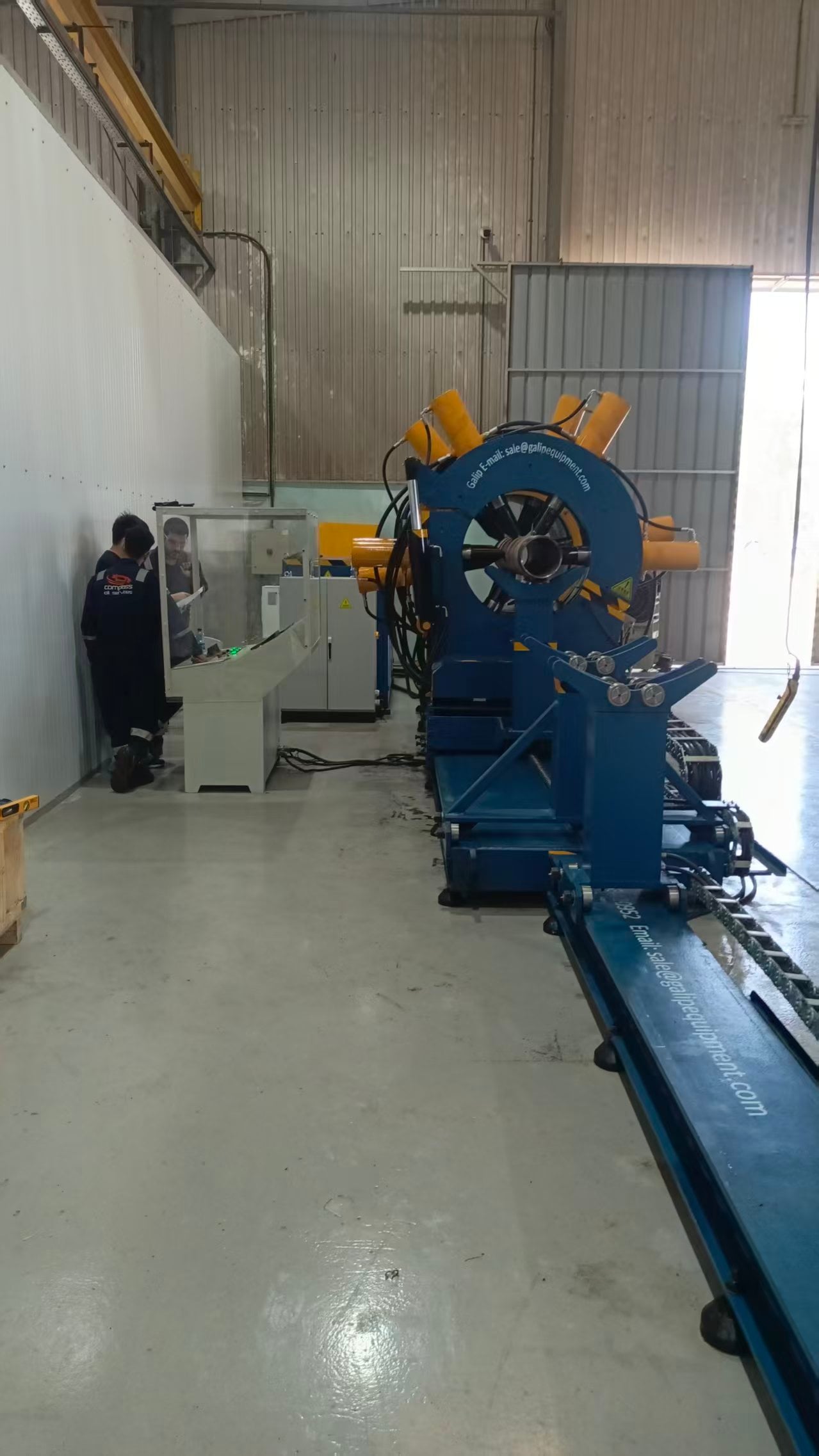
The workflow is the same across the families, and it is built around a make/break bench. The tool arrives from the well, usually still assembled and often still carrying whatever the well left on it. It is cleaned and logged in. On the bench every threaded joint is broken out, end connections first, then the internal housings, with the mandrel supported and the seals protected as each section comes free. The parts are inspected: threads gauged, seal bores measured, bodies checked for wear and cracks, elastomers replaced as a rule, never as an exception. The tool is rebuilt in the reverse order, each connection made up to its specified torque with the trace recorded, and then it is tested: a jar on a jar tester to prove its trip load, a motor on a bench to prove its rotor-stator fit and torque, a packer or a coiled tubing tool on a pressure test to prove its seals. The tested tool is tagged and returned to stock. The whole sequence, and the shop that runs it, is described in the downhole tool service centre guide.
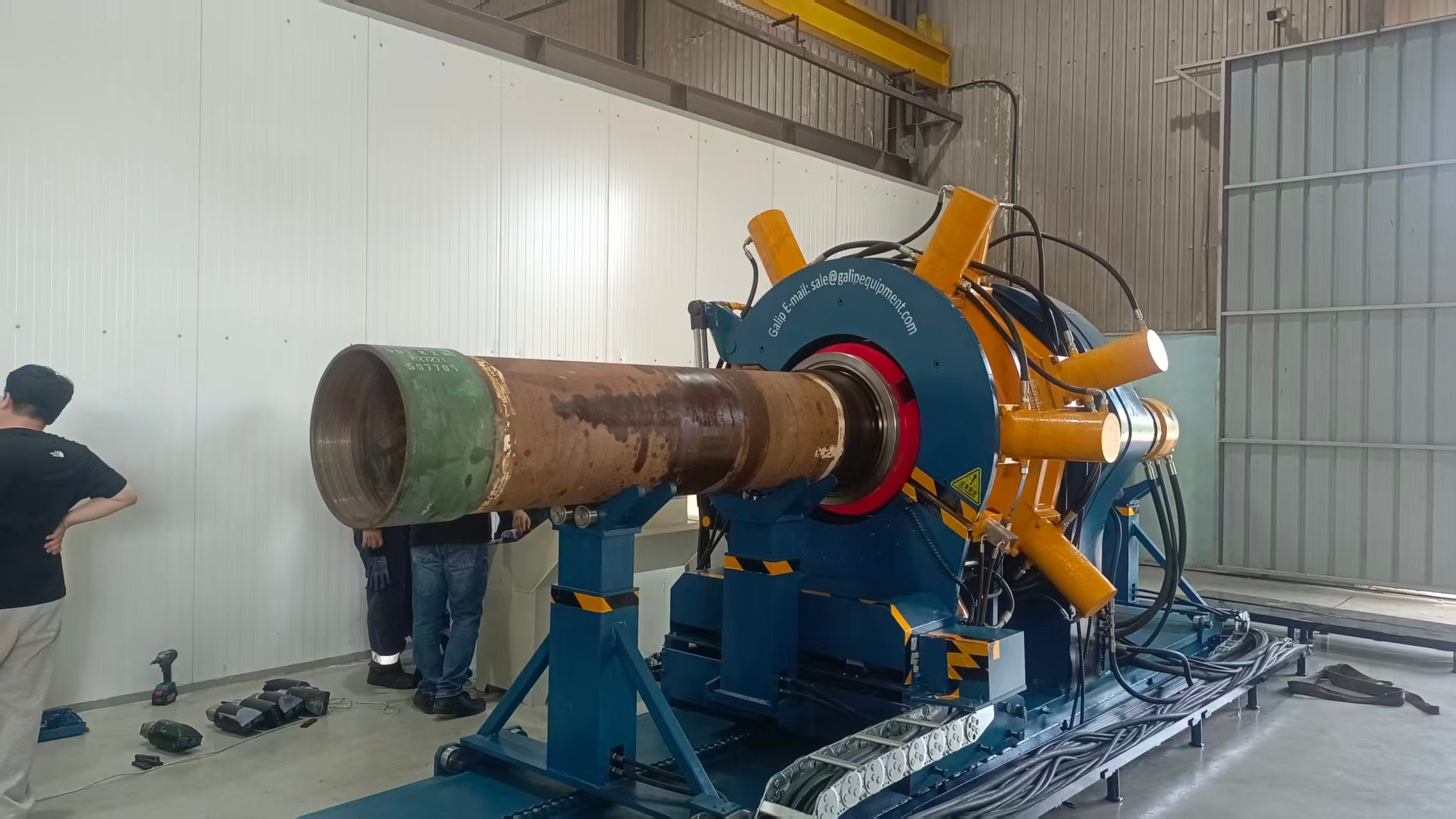
The bench at the centre of that sequence is a horizontal hydraulic bucking unit, chosen for tools, with pipe as the secondary job. The differences are practical. Tools are short, heavy and stiff, so the machine needs clamping that holds a thick body without distorting it and a spindle that can bring a rotary shouldered connection up hard and stop it. Tools come back from the well with joints that will not release at the torque that made them up, so the break-out capacity matters more than the make-up figure; the reasons are in what is breakout force. And tools carry mandrels and internal parts that must not be crushed, so the jaws and the clamping pressure are selected per tool, not once for the shop.
The test rig beside the bench is what makes the shop a service centre and not a repair shop. A drilling jar that has been rebuilt is not fit to run until it has been pulled to its set load and fired on a drilling jar tester, and the steps and acceptance criteria are laid out in the drilling jar testing procedure. A motor’s rotor and stator are matched on the bench, and the reason bench fit reads differently from downhole fit is explained in rotor stator fit. Coiled tubing tools go through the tests listed in coiled tubing downhole tool testing before every run. In each case the bench makes the tool, and the test proves it.
When a tool becomes a fish
A tool that parts or sticks downhole changes category. It is now a fish, and the fishing company’s tools go in after it: an overshot or spear to grip it, jars and accelerators to work it free, mills if it will not come. The decisions that run that job are set out in downhole tool recovery. For the workshop the point is what comes back. A recovered tool is damaged by definition, and the fishing string that recovered it has been loaded to its limits. Both arrive at the bench in worse condition than a tool that simply finished its run, and the break-out side of the shop earns its keep on them.
Where downhole tools sit in the industry
Every tool above is upstream equipment, used in the drilling, completion and production phases of a well; the phase view is in upstream oil and gas, and the sector map in upstream, midstream and downstream oil and gas explains why there are no downhole tools anywhere else in the value chain. The businesses that own them, service and rental companies, are the largest single population of tool-shop bucking unit users, ahead of threaders and drilling contractors, because they see the same tools again and again for as long as the fleet lasts.
When another page is the better start
A reader choosing which tool to run in a well is making an engineering decision that belongs with the tool supplier’s data and the well plan, and this site does not offer it. A shop that already knows its tool range should go to the bucking unit product page and the acceptance checklist, and should ask about clamping for short stiff bodies, jaw options and break-out capacity. A shop that services jars in particular should read the jar testing procedure and the drilling jar maintenance checklist before it specifies anything. And a reader who wanted a catalogue of every downhole tool ever made will not find one here; the families above are the ones a service centre meets, which is the question this page set out to answer.
There is also the usual limit. Internal connection torques, seal specifications and test loads belong to the tool’s maker. Galip supplies the bench and the tester and records the numbers; it does not set them.
Frequently asked questions
What are downhole tools?
The equipment run into a wellbore on drill pipe, tubing, coiled tubing or wireline to do a job below surface: motors, jars, stabilizers and MWD tools for drilling; packers, sleeves and mandrels for completion; overshots and mills for fishing; plugs, guns and cleanout tools for intervention; sondes and gauges for measurement. Nearly all are threaded assemblies. The motors and MWD tools are followed through a run in directional drilling explained.
What are the main types of downhole tools?
Five families cover most of them: drilling tools that make the hole, completion tools that make it produce, fishing tools that recover lost equipment, intervention tools that work on a live well through the tree, and logging and measurement tools that report conditions downhole. Suppliers and market surveys use roughly the same division.
Who owns downhole tools?
Mostly service and rental companies, who run the tools for an operator and take them back after the job. Drilling contractors own some of their own BHA components, and operators own their installed completions. The owner is responsible for servicing the tool between runs, which is why service companies run the largest tool workshops.
How is a downhole tool serviced between runs?
It is cleaned, logged in, and broken down on a make/break bench, end connections first and then the internal housings. Parts are inspected, threads gauged, elastomers replaced, and the tool is rebuilt with every connection made up to the maker’s torque and the trace recorded. It is then tested, a jar on a jar tester, a motor on a bench, a packer under pressure, and tagged.
Why does a tool shop need a bucking unit rather than a tong?
Because tools are short, stiff and heavy, carry internal mandrels that must not be crushed, and return from the well with joints that need more torque to break than to make. A horizontal bench supports the tool, clamps it on jaws chosen per tool, controls the make-up and records the trace, and has the break-out capacity a tong in a yard does not.
What is the difference between a downhole tool and a fish?
A fish is any tool or piece of equipment left in the well by accident, parted, dropped or stuck. It is recovered with fishing tools, overshots, spears, jars and mills, and comes back to the workshop damaged by definition. The fishing string that recovered it has also been loaded to its limits, so both are heavier work on the bench than a tool that finished its run.
Send the tool list, not the well count
A tool shop enquiry is answered from the fleet. The useful set for a bucking unit and tester quotation is: the tool families serviced and the longest, heaviest and largest-diameter tool in each, the end connection types and the largest rotary shouldered connection, the highest make-up torque in the makers’ manuals and the highest break-out expected on tools returned from the well, whether internal housings need special jaws or supports, which tools must be load or pressure tested and to what, the record the customers require, the site power supply and a sketch of the cell. The Galip team quotes from that list and will say where a jar tester or a motor bench belongs in the layout.
The downhole tools checklist
- Sort the shop’s fleet into the five types and note who owns each tool; the owner sets the record requirement.
- For each tool, list the end connections and the internal connections separately, with the torque source for each.
- Specify the bench from the shortest, stiffest, heaviest tool, with per-tool jaw and clamping selection.
- Size the machine from break-out on tools returned from the well, and from recovered fish in particular.
- Put the test rig beside the bench: jar tester, motor bench or pressure test, according to the fleet.
- Replace elastomers as a rule at every strip-down; record the seal batch with the rebuild.
- Save the torque-turn trace for every connection against the tool’s tag, and keep it with the test certificate.
- Keep the makers’ manuals current; the internal torques and test loads come from them, not from the shop.
{“@context”: “https://schema.org”, “@type”: “FAQPage”, “mainEntity”: [{“@type”: “Question”, “name”: “What are downhole tools?”, “acceptedAnswer”: {“@type”: “Answer”, “text”: “The equipment run into a wellbore on drill pipe, tubing, coiled tubing or wireline to do a job below surface: motors, jars, stabilizers and MWD tools for drilling; packers, sleeves and mandrels for completion; overshots and mills for fishing; plugs, guns and cleanout tools for intervention; sondes and gauges for measurement. Nearly all are threaded assemblies.”}}, {“@type”: “Question”, “name”: “What are the main types of downhole tools?”, “acceptedAnswer”: {“@type”: “Answer”, “text”: “Five families cover most of them: drilling tools that make the hole, completion tools that make it produce, fishing tools that recover lost equipment, intervention tools that work on a live well through the tree, and logging and measurement tools that report conditions downhole. Suppliers and market surveys use roughly the same division.”}}, {“@type”: “Question”, “name”: “Who owns downhole tools?”, “acceptedAnswer”: {“@type”: “Answer”, “text”: “Mostly service and rental companies, who run the tools for an operator and take them back after the job. Drilling contractors own some of their own BHA components, and operators own their installed completions. The owner is responsible for servicing the tool between runs, which is why service companies run the largest tool workshops.”}}, {“@type”: “Question”, “name”: “How is a downhole tool serviced between runs?”, “acceptedAnswer”: {“@type”: “Answer”, “text”: “It is cleaned, logged in, and broken down on a make/break bench, end connections first and then the internal housings. Parts are inspected, threads gauged, elastomers replaced, and the tool is rebuilt with every connection made up to the maker’s torque and the trace recorded. It is then tested, a jar on a jar tester, a motor on a bench, a packer under pressure, and tagged.”}}, {“@type”: “Question”, “name”: “Why does a tool shop need a bucking unit rather than a tong?”, “acceptedAnswer”: {“@type”: “Answer”, “text”: “Because tools are short, stiff and heavy, carry internal mandrels that must not be crushed, and return from the well with joints that need more torque to break than to make. A horizontal bench supports the tool, clamps it on jaws chosen per tool, controls the make-up and records the trace, and has the break-out capacity a tong in a yard does not.”}}, {“@type”: “Question”, “name”: “What is the difference between a downhole tool and a fish?”, “acceptedAnswer”: {“@type”: “Answer”, “text”: “A fish is any tool or piece of equipment left in the well by accident, parted, dropped or stuck. It is recovered with fishing tools, overshots, spears, jars and mills, and comes back to the workshop damaged by definition. The fishing string that recovered it has also been loaded to its limits, so both are heavier work on the bench than a tool that finished its run.”}}]}
Expert Consultation
Need more information on optimizing your equipment performance? Our engineering team is available for technical consultations.
Request a Quote
Tell us about your requirements and our engineering team will prepare a detailed proposal with specifications, pricing, and delivery timeline.
