
What Is Breakout Force? Why It Runs Higher Than Make-Up Torque
Breakout force is the torque needed to start loosening a made-up connection. It normally runs 3-14% above make-up torque, which is why sizing a breakout tool to the make-up figure leaves you under-sized.
Breakout force is the turning effort needed to separate a threaded connection that has been made up, loaded and, usually, left in service for a while. It is not the same number as make-up torque, and assuming it is will cost you a tool.
What is breakout force?
Breakout force is the torque required to start rotation in the loosening direction on a made-up threaded connection. It is normally higher than the make-up torque that created the joint, because thread friction, shoulder preload, compound behaviour and time in service all resist the first movement. Published make-up and break-out tests put the difference between 3% and 14%, averaging about 7.5%.
At a glance
| What it measures | Torque needed to initiate loosening rotation on a made-up connection |
| Usual relationship to make-up | Higher — typically 3–14% above, mean about 7.5% |
| Units | ft-lb or N·m (torque), not pounds of force |
| Rises with | Time in service, temperature cycling, galling, compound breakdown, corrosion |
| Equipment that supplies it | Breakout unit, bucking unit, power tong, iron roughneck |
| Galip published range | 500 – 199,000 ft-lb make-up and break-out, model-dependent |
Why breakout force exceeds make-up torque
When a connection is made up, torque does two jobs. Part of it stretches the pin and compresses the box shoulder to create preload. The rest is consumed by friction on the thread flanks and the shoulder face. Break-out has to overcome the same friction, but under worse conditions.
Thread compound thins, migrates or hardens. Fine surface asperities that were sliding during make-up have since settled into contact. On a joint that has seen heat cycles, the metal has crept slightly into a more comfortable position. None of that shows on a torque chart. It shows the first time somebody tries to break the joint with a tool sized to the make-up figure and nothing moves.
For context on where the make-up figure itself comes from, API drill stem practice sets standard make-up torque at the level that stresses the weaker of pin or box to roughly 60% of minimum yield, and that value follows tool joint OD and pin ID rather than the properties of the tube. The reference tables are published in API RP 7G. Those tables tell you what to apply going on. They do not tell you what it will take to get the joint off again.
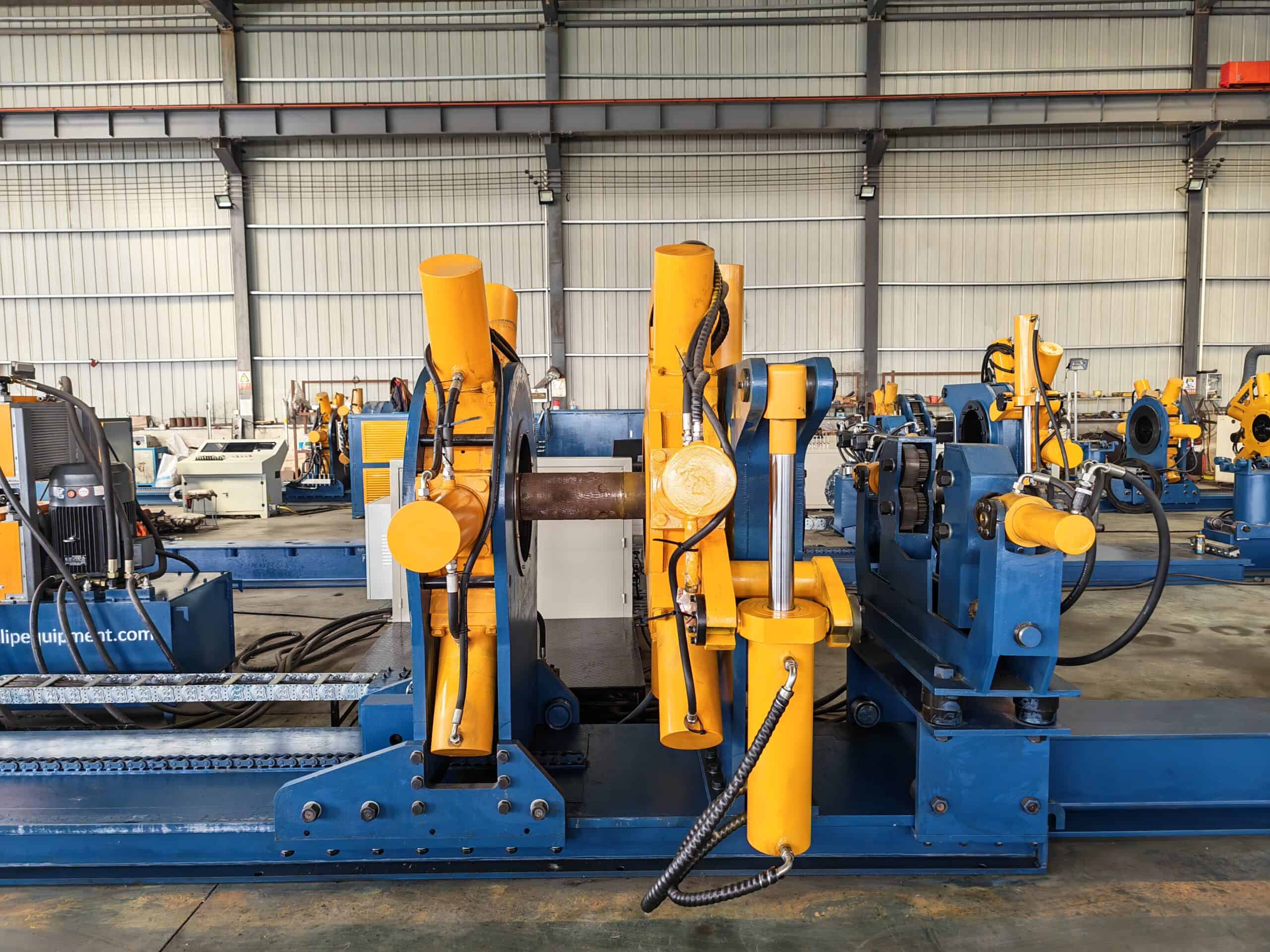
| Factor | Effect to consider | What the team should use for a decision |
|---|---|---|
| Time in service | Longer service generally raises break-out torque; the increase is not linear and is not predictable from a table | Size on the worst joint you actually handle, not the average |
| Thread compound condition | Degraded or wrong compound raises friction sharply and can mask galling | Record compound type and age with the joint; a break-out spike is a data point, not just a nuisance |
| Temperature history | Heat cycling changes the fit between pin and box | Treat downhole-service joints as a separate sizing class from shop-made joints |
| Galling or damage | Break-out torque climbs steeply and may never release cleanly | Stop. Inspect before forcing. A seized joint that is forced usually destroys the box |
| Corrosion or scale | Adds resistance unevenly around the thread | Expect an irregular break-out curve rather than a clean peak |
The sizing mistake this causes
A shop knows its make-up torque. It appears on the connection licensor’s sheet, it goes into the procedure, and it is the number everyone quotes. So when the time comes to specify a break-out tool, that is the number that gets used.
The tool then arrives rated at exactly the torque the shop can already apply. On new joints made up an hour earlier it works. On a tool joint that has been downhole for three months it stalls, and the shop is back to a cheater bar and a sling — which is where the injuries happen.
There is no honest universal multiplier here. The 3–14% range from published testing describes controlled test joints, not a mud motor that has been in a hot hole. What it does establish is the direction: your break-out requirement sits above your make-up torque, never below it. How far above is a function of your own service history, which is why the sizing conversation should start with the joints that gave you trouble last year rather than with a catalogue.
Breakout force is a torque, not a force
The phrase is used loosely in the field, and it causes real confusion in RFQs. “Breakout force” is almost always shorthand for break-out torque, measured in ft-lb or N·m. Where genuine force in pounds or kN matters is in the clamping system — the grip the jaws must exert on the pipe body so it does not spin or get marked while that torque is applied.
Both numbers belong in a specification, and they are not interchangeable. A machine can have ample break-out torque and still be wrong for your pipe if the clamp force marks a CRA tubular. When a quotation asks for “breakout force”, it is worth confirming which of the two the buyer means before pricing anything.
How to measure and record break-out torque
Most shops record make-up and ignore break-out. That is a missed opportunity, because break-out is the only measurement that tells you what actually happened to the connection while it was in service.
A machine with torque-turn capture in both directions produces a break-out curve as well as a make-up curve. The shape matters more than the peak. A clean break-out shows a sharp initial peak as the shoulder releases, then a rapid fall to running friction. A joint with thread damage releases raggedly, with several smaller peaks as damaged flanks catch and let go. A galled joint may show torque climbing steadily with no release at all, which is the signal to stop rather than push.
| Observation | Possible contributing factors | What to verify first |
|---|---|---|
| Sharp peak, clean fall | Normal release | Nothing — log the value and move on |
| Peak well above the recorded make-up | Service time, compound degradation, heat cycling | Compare against the same tool’s previous break-outs |
| Ragged, multi-peak release | Thread damage, debris, partial galling | Inspect threads before re-make-up |
| Torque climbing with no release | Galling or seizure | Stop. Forcing usually destroys the box |
| Break-out lower than make-up | Under-torqued on make-up, or the joint backed off in service | Review the original make-up record |
| Rising trend across repeat services | Progressive thread wear or compound problem | Pull the tool from rotation for inspection |
A rising break-out trend on the same tool over several services is one of the earliest available warnings of a connection heading for failure. It is visible long before the joint fails a dimensional inspection, and it costs nothing to capture if the machine is already recording. For how to read the resulting traces, see the torque-turn graph interpretation guide.
When a joint will not release
Every shop meets one eventually. The procedure for that moment should exist before it happens, because the decisions made under time pressure are the ones that hurt people.
- Stop at the machine’s rated torque. Not at the point where something gives. If the connection has not moved at rating, the answer is not more torque.
- Do not add leverage by hand. Cheater bars, slings and improvised extensions are how break-out injuries happen, and they apply load nobody is measuring.
- Check the direction. It sounds trivial. Left-hand connections exist in bottom-hole assemblies and they get broken the wrong way more often than anyone admits.
- Inspect before the next attempt. A joint that will not release at rated torque usually has a reason — galling, debris, a damaged shoulder — and forcing it converts a repairable connection into scrap.
- Record the attempt. The torque reached and the curve shape are evidence for the inspection that follows, and for the warranty conversation if there is one.
Heat, penetrating fluid and controlled impact all have a place in the trade, but they belong in a written procedure agreed with whoever owns the connection specification — not improvised on a Friday afternoon. Where damage is already visible, start with checks before make-up or repair.
When a breakout unit is the right fit
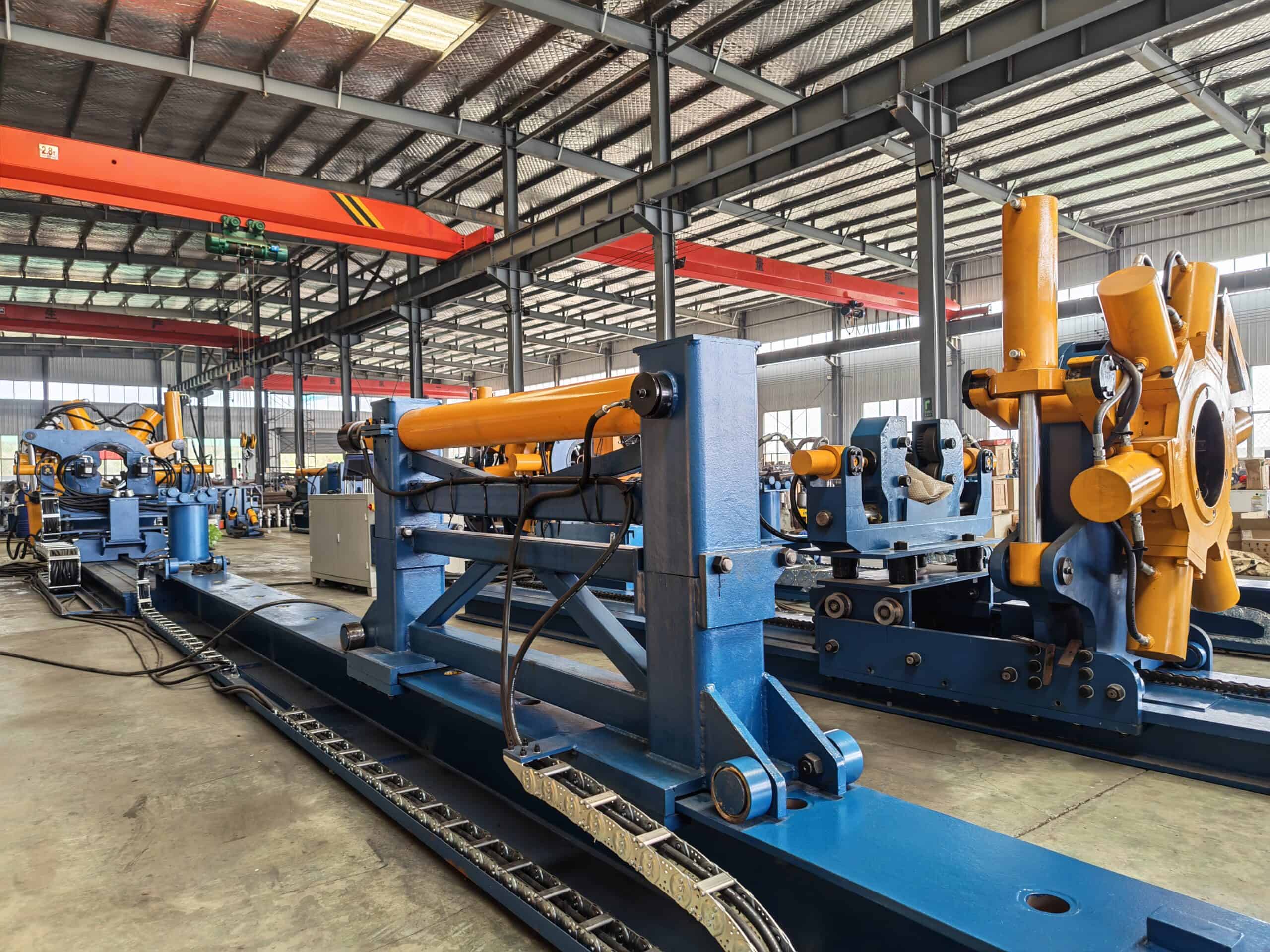
- Repeated shop break-out of tool joints, subs, housings or completion tools
- Connections that have been in service, where break-out torque is unknown and variable
- Work where marking the pipe body is unacceptable — CRA, chrome, premium connections
- Any operation that needs a record of what torque was actually applied
- Situations where the current method is a cheater bar, a sling or an improvised jaw
When another option may be better
A dedicated breakout unit is not always the right answer, and it is worth saying so plainly.
| Situation | Why a breakout unit may not fit | What to look at instead |
|---|---|---|
| Work happens at the rig floor, not in a shop | Breakout units are shop machines with a fixed footprint | Iron roughneck or power tong — see iron roughneck vs bucking unit |
| You mostly make up, and rarely break out | Break-out capacity is being paid for and not used | A bucking unit covering both directions |
| Very occasional break-out, low volume | Utilisation will not justify a capital machine | A third-party service, or renting shop time |
| Connections are small and consistently light | The torque range may sit under the useful band of a large unit | Bench-scale tooling, or the smallest frame in the range |
Specifying break-out capacity
| Check | What to confirm | Action when it does not match |
|---|---|---|
| Peak break-out torque | The highest figure your worst joint has actually needed, not the make-up spec | Move up a frame size rather than running at the machine’s ceiling |
| Clamp force and jaw type | Grip sufficient to hold without marking the pipe body | Specify soft-contact or non-marking jaws for CRA and chrome |
| OD range | Smallest and largest workpiece, including subs and crossovers | Confirm insert availability across the full range before ordering |
| Rotation control at first movement | Low, controlled speed at break; a sudden release damages threads | Proportional hydraulic control rather than on/off valving |
| Recording | Whether break-out torque is captured, not just make-up | Confirm the data system logs both directions if QA needs it |
| Stall behaviour | What the machine does when a joint will not release | Confirm the procedure and the protection before the first seized joint |
Proof and documentation
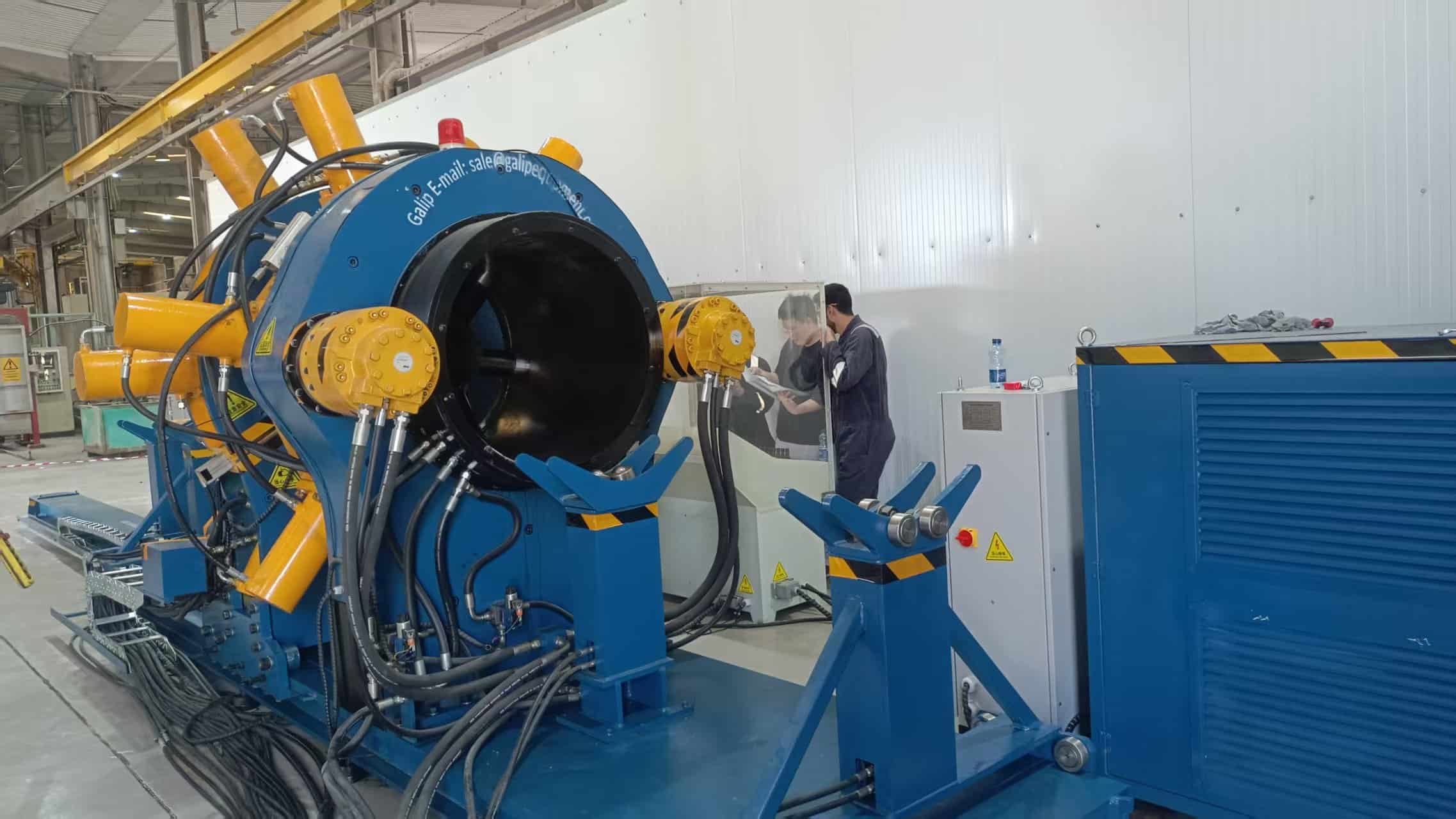
Break-out numbers are only as good as the machine that produced them. Galip publishes a make-up and break-out range of 500 to 199,000 ft-lb across the model line, and every figure quoted for a specific machine is measured at the factory acceptance test before shipment. That test report travels with the unit, so any published number can be checked against the machine that was actually built.
Worked examples are published for real projects, including the 32-inch unit built for Oman and the 10-inch unit for Singapore. For the wider control set around make-up and break-out, see the guide to make-up and break-out torque machines.
Frequently asked questions about breakout force
Is breakout force always higher than make-up torque?
Usually, but not universally. Controlled testing puts the difference at 3–14% above make-up, averaging around 7.5%. A joint that was under-torqued on make-up, or one that has corroded loose, can break out lower. Size for the higher case. The extreme case is pipe recovered from a closed well; plug and abandonment follows that pipe to the yard.
How do I calculate breakout force for my connection?
There is no reliable formula that accounts for service history. Start from the connection licensor’s make-up torque, then size above it using your own break-out records. If you have no records, begin logging them — that data is worth more than any published multiplier.
Is breakout force measured in pounds or ft-lb?
Torque, in ft-lb or N·m. Force in pounds or kN refers to the clamping system that grips the pipe body. Both belong in a specification and they are not interchangeable.
What happens if my breakout tool is under-sized?
The joint does not release, and the shop improvises. Cheater bars, slings and impact methods are where break-out injuries and destroyed boxes come from. An under-sized tool does not fail safely; it fails by pushing people back to unsafe methods.
Can one machine handle both make-up and break-out?
Yes. A bucking unit is built to run in both directions, which is why most shops handling a mix of new make-up and service teardown specify one machine rather than two. Confirm that the rated torque applies in both directions.
Should break-out torque be recorded?
If you service connections repeatedly, yes. A rising break-out trend on the same tool is an early warning of galling or compound problems, and it is visible long before the connection fails an inspection.
Does breakout force differ between API and premium connections?
Yes. Premium connections carry metal-to-metal seals and torque shoulders that behave differently on release, and the licensor’s procedure governs. Treat published API tables as a starting point for API connections only.
How much margin should I allow above make-up torque?
Enough that the machine is not working at its ceiling on a routine joint. Published testing suggests 3-14% above make-up for controlled test connections, but service history drives the real figure. If your records show break-out reaching the machine rating, you are already one difficult joint away from a stall.
Does breakout force change with connection size?
Yes. Make-up torque follows tool joint OD and pin ID rather than the tube, so larger connections carry higher torque, and break-out scales with them. A machine sized for your smallest workpiece will not cover the largest, which is why OD range and torque range are specified together.
Getting a sized quotation
Break-out capacity cannot be quoted from a product name. Send the following and the engineering team will return a configuration matched to the joints you actually handle:
- Workpiece family and OD range, including subs and crossovers
- Typical and maximum make-up torque
- Highest break-out torque you have recorded, or the joints that gave trouble
- Connection family — VAM, TenarisHydril, Hunting, JFE, TMK, Fox or API
- Surface protection needs — CRA, chrome, non-marking jaw requirement
- Daily workload and report format
- Workshop length, ceiling height, lifting and power available
See the breakout unit specifications for the current model range, or the torque machine knowledge hub for the selection guides.
Before you specify: a short checklist
- Have you separated break-out torque from make-up torque in your own numbers?
- Do you know the highest break-out your shop has actually needed, or only the spec value?
- Is the clamp force adequate for your most damage-sensitive pipe, not just your heaviest?
- Does the tool cover your smallest workpiece as well as your largest?
- Will the machine record break-out, or only make-up?
- Is there a written procedure for a joint that will not release?
- If a joint seizes today, does the shop have a safe answer that is not a cheater bar?
If any of those has no answer, that gap is worth closing before the equipment decision, because it will shape the specification more than the catalogue will.
Expert Consultation
Need more information on optimizing your equipment performance? Our engineering team is available for technical consultations.
Request a Quote
Tell us about your requirements and our engineering team will prepare a detailed proposal with specifications, pricing, and delivery timeline.
