
Damaged Threaded Connections: Checks Before Make-Up or Repair
Damaged threaded connections need a clear field decision. Use 7 critical checks to decide whether damaged threaded connections should be held, remade, repaired, or rejected with confidence.
By Galip Equipment Editorial Team, reviewed by Jason Wang.
A damaged threaded connection should not go straight back into service just because it can still be forced together. Small dents, galling, shoulder marks, or dirt trapped in the threads can turn into leakage, stuck joints, or repeat rework. This checklist helps teams decide when to clean, inspect, repair, or stop before make-up.
Table of Contents
- Damaged threaded connections: a remake, repair, or reject ladder teams can defend
- There is one sentence that has cost oilfield operations a lot of money over the years:
- "It will probably make up."
- First rule: stop the casual optimism
- Not every mark is a reject, but every mark deserves context
- Conditions that deserve immediate hold status
- The remake decision should answer "why" first
- Repair should never become improvisation
- Rejection is often the most professional answer in the building
- Build a disposition ladder before the job gets busy
- Decision ownership matters more than people think
- Where a bucking unit helps – and where it absolutely does not
- What to document when damaged threaded connections trigger a debate
- The real question is not "Can we run it?" It is "Can we defend it?"
- Final thought
- Related Galip resources
- External references
- Frequently asked questions about remake repair or reject threaded connection decisions
Damaged threaded connections: a remake, repair, or reject ladder teams can defend
- Accepted as-is: the condition is understood, non-critical, and still inside the program's acceptance path.
- Hold for review: the joint is physically isolated until inspection, engineering input, or customer review removes uncertainty.
- Controlled remake or reinspection: the team understands why the first event went wrong and can repeat under corrected conditions.
- Reject or permanently isolate: the joint should not continue in the production path because the condition or evidence is not defensible.
- Document the observation, location, cause, decision owner, and supporting evidence before the debate gets emotional.
There is one sentence that has cost oilfield operations a lot of money over the years:
"It will probably make up."
That sentence usually appears when a joint looks questionable, the crew is under pressure, and nobody wants to be the person who slows the job down. The problem is that saving one doubtful joint can end up costing much more than isolating it early.
A questionable connection can create remake loops, ugly torque-turn behavior, delay releases, trigger customer arguments, and in the worst cases push real risk further downstream into the job.
A good disposition decision is not dramatic. It is disciplined.
This article is not another generic warning about thread damage. It is a practical guide for the moment after damage, contamination, or abnormal behavior is found. That is the moment when supervisors, inspectors, and decision-makers need a better framework than instinct.
The right question is not "Can we get away with this?" The right question is "What is the safest, most defensible, most commercially sensible disposition for this specific joint?"
First rule: stop the casual optimism
Once damage or abnormal behavior is noticed, the worst possible response is to turn the decision into a mood. The shop does not need optimism in that moment. It needs a controlled sequence.
Start by slowing the moment down just enough to ask a few direct questions. What exactly was observed? Where is it located? Did the issue exist before make-up, appear during make-up, or only become visible after break-out?
Is the connection family positively identified? Does the program already have manufacturer guidance or internal criteria for this condition? Has the joint been marked, tagged, and separated from accepted material?
If those answers are vague, the decision is already too loose.
Many bad calls in the field do not happen because people are reckless. They happen because the team jumps too fast from "something looks off" to "try it again." That jump is expensive.
It skips the part where the operation decides whether the issue is cosmetic, dimensional, surface-critical, contamination-related, handling-related, or evidence of an engagement problem.
Without that distinction, every next move becomes weaker.
Not every mark is a reject, but every mark deserves context
This is where practical judgment matters.
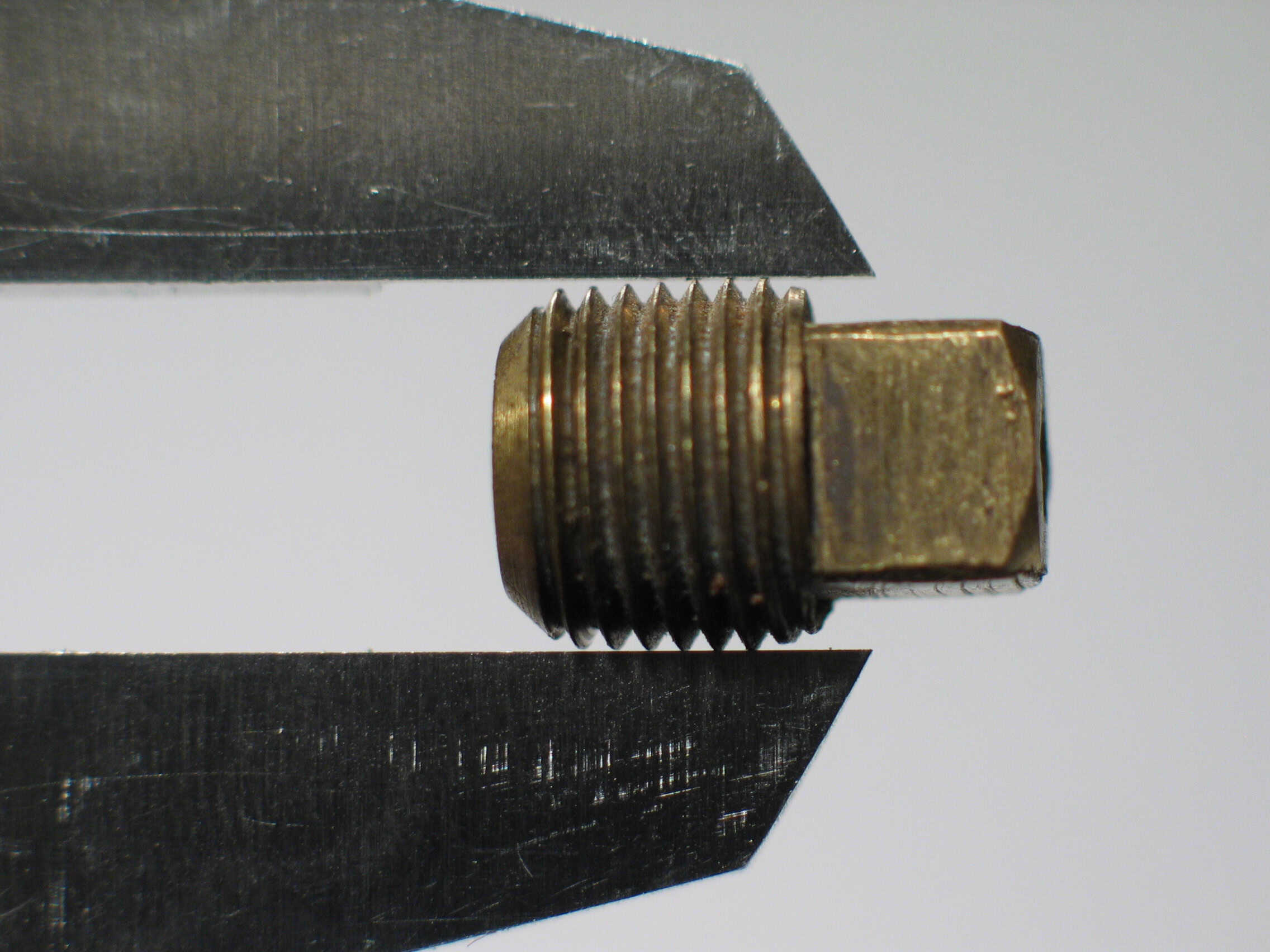
A premium threaded connection is not a painted structural beam where appearance alone tells the story. Some marks are cosmetic and have no meaningful effect on performance. Some marks look minor yet sit exactly where sealing confidence matters most.
Some damage is not even damage in the strict sense; it is residue, trapped contamination, handling witness, or a preservation problem. The mistake is treating everything as either harmless or catastrophic.
A better approach is to look at condition through four lenses.
First, ask whether the affected area is functional. A superficial witness mark away from the working surfaces belongs in a different category than an issue on a seal area, load flank, thread start, or nose region.
Second, ask whether the condition is stable or progressive. A tiny isolated mark may stay what it is. Rolled metal, smeared material, galling, crushed protectors, or engagement interference often point to a condition that can worsen if the joint is forced again.
Third, ask whether the cause is understood. If the team cannot explain why the abnormality exists, confidence should go down, not up.
Fourth, ask whether the result can be verified objectively after action is taken. If the proposed "repair" or remake will leave the team unable to prove that the joint is acceptable, then the action is weak even if it feels convenient in the moment.
That four-part filter helps teams avoid the false comfort of broad statements like "it doesn't look too bad."
Conditions that deserve immediate hold status
Some findings should move a joint out of normal flow immediately until qualified personnel review it. That does not mean every hold becomes a reject. It means the operation respects uncertainty before turning it into a quality escape.
Immediate hold status is usually justified when there is visible damage in a sealing or critical engagement area, obvious thread deformation, flattening or rollover, impact at the pin nose or box mouth, mixed or uncertain connection identification, contamination that cannot be confidently removed, or abnormal make-up behavior that suggests the connection did not engage normally. The same is true when the operator reports a feel problem, sudden instability, or an unexpected curve even if the joint technically reached the end point.
This is where mature organizations separate themselves from reactive ones. A mature operation does not ask, "Can we hide this inside the workflow?" It asks, "How do we stop this one joint from confusing the next five decisions?"
A clean hold process usually includes physical segregation, visible tagging, an entry in the traveler or digital log, and clear ownership of the next decision. If the joint stays on the floor beside good material with a verbal warning attached to it, the control is already compromised.
The remake decision should answer "why" first
One of the most common shop-floor habits is to respond to an odd result with a remake. Sometimes that is justified. Quite often it is not.
A remake is not simply another try. It is a second controlled event that should only happen when the team understands the likely reason the first make-up was abnormal and has grounds to believe that a repeat under corrected conditions is technically appropriate.
If the cause is unknown, the second attempt becomes a test driven by hope rather than evidence.
Reasonable remake cases do exist. The joint may have been interrupted by a clearly identified handling issue. Compound application may have been inconsistent. Setup may have been corrected.
A non-critical contamination source may have been found and properly removed. A procedural step may have been missed and then recovered. In those cases, a remake can be part of good control.
But notice what those examples have in common: the abnormality is not being ignored; it is being explained.
That explanation matters because it changes the meaning of the second record. A clean second result is more valuable when the team can say what changed and why the new outcome is credible.
Without that explanation, the remake only proves that one later event looked better than one earlier event. It does not prove the original concern was harmless.
Repair should never become improvisation
Repair is the zone where operations most need humility.
The phrase "We'll dress it a little" has caused more damage than people like to admit. The problem is not only whether someone can make the area look cleaner. The real problem is whether the connection remains inside approved limits after the work is done, whether the repair method is permitted, and whether somebody with the right authority has actually reviewed it.
In disciplined programs, repair is a controlled engineering choice, not a creative workshop habit.
That means there is a defined acceptance pathway. It may involve approved criteria, designated personnel, documentation, reinspection, or customer notification depending on the program and the connection.
It certainly means the team does not quietly perform local correction and push the joint back into production because the schedule is tight.
Even when minor correction is allowed, the operation still has to ask a serious question: after repair, can we demonstrate with confidence that this joint remains functionally acceptable? If the answer is uncertain, the right commercial decision is usually to stop.
This is where many organizations save pennies and lose dollars. They become too proud of recovering borderline material and too relaxed about the long-term cost of ambiguity.
Rejection is often the most professional answer in the building
Some teams still treat rejection like a sign that somebody failed.
That is the wrong culture.
A reject is often the clearest proof that the quality system is awake. Once you account for the full cost of a bad acceptance, rejection starts to look much less emotional and much more rational.
A single questionable joint can consume inspector time, operator time, machine time, release review time, customer trust, and sometimes field risk. By the time all of that is counted, rejecting the wrong joint early is frequently cheaper than defending the wrong acceptance later.
The commercial trap is easy to understand. Material is expensive. Delivery pressure is real. Nobody wants to explain why something was set aside. But that pressure often produces the exact behavior that makes jobs more expensive: pushing uncertain joints forward because the immediate cost is visible and the later cost is still hypothetical.
Experienced teams learn the opposite lesson. They get comfortable saying, "This one stops here unless the acceptance path is clear." That is not negativity. That is operational maturity.
Build a disposition ladder before the job gets busy
The best time to decide who can remake, repair, hold, or reject a connection is not during the argument. It is before the first questionable joint appears.
A useful disposition ladder defines at least four decision states.
The first state is accepted as-is. That means the condition is understood, non-critical, and within the program's allowance.
The second state is hold for review. That means the joint is removed from flow pending inspection, engineering input, or customer review.
The third state is controlled remake or controlled reinspection. That means the team has identified the reason for abnormal behavior and has an approved basis to repeat under corrected conditions.
The fourth state is reject or permanently isolate. That means the joint should not continue in the current production path.
This sounds simple, but the clarity is powerful. Once those states exist, the shop no longer has to improvise language every time something unusual shows up. That cuts down on confusion, protects the next shift, and keeps people from quietly inventing a fifth category called "let's just run it and see."
Decision ownership matters more than people think
Most bad connection decisions are not caused by a lack of technical knowledge. They are caused by unclear ownership.
Who is allowed to place a joint on hold? Who can authorize a remake? Who decides whether a local correction is acceptable? Who signs final release? Who informs the customer if required? Where is that recorded? How does the next supervisor see it without relying on memory?
If those answers are vague, even a good procedure will fail in practice.
Strong operations make ownership visible. The operator knows when to stop. The inspector knows when to escalate. The supervisor knows what they can and cannot clear. Engineering or customer quality knows when their input is required. The record shows the path without requiring a verbal retelling.
That visible ownership reduces conflict too. When authority is clear, the conversation becomes technical. When authority is blurry, every disposition becomes a personality contest.
Where a bucking unit helps – and where it absolutely does not
This is the part many buyers misunderstand.
A bucking unit is extremely valuable when a joint needs controlled break-out, controlled remake, alignment stability, and traceable evidence. In disposition work, that matters a great deal.
The machine helps the team produce a cleaner record, see behavior more clearly, and remove some of the variability that comes from improvised handling.
That is real value.
But the machine is not a permission slip.
A bucking unit cannot turn damaged geometry into healthy geometry. It cannot make uncertain identification acceptable. It cannot change the fact that a seal area is compromised. It cannot replace approval authority.
What it can do is support better evidence and better control once the decision path is technically justified.
That distinction matters in sales conversations too. The strongest commercial message is not "this machine saves every joint." The stronger and more believable message is "this machine helps qualified teams make better, more defensible decisions around make-up, break-out, and record quality."
Buyers trust that message more because it respects reality.
What to document when damaged threaded connections trigger a debate
The speed of a disposition decision improves dramatically when the right facts are captured immediately.
At minimum, teams should record what was seen, where it was seen, when it was seen, connection identification, whether the issue existed before make-up or followed an abnormal event, who observed it first, what photographs or evidence were taken, and what temporary control was applied. If a remake or inspection occurs later, that later record should point back to the original hold event rather than floating as an isolated note.
Photos help. So do marked sketches. So does a short plain-language note that explains the concern in human terms rather than hiding behind generic wording like "abnormal condition observed." Vague language wastes time because every reviewer has to reconstruct the problem from scratch.
A strong record does not need to be theatrical. It just needs to be specific enough that the next decision-maker can understand the issue without guessing.
The real question is not "Can we run it?" It is "Can we defend it?"
This mindset shift changes everything.
A doubtful joint may physically go together. It may even produce an acceptable-looking final number on one attempt. That does not automatically mean the decision was good. The stronger question is whether the operation could defend the acceptance later to a customer, auditor, internal quality lead, or failure review team.
- Can you explain what was observed?
- Can you show why the condition was considered acceptable or recoverable?
- Can you prove who approved the path?
- Can you show the evidence behind the final decision?
If the answer to those questions is weak, the acceptance is weak even if the immediate job continues.
That is why the smartest supervisors are often the least impressed by "it worked." They know a one-time successful outcome can still hide a poor decision.
Final thought
A damaged threaded connection should never be judged by hope, speed, or habit. It should be judged by condition, function, evidence, procedure, and clear ownership.
Sometimes the right answer is acceptance. Sometimes it is a controlled remake. Sometimes it is an engineering review. And sometimes the most professional answer in the shop is simply, "This one stops here."
That answer protects more than the connection. It protects the schedule from false recovery, the customer relationship from avoidable arguments, and the reputation of the team doing the work.
In oilfield operations, that kind of discipline is not bureaucracy. It is one of the quiet ways serious companies prove they know the difference between moving material and controlling quality.
Related Galip resources
- premium thread failure checklist – Natural supporting resource when readers need cause-and-prevention context.
- pipe connection QA workflow – Extends the topic from quality control to field-level disposition.
- controlled make-up and break-out equipment – Commercial bridge once the article reaches controlled remake and evidence.
- talk to the technical team – Useful CTA for buyers with edge cases or specific connection programs.
External references
- Tenaris IPSCO Connections Running Manual – Official running guidance reference.
- VAM running guidance – OEM-style reference for premium threaded connections.
- API RP 54 – Relevant safety context for drilling and servicing operations.
- ISO 13679 official page – Useful standards context around connection performance and testing.
Frequently asked questions about remake repair or reject threaded connection decisions
When should a damaged threaded connection go on hold immediately?
Immediate hold status is usually the right response when a sealing or engagement area is damaged, the connection identity is uncertain, the abnormality is progressive, or the acceptance basis is unclear.
What makes a remake credible?
A remake is credible when the team can explain why the first event was abnormal, what changed before the second event, and why the new result is technically meaningful instead of lucky.
What can equipment help with during disposition work?
Controlled equipment helps with alignment, repeatability, break-out, remake evidence, and cleaner records. It does not change damaged geometry into acceptable geometry or replace approval authority.
If you are deciding how much evidence your team should capture around controlled remake or break-out work, you can talk to Galip’s technical team before the next edge case shows up on the floor.
Damaged threaded connections decision checklist
Damaged threaded connections need a decision path that is visible, repeatable, and defensible before anyone argues for speed over evidence.
- Damaged threaded connections should be identified, isolated, and tagged before any remake discussion begins.
- Damaged threaded connections need a clear owner for acceptance, hold, repair, or rejection authority.
- Damaged threaded connections should only be remade when the first abnormal event is understood and corrected.
- Damaged threaded connections need photos, notes, and inspection evidence before the crew debate becomes emotional.
- Damaged threaded connections should move forward only when the acceptance basis stays technically defensible.
Why damaged threaded connections need a documented decision path
Damaged threaded connections create risk when shift teams rely on memory, verbal instructions, or production pressure instead of a written remake, repair, or reject workflow.
When damaged threaded connections are reviewed with a documented field decision path, teams can explain the condition, the evidence, the decision owner, and the final release logic without confusion.
On used drill pipe the same disposition logic runs alongside a formal grade; see how inspection classes are awarded for how the worst feature governs.
Damaged threaded connections and controlled remake decisions
Damaged threaded connections do not become acceptable just because a second make-up looks better. A controlled remake only matters when the team can explain what changed and why the second result is technically valid.
Expert Consultation
Need more information on optimizing your equipment performance? Our engineering team is available for technical consultations.
Request a Quote
Tell us about your requirements and our engineering team will prepare a detailed proposal with specifications, pricing, and delivery timeline.
