
Premium Thread Connection Failures in Oil & Gas: Causes, Prevention, and Inspection Checklist
Premium thread connection failures in oil and gas: practical causes, prevention controls, KPI thresholds, and a field-ready inspection checklist.
Premium thread connection failures in oil and gas are rarely caused by one dramatic mistake. In most field cases, failure is cumulative: minor handling damage, inconsistent thread compound application, marginal alignment, and unstable torque-turn behavior compound until sealing integrity is compromised. The fastest way to improve reliability is to control the entire connection lifecycle—preparation, make-up, verification, and post-run review—rather than relying on final torque alone.
This guide explains the dominant failure mechanisms, the most pragmatic prevention controls, and a field-ready inspection checklist your team can deploy immediately.
Teams standardizing make-up acceptance around a bucking unit for premium thread connections can use this checklist to tighten field execution before failures become visible.
Key Takeaways (TL;DR)
- Connection integrity depends on path quality, not just the endpoint torque value.
- Most failures are detectable early through visible thread condition, lubrication discipline, and torque-turn signature drift.
- A repeatable inspection checklist can reduce re-make cycles and non-productive time significantly.
- Define pass/review/reject thresholds before operations start, and enforce them consistently across crews.
Why Premium Thread Connection Failures in Oil and Gas Happen in Real Operations
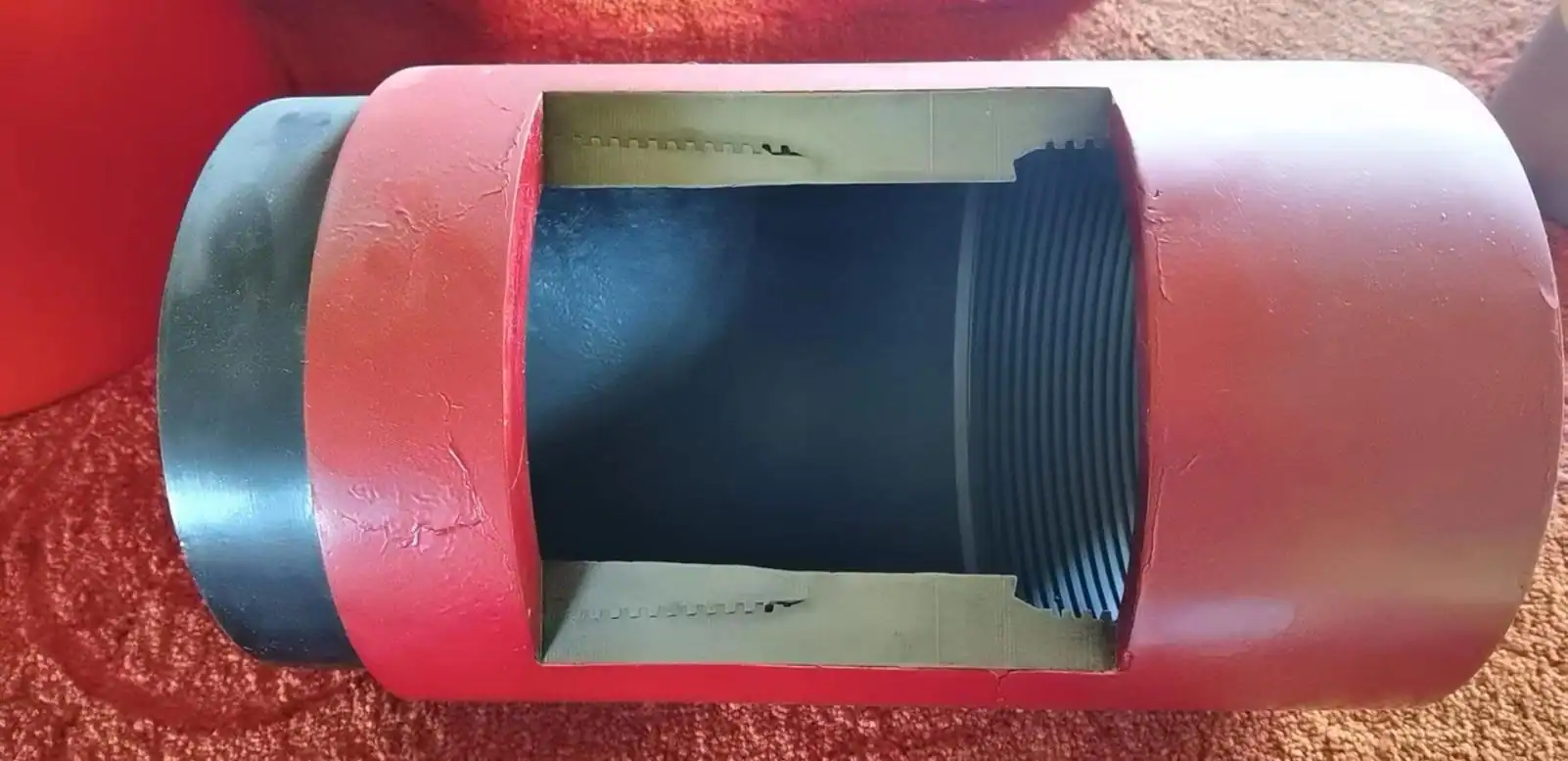
Premium connections are engineered with precise thread geometry and metal-to-metal sealing surfaces. That precision is an advantage only if field execution is equally disciplined. In practice, failure usually appears as one of four outcomes: leak during pressure test, abnormal breakout behavior, inability to hold target preload, or accelerated wear after limited service cycles.
From a reliability standpoint, the critical insight is this: a connection can pass a superficial acceptance check and still be structurally vulnerable. For example, final torque may look acceptable while shoulder engagement happens outside the normal turn window, indicating friction instability or geometric interference.
Top Causes of Premium Thread Connection Failure
1) Thread and seal surface damage during handling
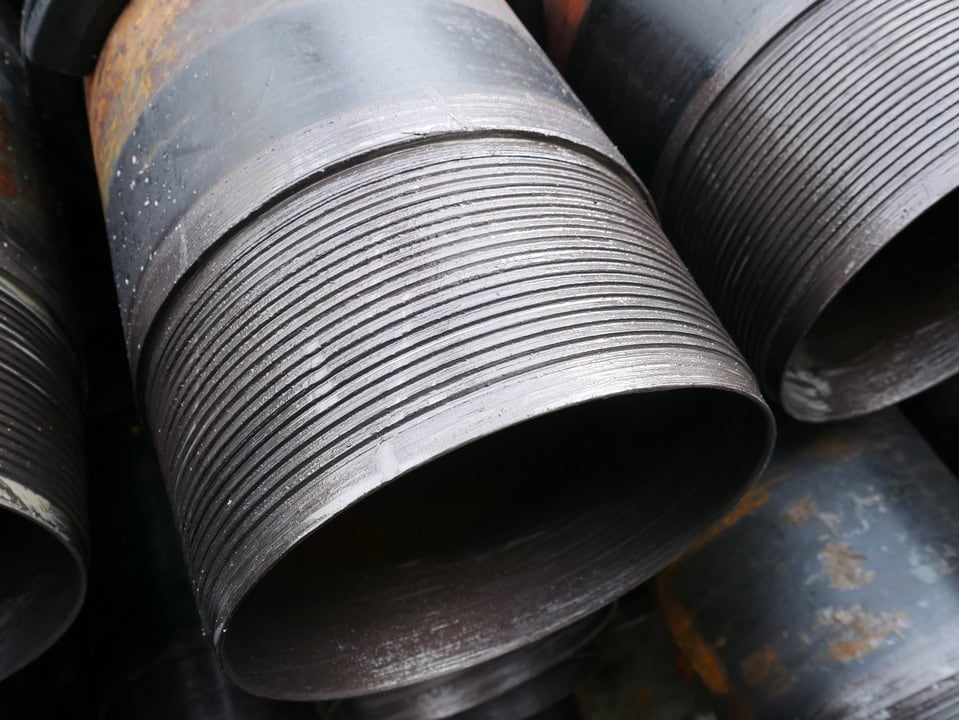
Micro-nicks, dents, and coating disruption at pin/box interfaces can degrade sealing performance, especially under thermal cycling and pressure fluctuations.
2) Poor cleaning and contamination control
Residual debris, old compound, metal particles, or moisture in threads can distort torque response and trigger local galling.
3) Inconsistent thread compound (dope) application
Too little compound increases friction and galling risk; too much can trap contaminants and alter make-up behavior.
4) Misalignment at stabbing or early engagement
Cross-thread initiation or forced engagement produces irreversible geometry damage that may not be obvious until pressure exposure.
5) Uncontrolled make-up speed near shoulder
Excessive RPM in the final stage can mask tactile feedback, overheat contact zones, and reduce repeatability.
6) Torque-only acceptance logic
Ignoring turn count, shoulder position, slope trend, and breakout ratio means latent defects can pass unnoticed.
Prevention Framework: From Procedure to Execution
A. Pre-make-up controls
- Use calibrated gauges and documented acceptance criteria for thread/seal condition.
- Mandate standardized cleaning tools and solvent protocol.
- Apply thread compound with controlled quantity (mass- or stroke-based method).
- Verify protectors, lifting subs, and handling tools before each shift.
B. Make-up controls
- Confirm axial alignment before full engagement.
- Use staged RPM: higher during free spin, lower in the critical shoulder approach zone.
- Record complete torque-turn signature for each joint.
- Flag anomalies immediately: saw-tooth torque, delayed shoulder, abrupt slope inflection, or noise spikes.
C. Post-make-up controls
- Validate against pre-defined acceptance window (not just final torque).
- Review breakout-to-make-up torque ratio trends on sampled joints.
- Capture root cause for every re-make and feed it into weekly reliability review.
Inspection Checklist (Field-Ready)
Before running operations
- ☐ Tooling calibration certificate valid (torque system, pressure gauge, sensors)
- ☐ Thread protectors intact; no evidence of impact damage
- ☐ Approved thread compound batch verified and within shelf-life
- ☐ Cleaning materials available and contamination controls in place
- ☐ Crew alignment on pass/review/reject criteria
Per-connection checklist
- ☐ Pin/box visual inspection completed (threads + seal area)
- ☐ Compound applied uniformly with no dry zones
- ☐ Stabbing alignment confirmed before powered engagement
- ☐ Make-up RPM controlled in final shoulder zone
- ☐ Torque-turn trace captured and archived
- ☐ Shoulder position and turn window within target range
- ☐ Final acceptance signed by responsible technician
After operation / quality loop closure
- ☐ Re-make count logged by connection type and crew
- ☐ Top 3 anomaly patterns categorized weekly
- ☐ Corrective actions assigned with owner and due date
- ☐ Lessons learned added to SOP revision cycle
Suggested KPI Thresholds (Calibrate to OEM Spec)
- Final torque deviation target: within ±5%
- Critical-zone make-up speed: 1.0–3.0 rpm
- Shoulder-point drift alert: >6°
- Breakout / final make-up torque ratio review line: <0.85
- Re-make trigger for investigation: ≥2 per 100 joints
- First-pass acceptance target: ≥98%
These values are pragmatic starting points, not universal constants. Always align thresholds to the connection design envelope, OEM guidance, and your actual field conditions.
References and Further Reading
- Internal guide: Premium connections field guide
- Internal archive: Galip Equipment technical blog
- External standard source: American Petroleum Institute standards
- External testing reference: ISO 13679 reference page
Frequently Asked Questions
What is the earliest reliable indicator of future connection failure?
Atypical torque-turn behavior near shoulder engagement is often the earliest indicator. If slope behavior changes materially versus baseline, inspect immediately even if final torque still looks acceptable.
Is final torque enough to release a joint?
No. Final torque is necessary but insufficient. Decision quality improves dramatically when combined with shoulder location, turn window, and anomaly-free signature path.
How often should procedures be recalibrated?
At minimum, review monthly and after any major change in connection family, compound type, tooling, or crew composition. High-variance projects may require weekly recalibration.
Conclusion
Preventing premium thread connection failures in oil and gas is fundamentally an execution discipline problem. Teams that standardize preparation, control make-up dynamics, and enforce signature-based acceptance can materially reduce leakage risk, rework, and non-productive time. If you need one immediate upgrade, start with the checklist above and require complete torque-turn trace review before final release.
If your team needs help turning this checklist into a field-ready workflow, contact Galip about bucking units.
Expert Consultation
Need more information on optimizing your equipment performance? Our engineering team is available for technical consultations.
Request a Quote
Tell us about your requirements and our engineering team will prepare a detailed proposal with specifications, pricing, and delivery timeline.
