
Coiled Tubing in Oil and Gas: The Unit, the Jobs It Does, and the Service Base Behind It
Coiled tubing is one continuous steel tube spooled on a reel and pushed into a live well by an injector head. It can pump the whole time it moves, which is why cleanouts and plug mill-outs run on it; it cannot rotate, and the tool string on its end is threaded together at the service…
Coiled tubing is a single continuous steel tube, spooled on a reel and pushed into a well by an injector head while the well stays under pressure. Because it has no connections to make, it runs in and out far faster than jointed pipe and keeps pumping while it moves, which makes it the usual choice for cleanouts, stimulation, milling plugs and lifting a well back into production.
At a glance
| What it is | One length of steel tube on a reel, commonly between about 1 and 3 1/2 inches in outside diameter, run into a well without making or breaking connections |
| The tube | Made to API Specification 5ST in grades CT70 to CT110; 2 in. is the most common size, and strings run from roughly 600 m to more than 9,000 m |
| The unit | Reel, gooseneck, injector head, stripper and coiled tubing BOP, with a power pack, a control cabin and the pumps or nitrogen unit for the job |
| Typical jobs | Wellbore cleanouts, nitrogen lift, acid and chemical treatments, milling frac plugs and scale, setting and retrieving tools, logging, fishing, cementing squeezes |
| Main strengths | Works on a live well, pumps continuously while moving, trips quickly, needs no rig |
| Main limits | The tube cannot rotate, it wears out from bending, and in long horizontal wells friction and buckling limit how far it reaches |
| The threaded part | The tool string at the end of the tube, assembled from threaded joints at the service company’s base |
| Decision this page supports | Understanding what coiled tubing does in a well, when another method is the better tool, and what the base behind a coiled tubing fleet has to be equipped to do |
What is coiled tubing?
Coiled tubing is steel tube made in continuous lengths at the mill and wound onto a reel the way a garden hose is. A string for well work may run to several thousand metres, and it goes into the well and comes out again as one piece. The SLB Energy Glossary: coiled tubing describes the same thing in one line: a long continuous length of pipe wound on a spool, straightened before it is pushed into the wellbore and rewound when it comes out.
That single fact, no connections, explains almost everything about where coiled tubing is used. Jointed pipe has to stop at every joint or stand to make up or break out a connection, and while the joint is open the well cannot be circulated through the pipe. Coiled tubing does not have to stop for connections. Fluid can be pumped down it the whole time it is moving, and the well can stay under pressure because the tube passes through a seal rather than through an open rotary table.
The trade-off is plastic bending. Going in, the tube is straightened as it leaves the reel, bent over the guide arch and straightened again into the injector; coming out, the same three events happen in reverse. Each one takes the steel past its yield point, so fatigue life is counted in bending cycles, and internal pressure during the bends uses it up faster.

The coiled tubing unit: reel, injector and pressure control
A coiled tubing unit is the surface spread that runs the tube. It is usually truck- or skid-mounted and rigs up directly on the wellhead, with no drilling or workover rig on location.
The reel holds the string and keeps it under light tension. A swivel on the reel axle lets fluid be pumped into the tube while the reel turns. The gooseneck, or tubing guide arch, carries the tube from the reel over into the injector. The injector head is the machine that does the work: two opposed chains with gripper blocks clamp the tube and drive it into or out of the well, pushing against well pressure on the way in and carrying the string’s weight on the way out (SLB Energy Glossary: injector head).
Below the injector sits the pressure control equipment. The stripper is a packing element that seals around the moving tube, so the well stays closed while the tube slides through it. Under the stripper is the coiled tubing BOP, usually a stack of four ram functions: blind rams to seal the empty bore, shear rams to cut the tube, slip rams to hold it, and pipe rams to seal around it. The stack sits on the tree with a riser or lubricator that gives room for the tool string, and the equipment is covered by API Recommended Practice 16ST for coiled tubing well control equipment. Newer stacks combine the four functions into two combination rams, shear-blind and pipe-slip, and many operators add a separate shear-seal ram between the tree and the riser as a last barrier. US offshore rules set the minimum stack, require blind-shear rams where surface pressure exceeds 3,500 psi, and require a dual check valve assembly on the coiled tubing connector (30 CFR 250.750). A power pack drives the hydraulics, the operator runs the job from a control cabin with weight, depth and pressure in front of them, and pumps or a nitrogen unit supply whatever the job needs to circulate.
Offshore, the same spread is lifted onto a platform deck or worked from a support vessel, and deck space, crane capacity and the weight of a full reel then decide which string can be used.
The coiled tubing itself has no connections. The surface iron does use threaded hammer unions and quick unions on the treating line, riser and lubricator, but the tool joints made up to a set torque are all in the tool string at the end of the tube.
What coiled tubing is used for
Coiled tubing jobs fall into a handful of families. All of them use the same two abilities: getting a tool or a fluid to a precise depth in a live well, and circulating while doing it.
| Job | What the tube does | Why coiled tubing rather than something else |
|---|---|---|
| Wellbore cleanout | Jets fluid or foam at the fill (sand, proppant, debris) and carries it to surface | Continuous circulation while moving down through the fill is the whole method |
| Nitrogen lift (unloading) | Pumps nitrogen at depth to lighten the fluid column so the well flows again | Runs on a live well and is out again the same day |
| Acid and chemical treatments | Places the treatment exactly across the zone, not along the whole casing | Precise depth and the ability to move while pumping |
| Milling plugs and scale | Drives a downhole motor and mill through frac plugs, scale or cement | Fast trips in long horizontal plug-and-perf completions |
| Tool conveyance | Sets and retrieves plugs, packers and valves; runs logging tools; electric line or optical fibre inside the tube sends downhole pressure, temperature, depth and even camera images to surface in real time | Can push tools along a horizontal section that wireline cannot reach by gravity |
| Perforating and fracturing | Conveys perforating guns or an abrasive jetting tool, and can place fracture treatments | Pushes guns along high-angle sections where wireline relies on gravity |
| Fishing | Runs fishing tools and jars to recover lost equipment | Circulation and jarring available without a rig |
| Cementing | Places small cement volumes for squeezes and plugs | Accurate placement in a live well; a route used in plug and abandonment work |
| Velocity strings and drilling | Hung in the well as a small-bore production string, or used to drill short re-entry sections | A velocity string’s small bore raises gas velocity so a loading gas well can lift its liquids; coiled tubing drilling allows underbalanced re-entry without a conventional drilling rig |
Most of these jobs are well intervention: work on a well that is already drilled and completed. They sit alongside the jobs done by wireline units and by workover rigs, which are described in workover rig operations. Many coiled tubing jobs exist because of how the well was completed; see well completion explained.
Coiled tubing drilling is a niche of its own. It is used mostly for through-tubing sidetracks and re-entries in existing wells, often drilled underbalanced, with a downhole motor turning the bit at higher speed and lower weight on bit than rotary drilling (SLB Oilfield Review: Defining Coiled Tubing). Bottomhole assemblies are commonly 3-1/8 in. and most holes are under 4-1/4 in. It still needs a coiled tubing drilling unit or a hybrid rig; what it replaces is the conventional drilling rig.
Coiled tubing, jointed pipe and wireline compared
An operator choosing how to do a job inside an existing well usually has three routes: a wireline or slickline unit, a coiled tubing unit, or jointed pipe run by a workover rig or snubbing unit. Each wins on different ground.
| Factor | Effect to consider | What the team should use for a decision |
|---|---|---|
| Need to pump fluid while moving | Wireline cannot pump; jointed pipe stops circulating at every connection | Coiled tubing, if the job is a cleanout, treatment or lift |
| Need to rotate the work string | Coiled tubing cannot rotate; rotation comes only from a downhole motor | Jointed pipe on a rig when high rotary torque is needed |
| Push and pull forces | Coiled tubing is limited by the injector and by the tube; jointed pipe on a rig or snubbing unit can push and pull far harder | Jointed pipe for heavy fishing or stuck tools |
| Simple tool runs in a vertical well | Wireline is quicker and cheaper to rig up | Wireline, unless the tool must be pushed or fluid pumped |
| Horizontal reach | Wireline relies on gravity or a tractor; coiled tubing pushes but buckles and locks up at long reach | Force modelling before the job; tractors or vibration tools to extend reach |
| Live-well work | Coiled tubing and snubbing work under pressure; a conventional workover rig usually kills the well first | Coiled tubing when killing the well would damage the zone |
The limits of coiled tubing
Fatigue. Every round trip takes the tube through six plastic bending events, three going in and three coming out, and pressure inside the tube while it bends shortens its life faster. Service companies track the accumulated fatigue of each section of each string with software, cut off the most worn end, and retire the string when the tracking says so. A string that has been overpressured, kinked, corroded or crushed is retired early.
No rotation. The tube comes off a reel and cannot be turned at surface. Anything that needs rotation, a mill or a bit, needs a downhole motor in the tool string, and the motor’s reactive torque is carried back up the tube. Heavy milling that needs more torque than a motor on coiled tubing can give is jointed-pipe work.
Reach. In a long horizontal section the tube lies on the low side of the hole. As it is pushed further, friction rises until the tube buckles into a helix against the casing and stops transmitting force, a condition called lockup. Friction reducers, larger tube, tractors and vibration tools all push the limit further, and every long-reach job is modelled before the string goes in the hole.
Bore and flow. A small tube limits how fast fluid can be pumped and how much solid can be carried out, which is why tube size is chosen job by job.

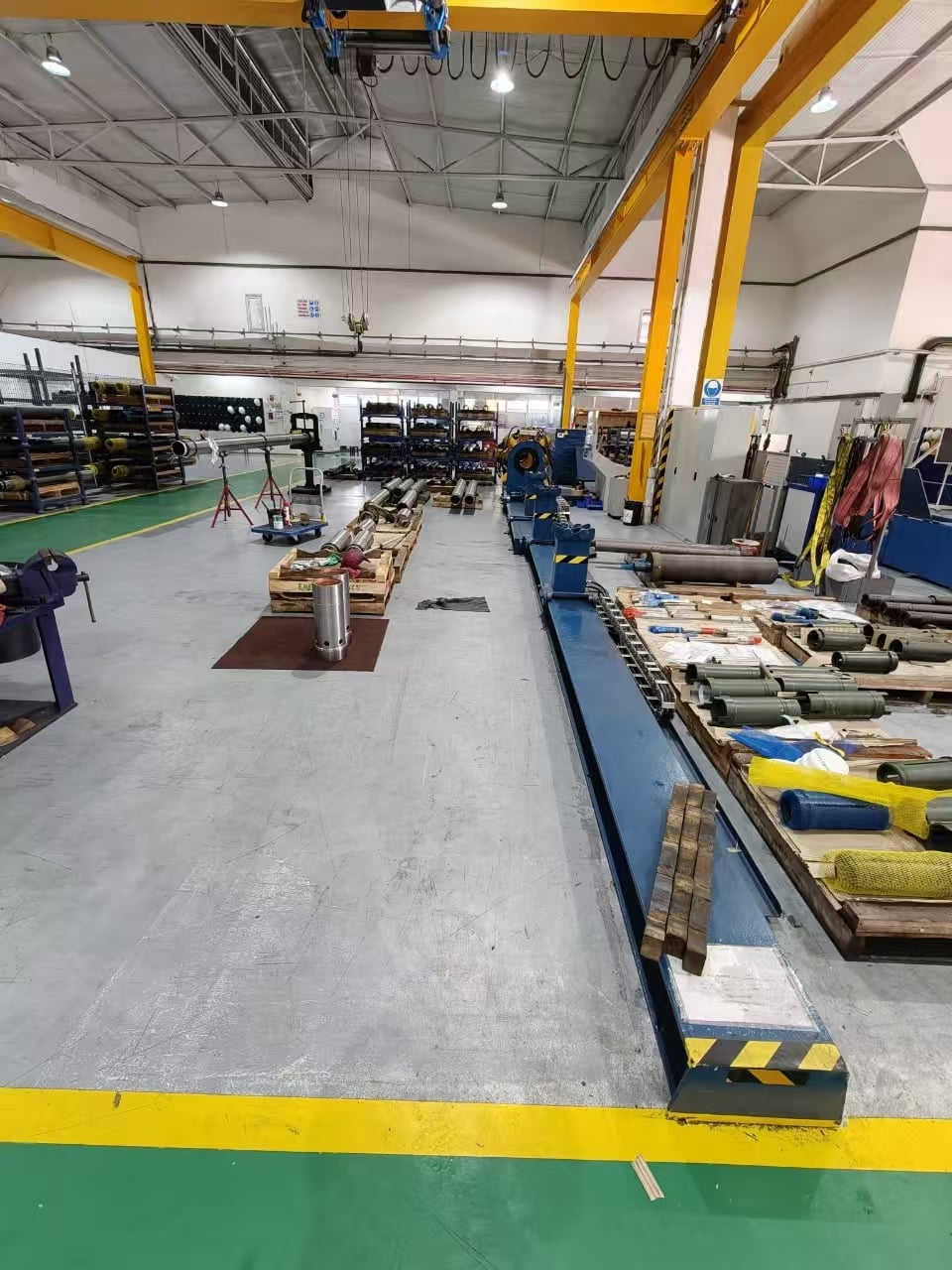
The service base: where the tool string is put together
The coiled tubing itself has no connections, but the tools at its end do. From the top, a typical tool string has a connector that grips the end of the tube, dual check valves that stop well fluid coming up the tube, a hydraulic disconnect that releases the tools on command, a circulating sub, often a jar and accelerator, and then the working end: a motor and mill, a jetting nozzle, a setting tool or a fishing tool. Each of those parts is joined to the next by a threaded connection.
Most of those joints are made up at the service company’s base before the string goes to the wellsite. The check valves, disconnect, circulating sub, jar and motor are assembled into sub-assemblies, torqued to the tool maker’s values, recorded, and broken out again when the string comes back. The connector itself goes on at the wellsite, because the tube has to be stabbed through the injector and stripper first; it is pull-tested and pressure-tested there, and again after any length of tube is cut off.
This matters more on coiled tubing than on most strings. The tube cannot be rotated, so a joint that loosens downhole cannot be retightened from surface, and motor torque, stalls and vibration all work on every joint in the string. That is why coiled tubing tool joints are torqued and also locked with set screws or anti-rotation features. The tests before each run are covered in coiled tubing downhole tools: the tests before every run, and the layout of a base in the downhole tool service centre guide.
The equipment a base needs follows from the tools it services. Small-diameter coiled tubing tools are made up to far lower torques than drill collars, usually in a vise with a calibrated torque wrench. Motors, jars and larger subs need a bench that holds both bodies and records the torque on every joint. A Galip hydraulic breakout unit covers that end of the range, from 2-3/4 in. OD and 2,000 ft-lb upward; tools smaller or lighter than that stay in the vise, and a base that services both keeps both.
Jars run on coiled tubing are tested for their firing load at the base as well. A drilling jar tester pulls and pushes the jar on a bench and records the load at which it fires, and the same jar types are discussed in the drilling and fishing jar guide.
When another option may be better
Five cases usually go to another method:
- A simple tool run in a near-vertical well: slickline or wireline sets a plug or runs a log faster and at lower cost, because there is no injector and no pressure stack of the same size to rig up.
- Heavy fishing or stuck pipe: jointed pipe on a workover rig or snubbing unit can pull and jar far harder, and can rotate.
- Milling that needs high torque: a motor on coiled tubing has a ceiling; jointed pipe rotated from surface does not have the same one.
- Replacing completion tubulars: pulling and rerunning tubing needs a workover rig or a snubbing or hydraulic workover unit.
- A base that only services small tools: if every tool string is small diameter and low torque, a vise, a calibrated torque wrench and a test stand cover the work, and a heavy make-up bench is not needed. The bench earns its place when motors, jars and heavier subs come through the same base.
Frequently asked questions
What is coiled tubing used for in oil and gas?
Coiled tubing is used for work inside existing wells: cleaning out sand and debris, lifting a well back into production with nitrogen, placing acid and chemical treatments, milling frac plugs and scale, setting and retrieving tools, logging, fishing and small cement jobs. It is chosen when the job needs fluid pumped while the tube is moving or the well must stay live.
How is coiled tubing different from jointed pipe?
Coiled tubing is one continuous tube on a reel, so it never stops to make or break a connection and can circulate the whole time it moves. Jointed pipe is screwed together one joint at a time on a rig. Jointed pipe can rotate and pull harder; coiled tubing trips faster and works on a live well without a rig.
What is a coiled tubing unit?
A coiled tubing unit is the surface equipment that runs the tube: the reel that stores it, the gooseneck that guides it, the injector head that pushes and pulls it, the stripper and BOP stack that keep the well sealed around it, plus a power pack, a control cabin and the pumps or nitrogen unit for the job.
Can coiled tubing rotate?
No. The tube is spooled on a reel and fed through an injector, so there is no way to turn it at surface. When a job needs rotation, for example milling a plug, a downhole motor is placed in the tool string and fluid pumped through the tube drives it. The motor’s reactive torque is carried back up the tube.
How far can coiled tubing reach in a horizontal well?
There is no single figure. In a horizontal section the tube is pushed along the low side of the hole, friction builds, and eventually the tube buckles into a helix and locks up. Reach depends on tube size, well path, fluids and friction, so each long-reach job is modelled first, and tractors or vibration tools extend it.
What is the difference between wireline and coiled tubing?
Wireline is a cable, plain slickline or electric line, that lowers tools into a well on their own weight. It cannot pump fluid or push. Coiled tubing is a steel tube driven in by an injector, so it can circulate, push tools along a horizontal section and pull harder. Wireline rigs up faster and costs less.
Can coiled tubing work on a live well?
Yes. The tube passes through a stripper that seals around it while it moves, and a coiled tubing BOP below can seal, hold or cut it. That lets work go ahead with the well under pressure, which is often the reason coiled tubing is chosen over a workover rig that would kill the well first.
How long does a coiled tubing string last?
A string is retired on its condition, not its age. Every bend over the reel and gooseneck uses up fatigue life, faster when the tube is under pressure, and service companies track it section by section in software. Strings are also retired early for corrosion, wall loss, kinks or crush damage.
Planning a coiled tubing job: the checklist
- The job is defined: cleanout, lift, treatment, milling, conveyance or fishing, with the target depth written down.
- Coiled tubing is the right route against wireline and jointed pipe for this job, and the reason is recorded.
- A force and reach model has been run for deviated or horizontal sections, with lockup depth compared with target depth.
- Tube size and the selected string’s fatigue history are checked, and the string has life left for this job.
- The pressure control stack is rated for the well, function-tested and pressure-tested before the tube enters the well: a low test at 250 to 350 psi and a high test to the rated working pressure, or the maximum anticipated surface pressure plus 500 psi where that is approved.
- The tool string is listed top to bottom, with each joint’s make-up torque from the tool maker.
- Every tool joint below the connector has been made up to its torque and locked at the base, and the record travels with the string.
- The check valves, disconnect and jar have been function-tested at the base; the connector is pull-tested and the tool string pressure-tested at the wellsite before running in.
- Fluids, nitrogen and returns handling are planned, including where the returned solids go.
- After the job, the string comes back to the base to be broken out, inspected and logged before its next run.
Expert Consultation
Need more information on optimizing your equipment performance? Our engineering team is available for technical consultations.
Request a Quote
Tell us about your requirements and our engineering team will prepare a detailed proposal with specifications, pricing, and delivery timeline.
