
Drilling Jar Trip Load: How a Drilling Jar and a Fishing Jar Fire Differently
Drilling jars and fishing jars are easy to confuse because the equipment can look similar from the outside. In the field, though, they do different jobs and should not be evaluated with the same test assumptions. This guide compares drilling jar and fishing jar function, where each tool is used, and what a workshop test…
Drilling jars and fishing jars are easy to confuse because the equipment can look similar from the outside. In the field, though, they do different jobs and should not be evaluated with the same test assumptions.
This guide compares drilling jar and fishing jar function, where each tool is used, and what a workshop test procedure should verify before the jar goes back into service. For the product line and equipment specifications, see our drilling jar tester range and the test rigs we build for this duty. Before bench testing, the jar’s threaded connections are made up to the governing torque on a hydraulic bucking unit, so the trip-load test is run on a tool whose connections are already proven.
A drilling jar trip load is the pull the tool has to see at its own position before the latch releases, not the number on the weight indicator. Between the two sits the buoyed weight of everything above the jar plus hole drag, so the surface pull that fires a jar set at 45,000 lb is often close to double that figure.
Drilling jars and fishing jars are easy to confuse because the tools look similar from the outside, but they sit in different strings and their trip loads are set for different reasons. This guide covers how each one fires, how to work out the surface pull that will trip it, and what to check when the pull reaches the number and nothing happens.
Where a Drilling Jar Sits and Where a Fishing Jar Sits
Drilling is the core activity in oil and gas exploration, involving the penetration of the Earth’s subsurface to extract oil, gas, or geothermal energy. In this process, various challenges can arise, such as stuck drill pipes or lost tools in the wellbore. This is where fishing operations come into play. Fishing is the term used when retrieving lost or stuck tools from the well, a important task to ensure continued drilling without costly interruptions.
Working Out the Surface Pull That Will Trip the Jar
The set point stamped on a jar is measured across the tool. What the driller sees at the hook is that figure plus everything the string adds between the jar and the rig floor. Work it out before the string goes in the hole and write it on the tour sheet, otherwise the crew is guessing whether the tool has fired.
- Take the buoyancy factor for the mud in the hole: BF = 1 minus (mud weight in ppg divided by 65.5). Ten pound mud gives 0.847.
- Add up the air weight of everything above the jar. For 2,500 ft of 5 in drill pipe at 19.5 lb/ft that is 48,750 lb.
- Apply the buoyancy factor: 48,750 x 0.847 = 41,300 lb.
- Add the up-trip setting of the jar. A tool set at 45,000 lb gives 41,300 + 45,000 = 86,300 lb at the hook.
- Add hole drag on top. In a deviated hole or a long horizontal bore that can be another 10 to 30 per cent. Any pull below the total will never fire the tool, however long the crew holds it.
| Symptom at surface | Most likely cause | Check before pulling the string |
|---|---|---|
| Hook load passes the calculated figure, no impact felt | Overpull absorbed by drag, so the jar never saw its trip load | Recalculate using measured pick-up and slack-off weights rather than assumed drag |
| Jar fires well below the calculated figure | Latch or detent wear, or the tool was reset to the wrong value after service | Compare the release value on the last bench certificate against the setting in the tool record |
| Long, uneven delay between pull and impact | Cold or contaminated fluid in the metering section of a hydraulic jar | Note hole temperature. The delay on a hydraulic jar shortens as the tool warms |
| Impact felt but the string does not move | Trip load correct, impact energy too low for the stuck condition | Reconsider jar placement and the collar or accelerator weight above it |
| Repeat blows getting weaker | Free stroke is not resetting fully between firings | Confirm the set-down travel available. A tight hole above the jar stops it re-cocking |
The difference between the two tools comes out of that arithmetic. A drilling jar is carried in the string from the start and is set to a value the crew can reach with normal overpull, because it may have to fire many times over one bit run. A fishing jar is picked after the string is already stuck — the situation a downhole tool recovery operation is built around — so the set point is chosen against the known free weight of the fishing assembly and the pull the rig can safely apply. Same physics, different starting information, and that is why the two are not interchangeable on paper even when the outside dimensions match.
Drilling Jar and Fishing Jar Types: Hydraulic, Mechanical and Hybrid
Jars are tools used to deliver a jarring action to a drill string or fishing tool when it becomes stuck. They operate by storing energy and releasing it in a controlled impact, helping to free the obstruction. There are various types of jars used in drilling, including:
- Hydraulic jars: Operate based on hydraulic pressure build-up before releasing the stored energy.
- Mechanical jars: Use mechanical components to trigger the impact force.
- Hybrid jars: Combine both hydraulic and mechanical mechanisms for optimized performance.
How a Trip Load Is Set and How It Is Proved
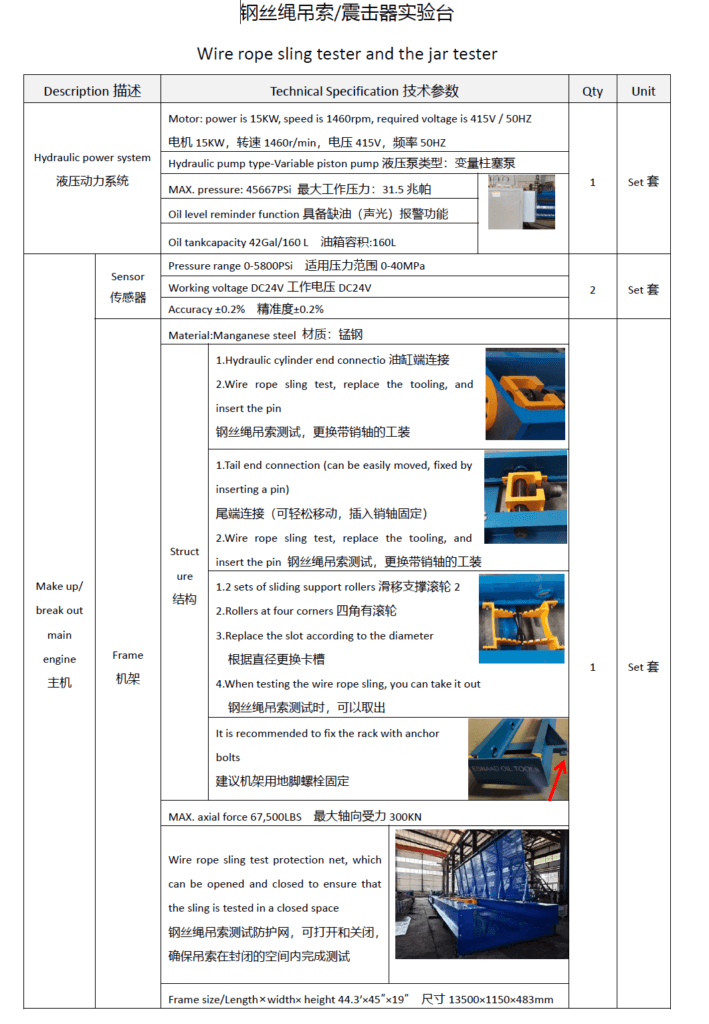
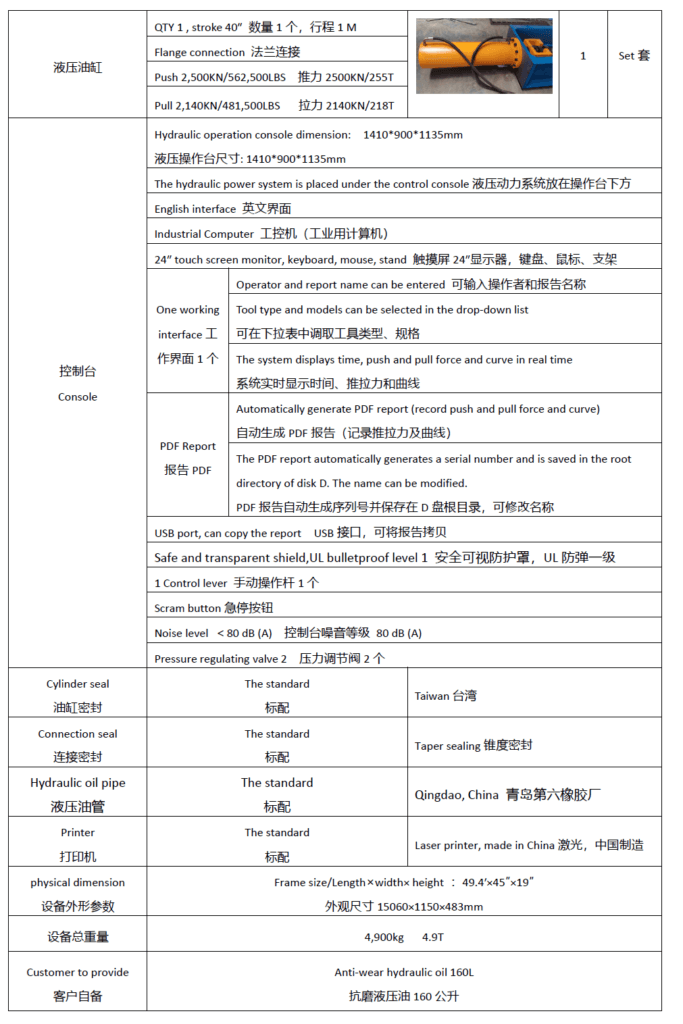
A drilling jar tester plays an essential role in verifying the performance of jars before they are deployed in the field. Jars can be delicate tools, and without proper testing, there’s a risk they may not fire correctly when needed, leading to costly delays and operational risks. A jar tester simulates the conditions a jar will face in the field, ensuring it functions as expected.
Why a Trip Load Has to Be Proved Before It Is Trusted
Jars are exposed to extreme forces in drilling operations, and any malfunction can lead to a stuck drill string or tool. Testing helps identify any potential failures such as misfires or inconsistent trigger force before deployment. It ensures the tool will work effectively under field conditions, minimizing downtime and enhancing safety.
Most of those failures are visible before the tool ever sees a load, which is why the inspection points that come before any load is applied are worth running first.
What Gets Measured During a Trip Load Check
A jar tester typically consists of several key components that make it a reliable tool for testing the functionality of jars. These components include:
- Load cells: Used to measure the force generated during the jar test.
- Hydraulic pumps: Apply the necessary force to simulate real drilling conditions.
- Sensors: Measure key parameters like force, stroke length, and trigger point to evaluate jar performance.
Reading the Load Trace: Manual Gauge Versus Logged Curve
There are two main types of jar testers available in the market:
- Manual jar testers: Operate via manual controls and require an operator to set and measure the performance metrics.
- Automated jar testers: Feature programmable systems that automatically measure and record test results, reducing the margin of human error.
Why a Logged Curve Catches Faults a Gauge Misses
Automated testers offer a higher level of precision and efficiency compared to manual testers. They allow for real-time data analysis and are often preferred in large-scale operations where repeatability and accuracy are crucial.
Setting and Confirming the Trip Load Step by Step
Performing a jar test requires a systematic approach to ensure accurate results. Here is a step-by-step process:
The surface figure only means something if the release value it is compared against was measured rather than assumed, and that measurement comes from the bench sequence that records the release value cycle by cycle.
- Mount the jar on the tester platform.
- Apply a load using hydraulic pressure.
- Simulate a trigger event to replicate real-world jarring conditions.
- Record the data on force, stroke length, and impact load.
- Analyze the results to determine if the jar meets operational standards.
Safety Precautions During Testing
Testing jars can involve high forces, making safety a priority. It’s important to ensure that all personnel are trained and wear protective gear during the test. Keeping a safe distance from the testing equipment and ensuring that the jar tester is regularly maintained are also essential safety practices.
Trip Load, Stroke and Delay: The Three Numbers That Matter
Several performance metrics are evaluated during jar testing:
- Impact load: The force generated by the jar during the test.
- Trigger force: The amount of force required to activate the jar.
- Stroke length: The distance the jar moves when delivering the impact.
These metrics help determine whether the jar is functioning within acceptable operational parameters.
Those three numbers only stay meaningful if the tool is stripped and rebuilt the same way each time, which is the point of the controlled make and break workflow a service centre runs around every downhole tool.
Where Trip Load Verification Happens: Onshore and Offshore
Jar testers are used in both onshore and offshore drilling operations. Onshore applications often involve easier access to equipment, while offshore operations require specialized testing due to the remote and harsh environments.
Where a workshop needs to prove those values in house rather than send tools away, the bench frames and instrumentation we build for that duty cover both tension and compression cycles with a logged load curve.
What Verifying the Trip Load Prevents
Using jar testers in oilfield operations offers several advantages:
- Operational safety: Ensures that jars will function correctly in the field, reducing the risk of accidents.
- Reduced downtime: Detects potential issues before they become operational problems, avoiding costly delays in drilling or fishing.
Faults That Show Up as a Wrong Trip Load
Some of the typical problems that a jar tester can detect include:
- Misfires in jars: Failure to trigger at the correct force level.
- Inconsistent jar activation: Variability in performance, which can lead to unreliable operation in the field.
Digital Load Logging and What It Adds
Advances in technology have led to the development of digital jar testers that provide more precise measurements and real-time data analysis. These innovations are making jar testing more accurate and efficient.
Keeping the Measurement Honest: Calibration and Routine Checks
To keep jar testers functioning correctly, it’s important to adhere to regular maintenance routines. This includes:
- Routine calibration: Ensures the accuracy of the sensors and load cells.
- Inspection of hydraulic systems: Checks for leaks or wear in hydraulic pumps.
- Software updates: Keeps automated systems running smoothly with the latest technology.
Standards That Govern Trip Load Records
The oil and gas industry is heavily regulated, and jar testers must comply with standards set by organizations like the American Petroleum Institute (API). These standards ensure that testing equipment meets safety and performance criteria.
Matching Verification Capacity to the Jars You Run
When choosing a jar tester, consider factors such as:
- The environment where it will be used (onshore vs. offshore).
- The type of drilling operation (exploratory or production).
- Budget constraints and the long-term value of the tester.
Where Trip Load Verification Is Heading
The future of jar testing is likely to see more automation and AI integration. Predictive maintenance systems could also become more prevalent, allowing operators to foresee potential failures before they occur.
FAQs
- What is a jar in drilling?
A jar is a tool used to deliver a controlled impact to free stuck drill pipes or fishing tools. - Why is jar testing necessary?
Testing ensures the jar will function correctly in the field, reducing the risk of downtime or accidents. - How does a drilling jar tester work?
A jar tester simulates field conditions to measure the performance of the jar in terms of impact force, stroke length, and trigger point. - What are the different types of jar testers?
There are manual and automated jar testers, with the latter providing more precision and efficiency. - What safety precautions should be taken during jar testing?
Ensure all personnel are trained, wear protective gear, and maintain a safe distance from the equipment. - What are common problems detected by jar testers?
Misfires and inconsistent activation are typical issues that can be detected through jar testing.
Conclusion
The drilling and fishing jar tester is a core tool in oil and gas operations, ensuring that jars work correctly in the field and reducing operational risks. With advances in technology, jar testing is becoming more precise and efficient, making it an essential part of modern drilling operations.
Expert Consultation
Need more information on optimizing your equipment performance? Our engineering team is available for technical consultations.
Request a Quote
Tell us about your requirements and our engineering team will prepare a detailed proposal with specifications, pricing, and delivery timeline.
