
Packer Redress: The 6 Steps Between Retrieval and Reuse
Elements are never reused, torque values come from the manual, and the post-redress test proves the rebuild — not the rating. The full discipline, step by step.
Packer redress is the controlled rebuild of a retrievable packer between runs: teardown, inspection of mandrel, slips and cones, replacement of every elastomer element and seal from the manufacturer’s redress kit, reassembly to the manual, and a function and pressure test before the tool is offered for the next well. Elements are never reused; records make the redress sellable.
At a glance
| What redress covers | Retrievable packers and similar sealing tools between runs: strip, inspect, re-kit, rebuild, test, document |
| What it does not cover | Permanent packers, which are drilled or milled out rather than recovered and rebuilt — a retrieval problem, not a service one |
| Whose rules govern | The packer manufacturer’s service manual for that model and revision. Design validation to ISO 14310 / API 11D1 belongs to the maker; the shop’s job is to preserve it, not re-prove it |
| The non-negotiables | Genuine redress kits, in-date elastomers matched to the well fluid and temperature, controlled make-up of every threaded joint, and a post-redress test with a record |
| Decision this page supports | Auditing a redress vendor, or standing up a disciplined packer service line in your own base |
What a packer goes through, and why redress is not optional
A production or service packer earns its living by being crushed on purpose: the setting mechanism drives cones under slips to bite the casing, and compresses a rubber element stack until it extrudes into sealing contact with the casing wall. Then it holds differential pressure, temperature swings and well chemistry for the life of the run. Retrieval reverses the violence — shear values let go, slips retract, the element relaxes as far as its set has left it able to.
Nothing about that cycle is gentle to elastomers. An element that has been set once is a used element regardless of how it looks: compression set, extrusion damage and fluid attack are cumulative and mostly invisible. That is why the first law of redress is that sealing elements and O-rings are replaced every time, from the manufacturer’s kit, without a condition debate. The metalwork is judged; the rubber is changed. A vendor who offers to “inspect and reuse” an element stack is quoting a cheaper job by making it not a redress.
The six steps of a disciplined redress
| Step | What to confirm | Action when it does not match |
|---|---|---|
| 1. Identity and history | Serial number legible and matching the file; model, size and revision confirmed against the manual before a wrench moves | No file, no redress — a packer with no history is inspected as an unknown, at unknown-tool pricing |
| 2. Controlled teardown | Threaded body joints broken on proper equipment with the tool held safely; setting energy confirmed released before disassembly | A joint that will not break cleanly goes to a controlled make/break station, not to heat and a longer cheater |
| 3. Metalwork inspection | Mandrel seal bores and threads, slips, cones, gauge rings, shear components — measured and judged against the manual’s limits | Cracked or worn-past-limit parts replaced from the maker’s list; seal bores with damage go to machining, not to hope |
| 4. Re-kit | Genuine redress kit for the model and revision; elastomer compound matched to well temperature and fluid; date codes in shelf life, storage history sane | Wrong compound or out-of-date rubber stops the job — an element that fails downhole costs a workover |
| 5. Reassembly | The manual’s sequence, lubricants and torque values; every threaded connection made up to a controlled, recorded figure; new shear components at the specified rating | Guessed torque on a packer body is deferred failure — the values are in the manual because they matter |
| 6. Test and certify | Function checks and the pressure test the manufacturer specifies for post-service verification, on calibrated equipment, with the record filed under the serial | No test, no certificate; no calibration reference, no defensible certificate |
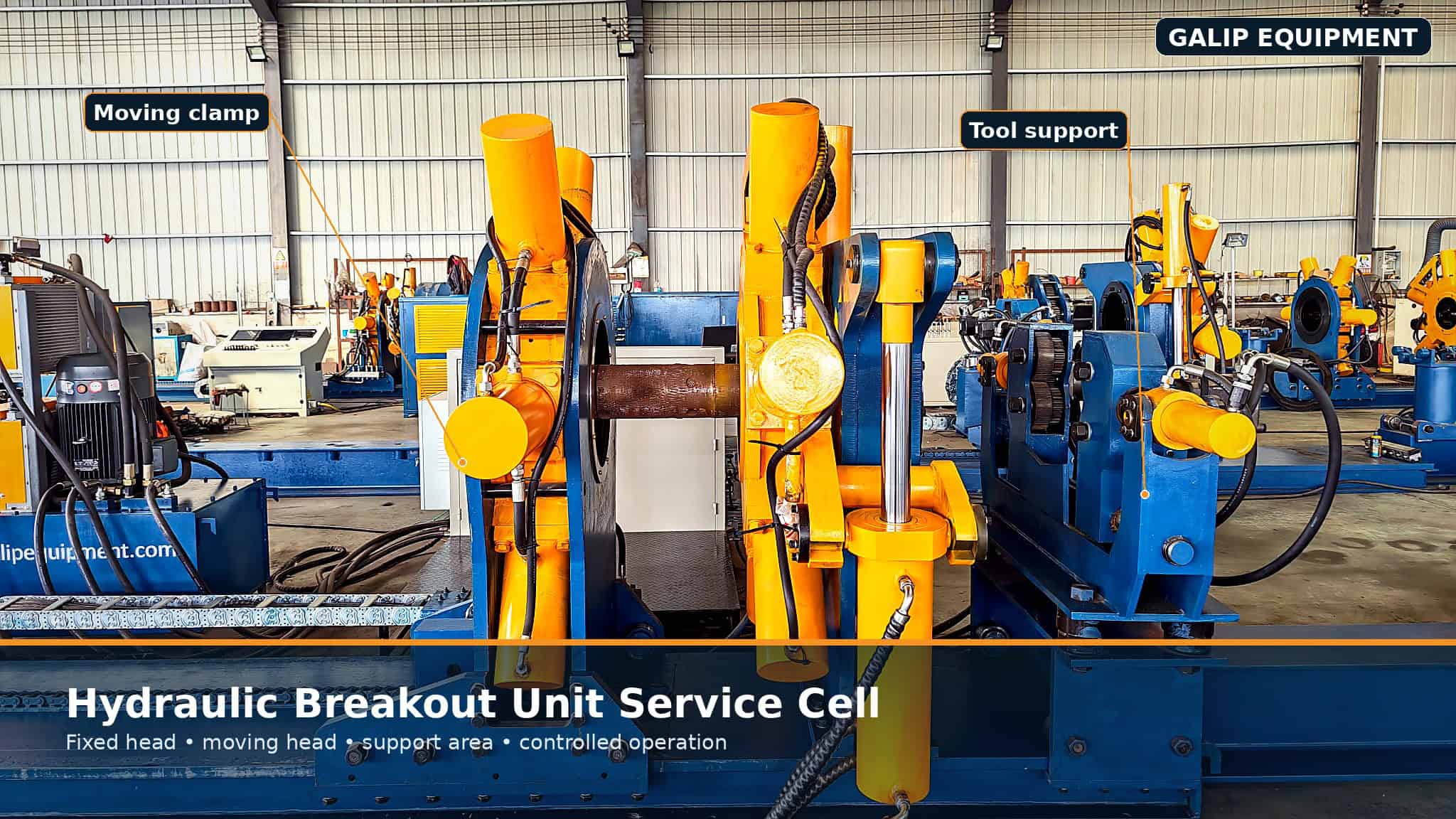
Step 2 deserves its own sentence, because it is where tools and people get hurt. Packer bodies are threaded assemblies designed to be broken out with proper reaction — the argument for a dedicated completion-tool make/break cell rather than chain tongs and improvisation. And step 3 quietly feeds the machine shop: mandrel seal bores that are scored beyond polishing are exactly the bores a honing station exists to recover, to the maker’s dimensions and no further.
Elastomers: where redress jobs are won and lost
The element stack is the packer. Everything else is the delivery system, and the redress decisions that matter most are rubber decisions.
| Factor | Effect to consider | What the team should use for a decision |
|---|---|---|
| Compound versus well conditions | Elastomer families tolerate different temperatures and fluids; a compound happy in one well hardens or swells in another | The manufacturer’s compound options for that model against the well’s temperature, fluids and gas exposure — chosen per job, not per habit |
| Shelf life and storage | Rubber ages in the box: heat, light, ozone and time all degrade an element that has never seen a well | Date codes inside the stated shelf life, storage cool and dark, and kits rotated first-in first-out with the batch recorded per job |
| Genuine kits versus lookalikes | An element’s dimensions, hardness and compound are part of the packer’s validated design; a lookalike changes the design | The maker’s part numbers on the kit and the packing slip in the job file — and a written rule that substitutes require engineering approval, not availability |
| One set, one life | Compression set and extrusion damage are cumulative and largely invisible after retrieval | Elements and seals replaced every redress, with the old stack photographed for the file when its condition tells a story about the well |
What the test at the end actually proves
A redress closes with verification, and it is worth being precise about what is being verified. The pressure ratings and gas-tightness of a packer design are established once, by the manufacturer, under ISO 14310 / API 11D1 validation testing — grades that describe how the design was proven, up to gas-tight service. A service shop does not re-run design validation, and should distrust any vendor who implies their bench test re-certifies a rating.
What the shop’s test proves is narrower and essential: this rebuild works. Setting mechanism functions at the intended inputs, holds where it should hold, releases where it should release, and the assembled seals hold the manufacturer’s specified post-service test pressure without decay. That test stands on the same three legs as every other certificate the base issues: specified procedure, calibrated instruments, and a filed record — the calibration chain doing its quiet work behind one more document. A packer that cannot be tested after redress, because the equipment is not there, is a packer being returned to service on faith.
Retrievable is a promise, not a guarantee
There is no honest way to write about packer service without the failure case. Retrievable packers sometimes refuse: scale or debris packs the fish, a release mechanism damaged in service will not shift, or the element bonds to casing after a long hot run. At that point the problem changes departments — from the service shop to the fishing and recovery conversation, with its own economics and its own tools. Two redress-side habits shrink the odds: release mechanisms inspected and rebuilt to spec every time rather than “they looked fine”, and shear components replaced with the rated parts the manual names — because a shear value is a promise made to a future crew trying to let go of the well.
Auditing a redress vendor in one visit
Walk the shop against six questions. Where is the tool’s file, and does it follow the serial from receiving to release? Where do redress kits live, and can anyone show date codes and batch traceability? What breaks the body joints, and what records the make-up torque on reassembly? Where are seal bores measured, and where do damaged ones go? What tests the finished tool, and when was that equipment last calibrated? And what happened the last time a packer failed after their redress — because the shops worth using can answer that one without flinching. The pattern is the same service-centre discipline that governs jars and motors: one serial, one file, no verbal history.
Frequently asked questions
What is packer redress?
The controlled rebuild of a retrievable packer between runs: teardown, inspection of the metalwork against the manufacturer’s limits, replacement of all elastomer elements and seals from the genuine redress kit, reassembly to the manual’s sequence and torques, and a function and pressure test with a filed record.
Can packer elements be reused if they look good?
No. Setting compresses and extrudes the element deliberately, and the damage — compression set, extrusion nicks, fluid attack — is cumulative and mostly invisible. Elements and seals are replaced at every redress from the manufacturer’s kit. A vendor offering to reuse a stack is quoting a cheaper job by not doing a redress.
What is in a packer redress kit?
The manufacturer’s replacement set for that model and revision: the element stack, O-rings and seals, back-up rings, and commonly the shear components and small expendables the manual calls for. The part numbers, compound choices and batch date codes belong in the job file with the tool’s serial.
What do ISO 14310 and API 11D1 mean for a service shop?
They are design validation standards: the manufacturer proves the packer design to a validation grade, up to gas-tight service. A service shop preserves that design by using genuine parts and the manual’s procedures — its post-redress test proves the rebuild functions and seals, not a new rating. Distrust anyone claiming a bench re-certifies ratings.
What should the post-redress test include?
Whatever the manufacturer specifies for post-service verification — typically function checks of the setting and release mechanisms and a hydrostatic hold on the assembled seals — on calibrated equipment, recorded against the tool’s serial with the calibration reference. No test, or a test without the record, returns the tool to service on faith.
Why do shear values matter so much in redress?
Shear components are calibrated promises: they let the packer set at the intended load and, critically, let a future crew release it. Reassembling with unrated or leftover shear parts changes both numbers invisibly. The manual’s rated components, replaced every redress and recorded, are what keep a retrievable packer retrievable.
When does a stuck retrievable packer become a fishing job?
When the release mechanism will not shift from surface — through damage, debris, scale or a seized element — the packer stops being a service item and becomes a fish, with milling or retrieval economics of its own. Redress-side discipline on release mechanisms and rated shear parts is the cheapest insurance against that day.
Equip the redress line, not just the bench
A packer service line is a chain of stations — controlled make/break for the body joints, measurement for the metalwork, machining recovery for seal bores, and a calibrated test station to close each job. Galip builds the workshop equipment behind that chain and has been asked to quote packer make/break stands alongside its test benches; the specification starts from your tool list, not a catalogue. Send: packer types, sizes and body connection range · maximum make/break torque expected · test pressures your manuals specify · report format your customers audit. Write to the contact page or sales@galipequipment.com and the reply will state approved figures rather than assumptions.
The redress checklist
- Serial confirmed, file open, model and revision matched to the manual before teardown.
- Setting energy confirmed released; body joints broken on controlled equipment, never improvised.
- Mandrel seal bores, slips, cones and shear components measured against the manual’s limits and dispositioned in writing.
- Damaged seal bores routed to machining recovery at the maker’s dimensions — or the part replaced.
- Genuine redress kit for the model and revision; compound matched to the well; date codes in shelf life; batch recorded.
- Elements and seals replaced without a condition debate — every redress, every time.
- Reassembly to the manual’s sequence and torque values, each make-up recorded.
- New rated shear components fitted and logged; release mechanism rebuilt to spec, not passed on appearance.
- Post-redress function and pressure test per the manufacturer, on calibrated equipment, record filed under the serial.
- The whole file — inspection, kit batches, torques, test — retrievable by serial when the customer’s auditor asks.
Expert Consultation
Need more information on optimizing your equipment performance? Our engineering team is available for technical consultations.
Request a Quote
Tell us about your requirements and our engineering team will prepare a detailed proposal with specifications, pricing, and delivery timeline.
