
HDD Mud Motor Sizing: Flow, Bit Size and Rock Type
HDD mud motor sizing starts with your pump output, not the motor catalogue. How to match flow rate, bit size and lobe configuration to the rock you are actually drilling.
A contractor buys a mud motor by diameter, puts it behind a pump that cannot feed it, and concludes that mud motors do not work in his ground. The motor was fine. It never reached the flow rate where it produces the torque on its data sheet.
How do you size a mud motor for HDD?
HDD mud motor sizing starts with the pump, not the motor. Every motor has a flow range it must operate inside, a bit size range it can steer, and a lobe configuration suited to the rock. Choose the motor your pump can actually feed, then match bit size and lobe count to the formation you are drilling.
At a glance
| First constraint | Mud pump output in gpm — it decides which motors are even possible |
| Second constraint | Bore diameter and the bit size range the motor can steer |
| Third constraint | Rock type, which drives lobe configuration and bit choice |
| Example flow range | A 4¾ in motor typically runs 150–250 gpm |
| Example bit range | That same motor suits roughly 6 to 7⅞ in bits, commonly 6½–6¾ in |
| Reamer rule of thumb | The smaller of 1.5× product pipe OD, or pipe OD plus 12 in |
Start with the pump, not the catalogue
A positive displacement motor converts fluid flow into rotation. Below its minimum flow it turns slowly and produces little torque. Above its maximum, the extra flow does not become useful work; it accelerates wear on the stator elastomer.
So the honest first question is not what size hole you are drilling. It is how many gallons per minute your pump delivers at the pressure the job needs. A 4¾ in motor with a 150 to 250 gpm range behind a pump that manages 120 gpm will underperform every time, and no amount of weight on bit will fix it.
This is the single most common error in HDD mud motor sizing, and it is invisible in the specification sheet because the sheet describes the motor in isolation. Pair the two numbers before anything else is decided.
| Factor | Effect to consider | What the team should use for a decision |
|---|---|---|
| Pump output in gpm | Sets which motors can reach rated torque at all | Measured output at working pressure, not the pump’s badge rating |
| Motor flow range | Below range gives low torque; above range shortens stator life | Choose a motor whose range sits inside your pump’s usable output |
| Bit size range | Too large and the annulus is tight, steering suffers | The manufacturer’s stated bit OD range for that motor |
| Rock hardness | Drives both bit type and lobe configuration | Core data or previous bores in the same ground, not assumption |
| Product pipe OD | Sets final reamed diameter and therefore the whole pass sequence | Confirm before pilot bore sizing, not after |
| Bend radius required | Motor length affects how tight a bend you can steer | Compare motor length against the planned bore profile |
Bit size and why the annulus matters
Every motor has a recommended bit outside diameter range. For a 4¾ in motor that is roughly 6 to 7⅞ in, and most crews settle around 6½ to 6¾ in. The reason is not just cutting: the motor needs annular space around it to sit properly in the hole and to steer.
Run a bit at the top of the range and the annulus is generous, returns are easy, but the motor has more room to wander and toolface control gets softer. Run a bit at the bottom and steering sharpens while the annulus tightens, which raises the risk of packing off in soft or sticky ground. The common choice sits deliberately between the two.
Lobe configuration follows the rock
The lobe count decides the trade between speed and torque. A low lobe count motor turns fast and produces less torque. A high lobe count motor turns slowly and produces more.
That choice follows the bit, and the bit follows the rock. Insert bits used in hard formations do not tolerate high rotational speed and need weight to penetrate, so they pair with a high lobe, slow-speed, high-torque motor. Diamond and impregnated bits work the opposite way, cutting best at speed with less weight, so they pair with a low lobe, high-speed configuration.
Getting this backwards is expensive and quiet. A high-speed motor behind an insert bit destroys the cutting structure without drilling much. For how bit selection is codified, see the IADC code for tricone bits, which describes exactly the cutting structure and bearing choices that have to line up with the motor.
| Formation and bit | Motor characteristic needed | Why |
|---|---|---|
| Hard rock, insert bit | High lobe count, slow speed, high torque | Inserts need weight, not rpm, and degrade at speed |
| Hard rock, diamond or impregnated bit | Low lobe count, high speed, lower torque | These bits cut by abrasion and want rotational speed |
| Mixed or medium formation | Mid-range lobe configuration | Compromise that tolerates changing ground |
| Soft soil and clay | Motor may not be required at all | Conventional steering often drills it faster and cheaper |
| Cobble and boulders | Torque and durability over speed | Impact loading punishes high-speed configurations |
Sizing the reamer and the pass sequence
The pilot bore is only the first decision. Final reamed diameter is normally taken as the smaller of 1.5 times the product pipe outside diameter, or the pipe diameter plus 12 inches.
That allowance exists for three reasons at once: an annular void so drilling fluid and cuttings can return, reduced friction during pullback, and room for the pipe to follow its bend radius without being forced. Undersize the reamed hole and pullback loads climb, sometimes to the point of damaging the product pipe.
Whether that diameter is reached in one pass or several depends on ground conditions and rig capacity, and it feeds back into HDD mud motor sizing because each pass has its own flow and torque demand.
When a mud motor is not the right answer
Motors are not free, and they are not always the faster route.
| Situation | Why a motor may not fit | What to look at instead |
|---|---|---|
| Soft soils, clay, sand | Conventional jetting and steering often drills faster | Rig capability and fluid programme |
| Pump output well below motor range | The motor cannot reach useful torque | Pump upgrade, or a smaller motor that fits the flow available |
| Very tight bend radius | Motor length limits steerability | Bore profile, or a shorter motor configuration |
| Short bores, cost sensitive | Mobilisation and wear may exceed the time saved | Honest cost per metre comparison |
| No rock, but slow progress | Usually fluid or steering, not power | Mud programme and bit choice before adding a motor |
Checking a motor before and after the bore
| Check | What to confirm | Action when it does not match |
|---|---|---|
| Flow range against pump | Pump delivers inside the motor’s stated range at working pressure | Change motor size rather than pushing the pump |
| Bit OD inside the motor’s range | Manufacturer’s stated range, not what is on the truck | Source the correct bit before mobilising |
| Lobe configuration versus bit type | High lobe with inserts, low lobe with diamond | Swap whichever is easier to change |
| Rotor and stator condition | Turns freely, seals, no chunking visible | Bench it before the bore, not after a failure |
| Bearing and driveshaft play | End play and vibration within limits | Service before the run |
| Post-bore inspection | Stator condition, bit wear, any washing | Record it; the next sizing decision depends on it |
The fourth row deserves emphasis because it is where bench testing earns its keep. A power section that has taken heat or run outside its flow range will show it, and the fit it was assembled to is temperature dependent, which is covered in rotor stator fit. For how a bench is set up and run, see the mud motor test bench guide.
A worked sizing example
Take a crew with a pump measured at 210 gpm at working pressure, installing 12 inch product pipe through a sandstone section with occasional harder stringers, on a profile with a moderate bend radius.
The pump figure comes first and it immediately narrows the field. A motor with a 150 to 250 gpm window fits comfortably, sitting mid-range rather than at either extreme, which leaves headroom when pressure climbs. A larger motor demanding 300 gpm is off the table regardless of how well it would suit the rock.
Sandstone with hard stringers points at an insert bit, which in turn points at a higher lobe count for slow speed and torque. Bit size lands inside the motor’s stated range, around 6½ to 6¾ inches for a 4¾ inch motor, giving a workable annulus. Final reamed diameter follows the product pipe: 12 inch pipe at 1.5 times is 18 inches, and pipe plus 12 inches is 24 inches, so the smaller figure of 18 inches governs.
Change the pump to 120 gpm and none of the rest survives. That is the point of doing HDD mud motor sizing in this order rather than starting from the hole.
What the motor tells you when it comes back
The bore is also a test. A motor returned from the ground carries evidence about whether the sizing was right, and reading it costs nothing beyond the time to look.
| Observation | Possible contributing factors | What to verify first |
|---|---|---|
| Stator chunked or torn | Flow above the motor’s range, repeated stalling, or heat | Actual pump output during the bore, and stall count |
| Bit worn flat, motor sound | Cutting structure too soft for the rock met | Bit type against the formation actually drilled |
| Slow progress, everything looks fine | Flow below the motor’s range, so torque never arrived | Pump output at working pressure, not badge rating |
| Poor steering control | Bit near the top of the OD range, loose annulus | Bit size against the motor’s stated window |
| Packing off in soft ground | Bit near the bottom of the range, tight annulus | Bit size and the fluid programme together |
| Bearing play after a short bore | Load or vibration beyond design, often from stalling | Whether the motor was worked outside its window |
The first and third rows describe opposite problems with the same root: the pump and the motor were never matched. One shows up as damage, the other as a slow week nobody can explain.
Proof and documentation
For an HDD contractor the useful record is short: pump output achieved, motor model and flow range, bit size and type, formation drilled, metres per hour, and the condition of the motor and bit afterwards. Six fields. Across a season they turn HDD mud motor sizing from a guess into a pattern.
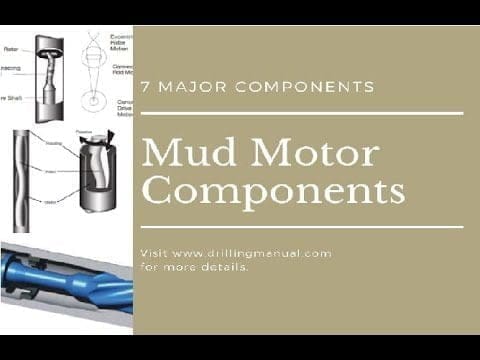
Galip supplies motors and the related downhole hardware for trenchless work. See drilling motors for the range, used HDD machines for rig capacity, sonde housings for the locating side, and the HDD tooling service guide for the habits that keep tooling alive. Component detail is in mud motor components. General guidance is published by trade sources such as Trenchless Technology.
Frequently asked questions about HDD mud motor sizing
What flow rate does a mud motor need?
It depends on the motor. A 4¾ in motor commonly runs 150 to 250 gpm. The number that matters is whether your pump delivers inside that window at working pressure, because below it the motor never reaches rated torque.
Can I run a bigger bit to speed things up?
Only within the motor’s stated bit OD range. Beyond it the annulus and steering suffer, and the motor is loaded outside its design. A 4¾ in motor generally suits 6 to 7⅞ in, with most work sitting near 6½ to 6¾ in.
How many lobes should the motor have?
Match it to the bit. Insert bits in hard rock want a high lobe count for slow speed and high torque. Diamond and impregnated bits want a low lobe count for speed. The rock chooses the bit, and the bit chooses the motor.
How big should the reamed hole be?
Usually the smaller of 1.5 times the product pipe OD, or the pipe OD plus 12 inches. That allowance gives fluid and cuttings a return path, lowers pullback friction, and lets the pipe follow its bend radius.
Do I need a motor for soft ground?
Often not. In clays and sands conventional steering and a sound fluid programme usually drill faster and cheaper. Motors earn their place in rock and in ground where steering control is otherwise poor.
Why did my motor stall?
Most often too much weight on bit for the torque available, or flow below the motor’s range. Check the pump output first, then the bit and lobe pairing. Repeated stalling damages the stator whatever the cause.
Does mud type affect motor selection?
Yes. The elastomer compound must suit the fluid, and some systems swell certain compounds. Confirm the compound is rated for the mud in use, particularly if the fluid programme changes between jobs.
Does HDD mud motor sizing change between pilot bore and reaming?
Yes. Each pass has its own torque and flow demand, and a reamer moves far more cuttings than a pilot bit. Confirm the motor and pump cover the heaviest pass on the sequence, not just the pilot.
Can I use one motor across different jobs?
Often yes, if the pump and formation stay similar. Problems appear when a motor bought for one ground type is carried to another without rechecking flow, bit pairing and rock. The hardware did not change; the inputs did.
What happens if the pump is oversized for the motor?
Flow above the motor’s stated range does not become extra torque. It raises internal velocity and heat across the power section, and the elastomer pays for it. Throttle back into the window rather than assuming more is better.
How much annulus does the motor actually need?
Enough for cuttings to return and for the motor to sit and steer. That is why the manufacturer publishes a bit OD range rather than a single figure, and why most crews work near the middle of it instead of either edge.
Getting a motor specified
Send the following and the engineering team will return a configuration rather than asking you to pick from a list:
- Mud pump output in gpm at working pressure, and pump model
- Rig make and model, and available pullback
- Pilot bore diameter and final reamed diameter required
- Product pipe outside diameter and material
- Formation expected, with core or previous bore data if available
- Bore length and tightest bend radius on the profile
- Bit type available or preferred
- Whether a sonde or wireline steering system is in use
Before you order: a short checklist
- Do you know your pump’s actual output at working pressure, not its badge rating?
- Does that figure sit inside the flow range of the motor you are considering?
- Is the bit you intend to run inside the motor’s stated OD range?
- Does the lobe configuration match the bit type, and the bit match the rock?
- Has the final reamed diameter been set from the product pipe, not guessed?
- Does the bore profile’s tightest bend accept the motor length?
- Do you have records from the last bore in similar ground?
If the first two have no answer, stop there. Every other decision on this list depends on them, and a motor chosen without them is a motor chosen by hope.
Expert Consultation
Need more information on optimizing your equipment performance? Our engineering team is available for technical consultations.
Request a Quote
Tell us about your requirements and our engineering team will prepare a detailed proposal with specifications, pricing, and delivery timeline.
