
Pipe Handling Equipment for OCTG Workshops: 12 Essential Systems
How to select pipe handling equipment for OCTG workshops: racks, cranes, rollers, transfer systems, surface protection, traceability, and make-up cells.
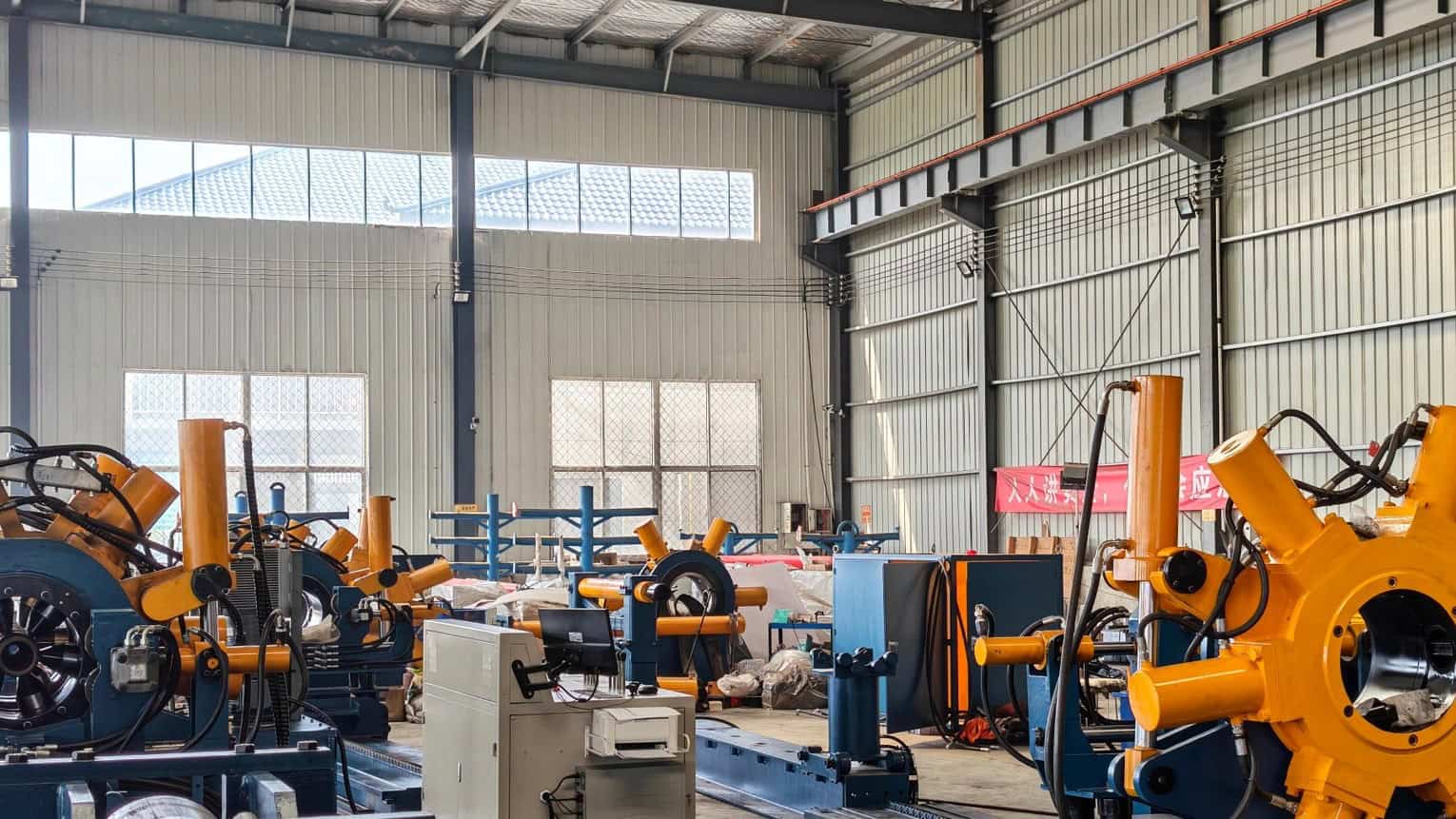
Why pipe handling deserves its own equipment strategy
When an OCTG joint leaves the mill, its quality can still be damaged long before it reaches the rig. A thread protector can be knocked loose during transfer. A coupling can strike a steel rack. A pipe can roll unexpectedly while an operator is cleaning the thread. A crane can lower a long component onto supports that are set at different heights. None of these events changes the steel grade or the original mill certificate, but each can change the condition of the product that the customer finally receives.
That is why pipe handling equipment should be treated as a production system rather than a collection of cranes, racks, and rollers. The goal is not simply to move a heavy cylinder from point A to point B. The goal is to preserve surface condition, protect connections, control alignment, reduce manual intervention, keep the work area clear, and make the next operation easier to perform correctly.
This matters in threading shops, coupling lines, repair workshops, inspection yards, mud-motor service centers, and completion-tool facilities. The exact equipment changes with the product, but the engineering questions remain similar: What is the heaviest and longest item? Where are the sensitive surfaces? How many transitions are required? What happens when a job is placed on hold? How is identity protected during movement? Where can an operator stand without entering a pinch zone?
Safety note: This article is a buyer and workflow guide, not a lift plan. Lifting operations must be engineered, supervised, inspected, and performed under the rules that apply at the operating location. OSHA 1910.176 requires sufficient clearances and unobstructed, marked passageways where mechanical handling equipment is used. UK HSE guidance under LOLER similarly emphasizes planned lifting operations and examination of lifting equipment.
What counts as pipe handling equipment?
The phrase pipe handling equipment is often used as if it refers to one product category. In reality, it covers every device that influences how tubulars enter, move through, and leave a work area. A basic system may include storage racks, an overhead crane, slings, and adjustable supports. A higher-throughput system may add powered conveyors, transfer arms, hydraulic push-pull devices, identification stations, make-up equipment, inspection stations, and dedicated outbound staging.
The most useful way to evaluate the system is by function. Every piece of equipment should support at least one of seven needs: safe lifting, stable support, controlled transfer, accurate alignment, surface protection, positive identification, or process documentation. Equipment that does not solve a defined workflow problem often becomes an obstacle on the floor.
| Function | Typical equipment | Why it matters |
|---|---|---|
| Receive and segregate | Inbound racks, quarantine stands, identification points | Prevents mixed status and uncontrolled floor storage |
| Lift and transfer | Cranes, hoists, lifting beams, slings, powered transfers | Moves weight without dragging or uncontrolled rolling |
| Support and align | Roller stands, V-blocks, adjustable jacks, centering guides | Keeps the product stable and on the correct centerline |
| Protect surfaces | Soft pads, non-marking contact points, protectors, clean trays | Reduces preventable damage to threads, coatings, CRA, and chrome |
| Process and record | Inspection stations, make-up cells, marking and record systems | Connects physical handling with QA evidence |
| Stage and dispatch | Outbound racks, chocks, transport frames, release zones | Prevents approved and held products from being mixed |
The 12 pipe handling systems an OCTG workshop should evaluate
1. Inbound racks and quarantine stands
The receiving area should give every incoming joint a stable location before inspection or processing begins. Pipes left directly on the floor are difficult to identify, difficult to inspect, and easy to strike with forklifts or other loads. Racks should be rated for the expected weight, arranged to prevent uncontrolled rolling, and divided so that incoming, accepted, held, and rejected material cannot be confused.
A quarantine position is especially important. If a protector is missing, a thread is dirty, a serial number is unclear, or the paperwork does not match, the product needs a visible hold location. Without that physical separation, questionable material tends to move forward because the production line needs space.
2. Overhead cranes, gantry cranes, and hoists
For long OCTG joints and heavy downhole tools, an overhead crane is often the main lifting method. Capacity is only the first requirement. The crane must also cover the full movement path, allow controlled approach to the supports, and leave enough clearance for the load, lifting gear, operators, and surrounding equipment.
A crane that can lift the load but cannot reach the correct set-down position creates extra transfers. Each extra transfer adds time and introduces another opportunity for a swing, impact, or hand-guided movement. Buyers should therefore map the crane envelope over the entire cell, not only over the machine centerline.
- Confirm the rated load covers the heaviest product plus lifting gear.
- Check hook height against the largest OD and the highest machine component.
- Provide a controlled parking location for slings, beams, and hooks.
- Keep the operator route separate from the suspended-load route wherever practical.
3. Lifting beams, slings, clamps, and contact accessories
The lifting accessory determines how the load is contacted. A heavy pipe lifted with an unsuitable sling can slide, rotate, or receive concentrated surface pressure. A lifting beam can improve load balance on long tubulars, while correctly selected slings and clamps help maintain control during transfer.
The correct accessory depends on length, weight, center of gravity, surface condition, and whether the item can tolerate local contact. Premium-finished, coated, CRA, or chrome components may require soft contact materials and stricter cleanliness controls. The accessory should also have a clear inspection status and an identification system that makes its rated capacity easy to verify.
4. Powered transfer tables, conveyors, and skids
A powered transfer system can remove repeated crane lifts between operations. Rollers, chain conveyors, walking beams, or hydraulic skids can move tubulars from receiving to inspection, cleaning, make-up, and final staging. The productivity benefit is obvious, but the deeper value is consistency: the product follows the same path each time.
The transfer speed should match the work, not only the maximum capability of the equipment. A fast conveyor that delivers pipe faster than the inspection or make-up station can process it creates congestion and unsafe staging. Good systems use controlled indexing, positive stops, and a defined buffer between operations.

5. Adjustable roller stands and support jacks
Roller stands and support jacks carry the pipe after it leaves the crane. They should be positioned so the product remains stable, does not sag excessively, and stays close to the centerline of the next operation. Height adjustment is essential when the workshop handles several outside diameters or tools with changing body profiles.
Support spacing matters as much as capacity. Too few supports can allow deflection. Supports placed in the wrong location can interfere with connections, stabilizers, protectors, or areas that need inspection. The best approach is to define standard support positions for each common product family and record exceptions in the job setup.
- Rated load per stand and total load distribution.
- Height range and adjustment method.
- Roller material and suitability for finished surfaces.
- Locking, chocking, and anti-roll provisions.
- Access for cleaning and inspection around the support point.
6. Loading arms, pushers, pullers, and positioning cylinders
Loading arms and hydraulic push-pull devices help move a supported component into the correct working position without asking operators to guide a suspended load by hand. These systems are especially useful for heavy BHA components, motors, housings, or long tools that require precise axial movement.
The motion should be slow and controllable near the final position. Mechanical stops, travel limits, and clear operator sightlines are more valuable than headline speed. The system should also make it easy to reverse the move if the product is not aligned correctly.
7. Centering, alignment, and anti-roll devices
Alignment equipment is not only about protecting the thread. It also reduces side load on clamps, bearings, couplings, and support structures. A pipe can appear centered from one viewing angle while still approaching the connection at an offset or with angular misalignment.
A good cell gives the operator more than one alignment reference. Adjustable roller height, centerline marks, approach guides, and controlled axial travel can work together. Anti-roll devices and chocks are equally important during inspection, cleaning, and manual measurement when the tubular is not clamped by the process machine.
8. Surface-protection and non-marking contact systems
Not every tubular can be handled with the same steel contact surfaces. Standard casing, machined completion tools, chrome tubulars, coated components, and corrosion-resistant alloys have different damage sensitivities. Surface-protection equipment may include padded racks, soft-contact rollers, non-marking jaws, clean slings, end caps, thread protectors, and dedicated trays for small components.
The workshop also needs a cleanliness rule. A soft pad contaminated with metal chips or abrasive dirt can cause more damage than a clean steel surface. Protection systems should therefore be inspected, cleaned, and replaced as consumable production tooling rather than treated as permanent furniture.
9. Thread cleaning and inspection stations
A well-designed handling line includes a place to stop the product for cleaning, visual inspection, gauging, protector replacement, and documentation. If these tasks are performed wherever space happens to be available, tools and cleaning materials spread across the aisle and the inspection quality varies from shift to shift.
The station should provide stable support, adequate lighting, clean storage for gauges and protectors, waste control, and room to rotate or reposition the product safely. It should also have a clear disposition method: accepted, clean-and-recheck, repair, or hold for technical review.
10. Identification and traceability stations
Physical handling and information handling must stay connected. A pipe that moves correctly but loses its identity is still a quality problem. Barcode, QR, RFID, stamped identity, or controlled paper travelers can all work, provided the identifier stays with the product and the workshop knows which source is authoritative.
The system should capture the minimum information required to find the history later: product or joint ID, work order, status, procedure revision, operator or station, date and time, inspection outcome, make-up or repair record, and final release decision. The exact fields depend on the customer and product, but the principle is consistent: each transition should preserve identity.
11. Make-up and break-out cells
The make-up or break-out station is one part of the pipe handling line, not an isolated machine. The product must arrive supported and identified, enter the clamping area without impact, leave with its connection protected, and move into the correct release or rework lane.
For workshop-controlled make-up, a hydraulic bucking unit can combine stable support, controlled rotation, clamping, torque-turn monitoring, and report output. It does not replace cranes, racks, or transfer systems. Its role is to create a controlled process step inside the wider handling system.
Where a hydraulic bucking unit fits in the pipe handling system
A bucking unit adds the most value when the workshop needs repeatable make-up or break-out of casing, tubing, drill pipe, completion tools, BHA components, or repaired downhole tools. The pipe handling system delivers the product to the machine in a stable and aligned condition; the machine then controls the connection operation; the downstream handling system protects and identifies the completed product.
Galip hydraulic bucking units are publicly configured around the buyer's OD range, torque range, connection family, reporting needs, output target, floor space, power supply, and accessories. Available support features include extension beams and roller jacks, while the control package provides 360-degree continuous rotation, real-time torque-turn display, and PDF/Excel report export.
The safe conclusion for buyers is simple: Galip hydraulic bucking units can be configured as the controlled make-up station within a wider OCTG pipe handling system that also includes lifting, support, alignment, protection, and traceability controls.
Related product page: Galip hydraulic bucking unit for controlled tubular make-up
12. Outbound staging, transport frames, and release lanes
The last handling stage is often underestimated. A connection can be accepted correctly and then damaged while waiting for packing or loading. Approved products should be staged on stable supports, separated from held or rework material, protected from traffic, and arranged so the next lift does not require unnecessary rolling or dragging.
Transport frames, chocks, dunnage, protectors, and tie-down points should match the product. The release lane should also make the documentation easy to check before dispatch. A good outbound area answers three questions immediately: Is this product released? Is its identity clear? Can it be lifted without disturbing another item?
How to specify pipe handling equipment before requesting a quote
A useful quotation begins with a product and workflow envelope, not a list of machine names. Buyers should describe the normal job, the difficult job, and the expected future job. That gives the supplier enough context to propose a system instead of selling isolated equipment.
The following specification questions apply whether the buyer is planning one support station or a complete OCTG handling line.
| Specification area | Information to provide | Why it matters |
|---|---|---|
| Product envelope | Minimum and maximum OD, length, weight, center of gravity, and unusual profiles | Determines support, lifting, and transfer capacity |
| Surface sensitivity | Standard steel, coated, CRA, chrome, machined tool body, premium thread | Determines contact materials and cleanliness controls |
| Throughput | Joints or tools per shift, batch size, changeover frequency | Determines whether manual transfer or powered indexing is appropriate |
| Process steps | Receiving, inspection, cleaning, make-up, test, repair, staging, dispatch | Prevents missing transitions and hidden extra lifts |
| Workshop envelope | Floor length, width, ceiling height, doors, crane coverage, aisle needs | Confirms the equipment can be installed and operated |
| Utilities | Electrical supply, hydraulic power, air, lighting, network access | Avoids late installation changes |
| Records | Joint ID, work order, report format, customer witness fields, retention period | Connects the physical system to QA requirements |
| Support model | Installation, training, spares, maintenance, inspection, remote support | Defines the life-cycle cost and operating readiness |
Seven common pipe handling mistakes
1. Buying by maximum load only: A system can have enough capacity and still be slow, difficult to align, or unsafe to access. Capacity is a boundary condition, not the whole specification.
2. Ignoring transitions between machines: Most impacts and manual interventions occur while the product moves from one station to another. Map every transition.
3. Using one contact material for every product: Standard steel, finished tools, CRA, and chrome do not have the same surface-protection needs.
4. No physical hold lane: If questionable material has nowhere to go, it tends to remain in the production flow.
5. Supports that cannot be standardized: If operators rebuild the support arrangement for every job, alignment and cycle time will vary.
6. Poor maintenance access: Rollers, cylinders, chains, hoses, and guards need inspection and service space. A machine squeezed against a wall may be cheap to install and expensive to own.
7. Treating records as an office task: Identity and status must be visible at the point of work. Reconstructing the history later is slower and less reliable.

A practical three-phase upgrade plan
Phase 1. Map the present flow
Follow one normal product from receiving to dispatch and count every lift, roll, drag, hand-guided move, identity check, and waiting point. Repeat the exercise for one heavy or unusual product. The result usually reveals that the main problem is not a lack of capacity; it is an awkward transition or an undefined staging area.
Phase 2. Stabilize the highest-risk steps
Start with stable racks, anti-roll controls, standard support heights, clean contact surfaces, marked aisles, and a visible hold lane. These changes are often less expensive than full automation and can immediately reduce uncontrolled movement.
Phase 3. Integrate equipment and records
Add powered transfer, controlled positioning, process equipment, and digital records where the workload justifies them. Automation should remove a defined risk or bottleneck. It should not simply make the line look more advanced.
Buyer checklist for pipe handling equipment
- Have we defined the maximum weight and length, not only the maximum OD?
- Is the crane or transfer route continuous across every required station?
- Can the product be supported at the correct centerline without improvised blocking?
- Are sensitive surfaces protected by clean, suitable contact materials?
- Is there a physical lane for hold, rework, and rejected material?
- Can operators inspect, clean, and identify the product without entering an uncontrolled roll or pinch zone?
- Does each station preserve product identity and work-order status?
- Can the equipment be maintained without dismantling the surrounding work area?
- Does the make-up or break-out station receive the product already supported and aligned?
- Can the final product be staged, protected, and lifted for dispatch without being moved twice?
Frequently asked questions
What is pipe handling equipment?
Pipe handling equipment includes racks, cranes, hoists, slings, lifting beams, conveyors, rollers, support stands, positioning devices, inspection stations, make-up equipment, and outbound staging systems used to move and control tubular products.
What pipe handling tools are most important in a small OCTG workshop?
A small workshop normally needs stable racks, a suitable lifting method, inspected lifting accessories, adjustable support stands, anti-roll controls, a clean inspection area, and a defined make-up or repair station. The correct combination depends on product weight, length, surface condition, and throughput.
Is an overhead crane enough for pipe handling?
A crane solves lifting, but it does not automatically solve support, alignment, rolling control, staging, or traceability. Long products still need suitable supports and a planned route between operations.
How does pipe handling affect premium connections?
Poor handling can damage protectors, contaminate threads, create impacts, or present the connection to the make-up station out of alignment. Handling controls therefore protect the condition needed for the approved make-up procedure.
Where does a bucking unit fit in an OCTG handling line?
The bucking unit is the controlled make-up or break-out station. The surrounding equipment lifts, supports, aligns, protects, and stages the product before and after the connection operation.
What information should I send when planning a pipe handling system?
Send the product list, OD and length range, maximum weight, surface sensitivities, daily volume, process sequence, available crane and floor space, utilities, record requirements, and destination or installation constraints.
Related reading: casing coupling make-up for OCTG threading shops, bucking unit workshop layout planning, and OCTG connection integrity after the mill. Browse more technical guides.
Final recommendation
The best pipe handling equipment is not necessarily the most automated system. It is the system that removes uncontrolled movement, supports the actual product range, protects sensitive surfaces, keeps identity visible, and presents each tubular correctly to the next operation.
For OCTG workshops, this means designing the complete path: receiving, quarantine, lifting, support, cleaning, inspection, alignment, make-up or repair, records, outbound staging, and dispatch. When those steps are connected, productivity improves because operators spend less time recovering from poor flow. Quality improves because the product experiences fewer uncontrolled contacts. Safety improves because fewer tasks depend on hands near a moving or suspended load.
If the workflow includes controlled make-up or break-out, Galip can review the OD range, torque requirement, connection family, floor space, lifting arrangement, support needs, reporting format, and daily output target to configure the bucking-unit station around the real workshop rather than a generic catalog assumption.
Planning an OCTG handling or make-up cell?
Send Galip your product OD and length range, maximum weight, typical and peak torque, connection families, daily volume, workshop dimensions, crane coverage, power supply, and reporting requirements. The engineering team can review how the bucking-unit station, roller supports, extension beams, operator area, and report workflow should fit the wider handling process. Send your requirements or write to sales@galipequipment.com.
Request a configuration: galipequipment.com/contact-us
Expert Consultation
Need more information on optimizing your equipment performance? Our engineering team is available for technical consultations.
Request a Quote
Tell us about your requirements and our engineering team will prepare a detailed proposal with specifications, pricing, and delivery timeline.
