
Field Torque Verification: Why On-Site Torque Readings Drift
Field torque verification is the set of checks that prove the number on the display matches the torque actually going into the connection once you are off the workshop floor. Oil temperature, pressure-only readings, zero drift and an unlevel frame each move that number by a few per cent. Stacked in the same direction, they…
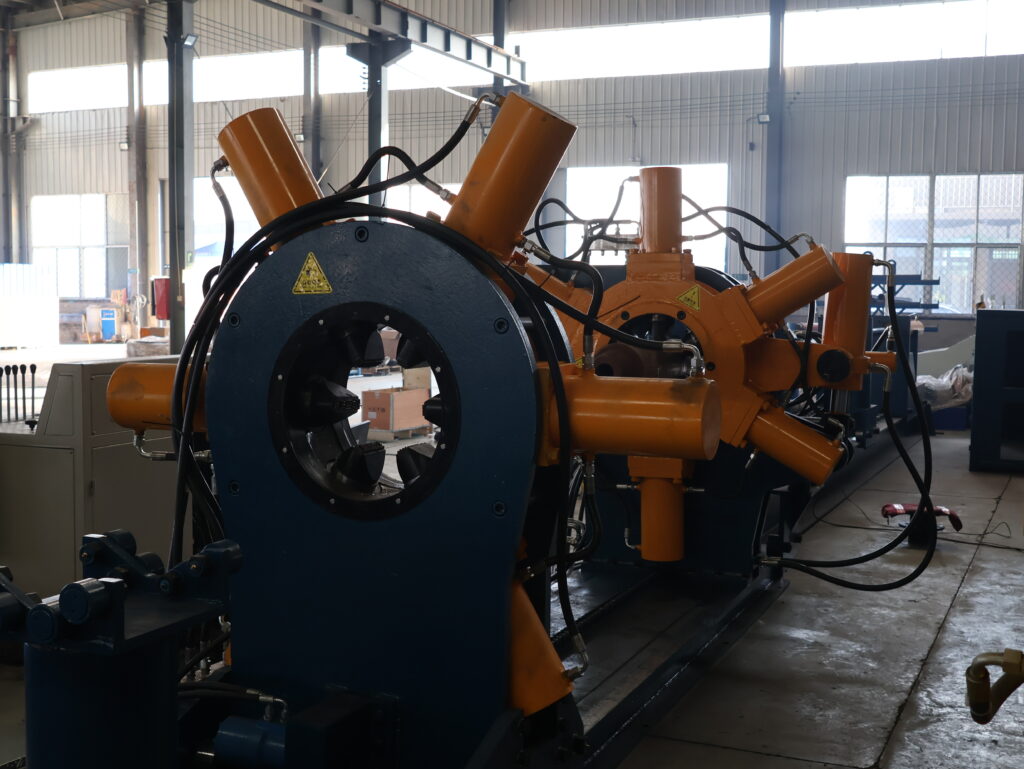
Field torque verification is the set of checks that prove the number on the display matches the torque actually going into the connection once you are off the workshop floor. Oil temperature, pressure-only readings, zero drift and an unlevel frame each move that number by a few per cent. Stacked in the same direction, they move it by ten.
None of it is exotic. The checks below take about twenty minutes before the first joint, and they are the difference between a torque record that survives an audit and one that only looks tidy. Work through them in order and write the results on the same sheet as the job, with the ambient and oil temperatures next to them.
What actually drifts when you leave the workshop
Not all makeup and breakout work happens in a dedicated workshop. Often in oilfield operations, there’s a need to assemble or disassemble threaded connections right at the well site or on the drilling rig. Mobile bucking units answer this need by providing the same high-torque, precise connection handling capabilities in a portable form factor. These units can be skid-mounted or trailer-mounted, allowing them to be moved to where they’re required. For drilling contractors and service companies, mobile bucking units mean no longer having to ship heavy pipes or tools back and forth for make-up – the power comes directly to the field.
A field set-up is a small commissioning every time, so the same logic as the commissioning and first-job sign-off checks applies each time the frame is set down somewhere new.
Torque error budget for on-site work
Treat accuracy as a budget rather than a yes or no. Each line below is a known error source, the size it usually reaches in field conditions, and the check that settles it in a few minutes.
| Error source | Typical effect on indicated torque | How to check it | Accept or reject |
|---|---|---|---|
| Hydraulic oil below 10 degrees C at start-up | 3 to 6 per cent high on pressure-derived torque | Run ten no-load cycles, compare stroke 1 with stroke 10 | Reject if the reading still moves more than 2 per cent after warm-up |
| Oil above 70 degrees C in desert or high summer conditions | 2 to 4 per cent low, plus slower cylinder fill | Read the tank thermometer at the top of every hour | Stop and cool above 70 degrees C |
| Torque taken from pump pressure only, no load cell | plus or minus 5 to 10 per cent | Compare against a load cell or a calibrated master gauge at working torque | Not acceptable for premium or CRA connections |
| Load cell zero drift | 1 to 3 per cent of span | Zero with jaws open and no load, at working oil temperature | Re-zero if the offset exceeds 0.5 per cent of span |
| Extra 10 m of hose between power pack and cylinder | up to 2 per cent loss at the cylinder | Take pressure at the cylinder port, not at the pump | Keep runs short, re-verify after any hose change |
| Frame out of level or standing on soft ground | Reading looks correct, the joint sees bending | Spirit level across the frame in two axes | Shim to better than 2 mm per metre before the first joint |
| Calibration certificate out of date | Unknown, and unarguable in an audit | Check the sticker date against the last certificate | Reject. There is no field work-around |
Errors do not cancel each other out. Take a 30,000 ft-lb target on a premium casing connection. Accept a cold-oil error of 4 per cent, a pressure-only error of 5 per cent and 1 per cent of zero drift, all leaning the same way, and the joint can see roughly 33,000 ft-lb while the sheet records 30,000. On a connection with a 10 per cent tolerance band, that one set-up has used the whole band before the operator has made a single mistake.
High precision work on tubing suffers most. Tubing targets are low, so a fixed few hundred ft-lb of error is a much larger share of the number than it would be on casing. The same applies in reverse on desert rig work, where oil that starts cold at dawn and runs hot by midday can move the reading in both directions inside one shift.
Two rules keep this manageable. Verify at the torque you will actually work at, not at ten per cent of it, because hydraulic and load cell errors are rarely linear across the range. And re-verify after every move, every hose change and every oil top-up, because each of those resets the assumptions behind the last check.
Set-up conditions that change the reading
Mobile bucking units are engineered to be compact and transportable without sacrificing much in performance:
- They typically feature a built-in or accompanying hydraulic power unit (HPU) and a frame that can be lifted or wheeled into place. Despite a smaller footprint, they deliver substantial torque output, often comparable to stationary units. For instance, one mobile bucking unit model can apply up to 100,000 ft-lb of torque, yet is built as a robust, compact system suitable for use on a rig floor or workshopclassic-ap.com.
- These units are designed for easy setup and teardown. Quick-connect hydraulic lines and modular components allow crews to rig them up on-site with minimal delay. Their compact design means they can operate even on a crowded drill site or platform, fitting on the pipe deck for fast useclassic-ap.com.
- Mobile units also maintain precision: they come with the same automated controls and safety features as larger units, ensuring that on-site operation does not compromise connection quality. They often include digital torque control and even data logging abilities, just like their stationary counterparts.
Torque verification sits inside the wider pre-shift checks before the first joint, and neither one is a substitute for the other.
Data logging only helps if the logged number is right, which is why it is worth knowing how torque records are audited afterwards before you rely on them.
The verification sequence before the first joint
The primary benefit of using mobile bucking units is the efficiency gained by handling connections on-site:
- No Transport Delays: With a portable unit, you don’t need to send pipes or tools to a central workshop for make-up or break-out. This eliminates the transport time and logistics, which can be especially significant in remote locations or offshore rigsofficeandindustrialequipment.com. The connections can be made or broken right where the equipment is used.
- Offline Stand Building: On drilling rigs, mobile bucking units enable offline makeup of drilling stands or bottomhole assemblies while other operations continueclassic-ap.com. This means drill pipe doubles or triples can be pre-assembled off the critical path, providing significant time savings for the drilling process.
- Quick Service and Repairs: When a tool downhole needs to be serviced, a mobile unit on site can break it down immediately. For example, if a drilling motor or a stuck pipe joint needs disassembly at the well, the unit can be deployed to do the job on the spot, reducing downtime.
- Adaptability: Mobile units are versatile; they can move between different rigs or job sites as needed. One unit might service multiple wells in a field, handling everything from making up completion tubing to breaking out test tools. Their ability to adapt and work wherever necessary introduces a game-changing flexibility in operationsofficeandindustrialequipment.comofficeandindustrialequipment.com.
Fast turnarounds are where verification slips, so build reading the make-up curve on site into the same routine as the pressure and zero checks.
Crew size, guarding and hose routing on site
Using a mobile bucking unit can also improve safety and reduce required manpower:
- Fewer lifts and transports of heavy tubulars mean less risk of accidents during handling. Everything is done at ground level or rig level where the pipe already is.
- The operations can often be handled by a small crew. The unit’s design (with clamping and automated torque) means one or two technicians can perform tasks that would otherwise require a larger team with manual tongs.
- By bringing a mechanized solution to the field, workers avoid manual breaking of stubborn connections, thus reducing strain injuries and exposure to hazards. As noted, modern mobile units come with features like remote control and automation, which keep personnel out of harm’s way during operationclassic-ap.com.
Where torque accuracy has to hold in the field, the machines we build for this work use a load cell rather than pump pressure, which removes the largest line in the table above.
Specifying a machine that holds accuracy away from the shop
Mobile bucking units pack the strength and precision of a full-sized torque machine into a travel-ready package. They have become invaluable for on-site operations by streamlining workflows and saving time. In an industry where every hour of rig time counts, being able to make or break connections at the well site without delay is a major advantage
officeandindustrialequipment.com. Portable bucking units exemplify efficiency and flexibility, ensuring that wherever the job takes place – whether on a remote pad or an offshore platform – the necessary torque and control are on hand to get the work done.
Primary Bucking Unit Reference: For full specs, QA workflow, and model comparison, see the bucking unit page.
Expert Consultation
Need more information on optimizing your equipment performance? Our engineering team is available for technical consultations.
Request a Quote
Tell us about your requirements and our engineering team will prepare a detailed proposal with specifications, pricing, and delivery timeline.
