
Breakout Unit for Mud Motor Repair: Safer Teardown of Subs, Housings and Tool Joints
A breakout unit for mud motor repair is not just a high-torque machine sitting at the end of a service bay. For a busy mud motor repair shop, it is the controlled place where stuck threaded connections are opened, long motor sections are supported, sensitive connection areas are protected, and repair records begin. When a…
A breakout unit for mud motor repair is not just a high-torque machine sitting at the end of a service bay. For a busy mud motor repair shop, it is the controlled place where stuck threaded connections are opened, long motor sections are supported, sensitive connection areas are protected, and repair records begin. When a mud motor comes back from the field, the repair team usually needs to open subs, housings, bearing assemblies, stabilizer connections, bit boxes, and other BHA components without turning a worn connection into a damaged part.
This article is written for service center owners, maintenance supervisors, procurement teams, and repair engineers who handle positive displacement motors. Instead of repeating generic breakout machine claims, it focuses on how a hydraulic breakout unit fits into the real mud motor repair workflow: inspection, clamping, support, breakout torque control, jaw selection, service documentation, and quotation preparation.
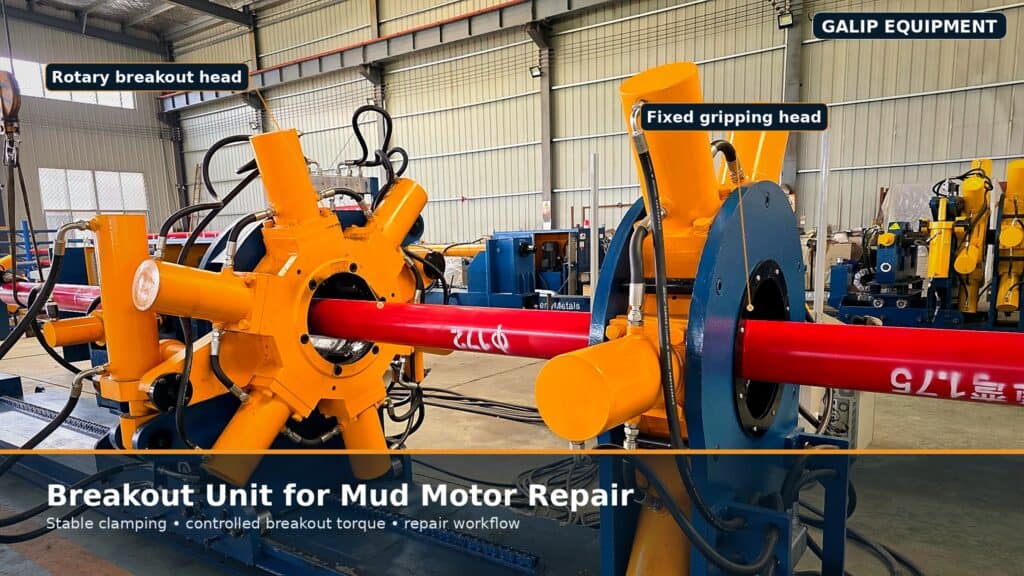
Figure 1. Real Galip breakout unit photo enhanced for website publishing, with callouts for the rotary breakout head and fixed gripping head used in mud motor repair workflows.
Why Mud Motor Repair Needs Controlled Breakout
Mud motors are rugged field tools, but repair work exposes sensitive details. A typical motor may include a top sub, power section, transmission assembly, bent housing, bearing assembly, bit box, stabilizer, and several tool joints or threaded interfaces. These components are heavy, long, and often returned from drilling conditions with dried mud, vibration marks, thread compound residue, corrosion, impact marks, or unknown field history. Opening them with poor support or uncontrolled force can create a second problem before the original failure is even inspected.
Knowing which of those sections usually gives up first helps the shop plan the teardown, and our guide to how a mud motor is built section by section sets out the normal wear order.
A repair shop often has two competing goals. The first goal is speed: open the motor, inspect the worn components, replace what needs replacing, and return the tool to service. The second goal is control: do the work without thread damage, housing distortion, jaw slippage, unsafe stored energy release, or missing service evidence. A breakout unit helps balance both goals because it gives the operator a stable clamping platform, controlled hydraulic force, and a repeatable place to inspect each connection as it is opened.
The real value is not only maximum torque. Maximum torque matters when a connection is tight, but support, jaw selection, hydraulic smoothness, operator visibility, and record quality decide whether the teardown is safe and repeatable. For this reason, a good breakout unit for mud motor repair should be selected as part of a service workflow, not only as a torque rating on a specification sheet.
Where Mud Motor Connections Become Difficult
Mud motor teardown is different from simple pipe disassembly. Pipe is usually straight, repetitive, and easier to support along a predictable centerline. Mud motors are mixed assemblies. One section may have a large OD housing, another may have a stabilizer blade, and another may include a threaded end that must stay clean for inspection. The machine must hold the workpiece securely while still giving the operator room to see the connection and stop before damage spreads.
Connections can become difficult for several reasons. Solids and drilling fluid residue may dry around shoulders. Thread compound may be aged or contaminated. Field torque and downhole vibration can make a connection harder to open than expected. Corrosion, galling, shoulder deformation, or previous repair errors may also increase the breakout load. In some cases, the connection is not only tight; it is carrying the history of the last run.
For mud motor service, the operator should identify the connection before clamping. Is the job opening a top sub, bit box, bent housing connection, bearing assembly interface, or power-section related component? Is the gripping area a robust body section, a machined area, a coated surface, or a part with thin-wall risk? These questions decide the jaw choice, clamping pressure, support span, and inspection plan.
What a Breakout Unit Changes in the Repair Workflow
A hydraulic breakout unit changes the workflow by turning a risky moment into a controlled step. The motor section can be positioned on support rollers or hydraulic support jacks, the clamping area can be confirmed, and the operator can apply torque gradually rather than relying on improvised tools. If the connection starts to move, the team can pause, inspect the shoulder or thread area, and continue with less guesswork.
For a mud motor repair shop, the most important improvement may be consistency. Different operators should not create different results on the same tool family. A consistent process includes intake identification, cleaning, pre-breakout inspection, correct support spacing, jaw selection, controlled clamping, breakout torque application, post-breakout inspection, and service record creation. A breakout unit supports this process because it gives the shop a defined repair station rather than a collection of manual habits.
It also helps separate teardown from rebuild. During teardown, the goal is to open the motor safely and preserve inspection evidence. During rebuild, the goal is to reassemble the motor according to the required torque, procedure, and quality record. A workshop may use a breakout unit mainly for disassembly and a bucking unit for controlled make-up, torque-turn monitoring, or premium connection records. When both machines are planned together, the repair bay becomes easier to audit, train, and scale.
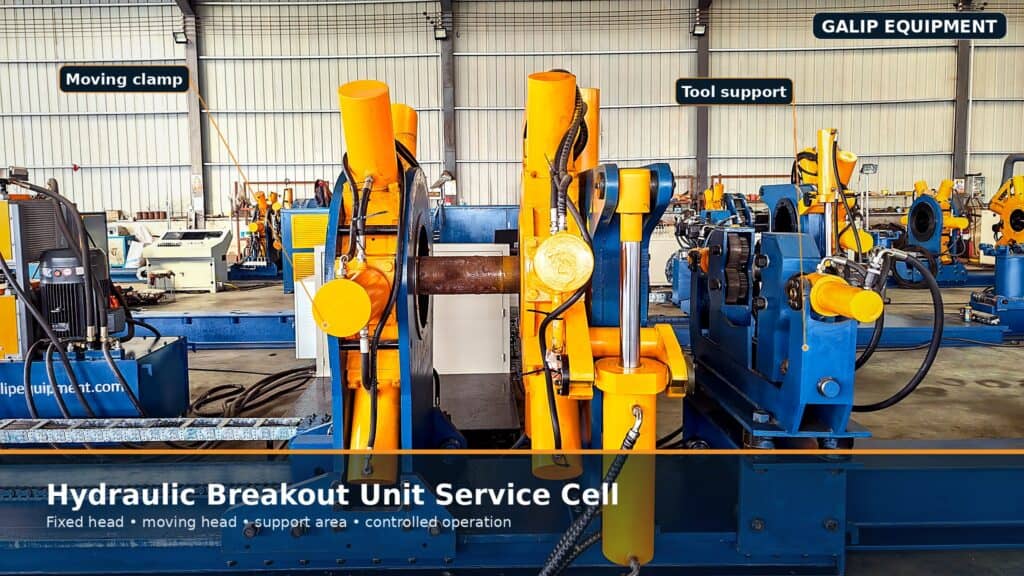
Figure 2. Enhanced real product photo showing a hydraulic breakout unit service cell with moving clamp, fixed gripping head, tool support area, and controlled operation layout.
Key Breakout Risks During Mud Motor Repair
The first risk is slippage. If the jaws do not grip correctly, the tool can move under torque and create long scoring marks. A controlled shallow mark on an approved grip area may be acceptable on some robust carbon steel bodies, but slippage scratches are different. They can travel along the surface, damage coating, hide inspection evidence, and lead to customer rejection. If slippage appears, the operator should stop, release the tool, inspect the surface, clean the jaw area, and correct the setup before applying torque again.
The second risk is bending load. Mud motors are long and heavy. If the support is poor, high breakout force can introduce bending stress into a housing or connection. This is one reason support hardware matters as much as torque capacity. The tool should be held on a stable centerline, and the support spacing should match the length and weight of the motor section. A long-frame breakout unit with suitable support options can make this work safer and more predictable.
The third risk is gripping the wrong area. Some motor sections have features that should not be clamped aggressively. Seal surfaces, shoulders, threads, thin-wall sections, coatings, and machined faces need protection. If the operator clamps where the tool was never designed to be clamped, the machine may open the connection but leave a new repair problem behind.
The fourth risk is losing the service story. A customer may not only ask whether the motor was repaired. They may ask what was found, which connection was difficult, whether threads were damaged before teardown, and what corrective actions were taken. A breakout unit that supports service records, report fields, or PDF documentation helps the shop turn difficult teardown events into traceable repair history.
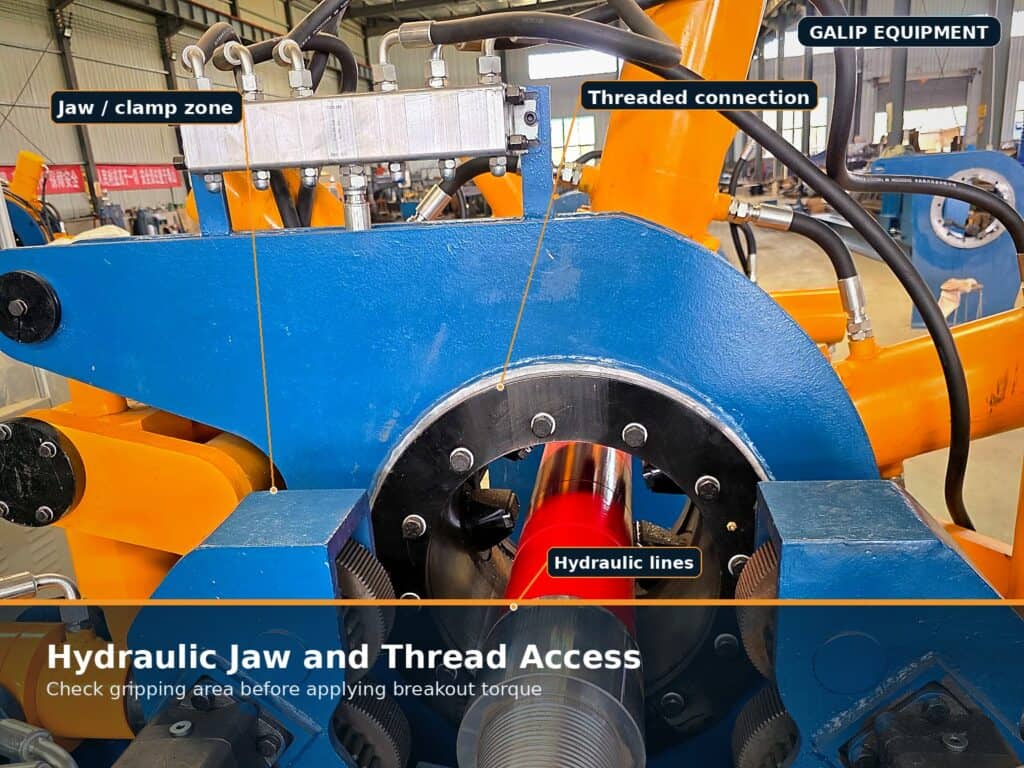
Figure 3. Enhanced close-up photo showing hydraulic jaw access, clamping area, threaded connection visibility, and hydraulic lines for controlled breakout work.
Jaw Selection: Grip Without Creating a New Repair Problem
Jaw selection for a mud motor breakout unit should be based on the motor body, connection type, surface condition, and breakout torque expectation. Standard aggressive dies may grip strongly, but they are not always the correct answer. A high-grip jaw used in the wrong area can leave deep tooth marks. A soft or low-marking jaw used beyond its grip capability can slip. The supplier and repair shop should therefore discuss the actual motor mix before selecting jaws.
A practical shop can divide jaw decisions into three groups. The first group is robust carbon steel bodies where controlled marking on an approved grip zone is allowed. The second group is sensitive areas where low-marking or custom contact surfaces should be considered. The third group is damaged, corroded, or irregular parts that need a case-by-case setup. In all three cases, the jaw is not just a spare part; it is part of the repair quality plan.
A good RFQ should therefore describe the real motor mix. Send the OD range, length range, connection type, common stuck-connection locations, tool material, surface acceptance rules, and any photos of typical tools. If the shop handles stabilizers, jars, subs, collars, or other BHA components in the same bay, include those too. This helps the supplier recommend the correct gripping package, support arrangement, and frame layout instead of quoting a generic machine that may not match the work.
Jars also need a verification step after teardown, so a bay that opens them should plan floor space for jar load testing equipment next to the breakout frame.
Breakout Torque Is Not the Only Specification
Many buyers start with a simple question: how much torque can the machine produce? That question is necessary, but it is not enough. A breakout unit for mud motor repair should also be evaluated by pipe or tool OD range, maximum tool length, frame stiffness, clamping method, jaw options, support travel, control method, safety interlocks, operator visibility, hydraulic system reliability, and reporting capability.
Breakout torque can be higher than make-up torque because used connections may be affected by field loading, corrosion, thread compound condition, temperature history, or damage. The shop should not select a machine based only on the nominal make-up torque from a clean procedure. It should consider the worst normal disassembly conditions, the largest tool family, and the expected frequency of difficult breakouts.
Reporting should also be treated as a specification. A PDF report or job record can include tool serial number, connection name, operator, date, target torque, actual breakout behavior, notes, and inspection results. This does not replace the repair procedure, but it helps the service shop communicate with customers and prove that the teardown was controlled.
A Mud Motor Service Cell, Not a One-Machine Island
The best breakout unit installation is part of a service cell. The cell starts before the motor reaches the machine. Incoming tools should be identified, washed, measured, photographed, and checked against the work order. The lifting method should be ready. The support span should be set. The operator should know which connection is being opened and what part of the motor must be protected.
This cell approach is useful for SEO because it matches what serious buyers actually worry about. They are not only searching for a machine name. They are trying to reduce turnaround time, lower rework, protect expensive tools, train operators, and create a repeatable service process. An article that speaks to those concerns is more useful than one that only lists cylinders and torque ratings.
A bucking unit may still be valuable in the same facility, especially when the shop needs controlled make-up, torque-turn monitoring, or premium connection records. But the breakout unit earns its place when the daily problem is opening used tools safely. It is the machine that helps the repair team move from force to control.
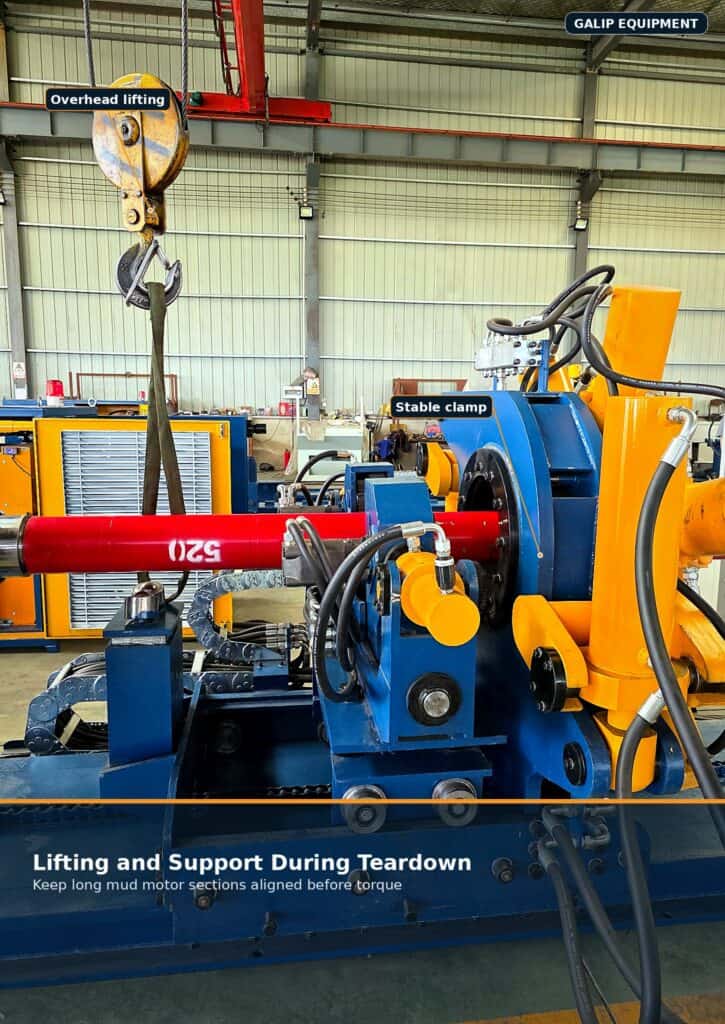
Figure 4. Enhanced real workshop photo showing lifting support and stable clamping during mud motor teardown, helping long tool sections stay aligned before torque is applied.
Buyer Checklist: What to Send Before Requesting a Quote
The most useful quotation does not come from asking for a price on a generic machine. It comes from describing the repair work clearly. Before requesting a breakout unit for mud motor repair, prepare the information below so the supplier can review the real application and recommend a suitable configuration.
- Mud motor OD range, maximum length, approximate weight, and common tool families.
- Connection types: top sub, bit box, bent housing, bearing assembly, stabilizer, subs, jars, or mixed BHA components.
- Expected make-up torque and realistic breakout torque for used tools returned from the field.
- Approved gripping areas, surface acceptance rules, coating status, and thread protection requirements.
- Preferred jaw package: standard dies, low-marking jaws, custom inserts, or mixed jaw sets.
- Support requirements: roller supports, hydraulic support jacks, lifting method, and frame length.
- Workshop layout: bay length, crane access, power supply, hydraulic power unit location, and operator access.
- Report requirements: PDF record, job number, operator name, tool serial number, torque notes, and inspection comments.
Also include the business goal. Are you replacing manual methods? Increasing service throughput? Handling larger motors? Reducing thread damage? Creating a standard teardown record? Preparing for customer audits? The same machine may be configured differently depending on whether the main goal is capacity, speed, traceability, or surface protection.
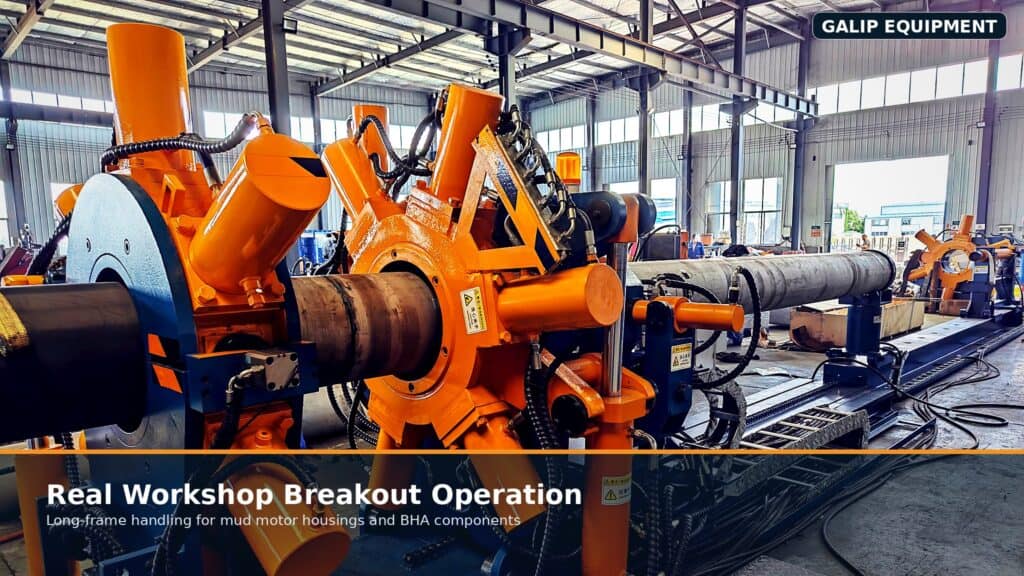
Figure 5. Enhanced wide-angle workshop photo showing long-frame breakout operation for mud motor housings and BHA components in a real service environment.
Common Mistakes to Avoid
The first mistake is buying by peak torque alone. Peak torque looks impressive, but the machine must also hold the tool correctly, support long bodies, control low-speed motion, and stop safely. The second mistake is ignoring jaw selection until after delivery. If the jaw package does not match the real motor range, operators may improvise, and improvisation is where many marks and slips begin. The third mistake is treating layout as an afterthought. A breakout unit needs loading space, tool support space, operator access, hydraulic power unit access, and a clear path for lifting equipment.
The fourth mistake is failing to record exceptions. Every shop has difficult jobs, but not every shop learns from them. If a connection required unusual force, slipped once, showed damaged threads, or needed a different jaw setup, that information should be recorded. Over time, those records help the service center refine procedures, spare parts, training, and quotation assumptions.
FAQ: Breakout Unit for Mud Motor Repair
Is a breakout unit different from a bucking unit?
Yes. A bucking unit is often selected when controlled make-up quality, torque-turn monitoring, and connection acceptance records are the main priorities. A breakout unit is usually selected when the main requirement is safe high-force disassembly of used or tight threaded connections. Many serious service centers may need both machines, depending on the repair workflow.
Can one breakout unit handle different mud motor sizes?
Yes, if the machine is configured with the correct OD range, support span, frame length, clamping system, and jaw options. The supplier should review the tool mix before confirming the configuration. A machine that works well for one motor family may need different jaws, supports, or handling equipment for larger or more sensitive tools.
What information matters most for a mud motor repair RFQ?
Send the motor OD range, length, connection types, expected breakout torque, make-up torque, shop layout, lifting method, jaw requirements, power supply, reporting needs, and photos or drawings of different motor families. Real tool photos are especially useful because they show gripping areas, support challenges, and workshop access limits.
How does a breakout unit reduce repair damage?
It reduces damage by providing stable grip, controlled torque application, better support for long tool bodies, clearer operator control, and a defined inspection pause after breakout. It does not replace good procedures, but it makes good procedures easier to repeat.
Should a mud motor repair shop request automatic reports?
Yes, especially if the shop serves third-party customers, rental fleets, or contractors who expect traceable service records. Reports can support internal QA, customer communication, and future troubleshooting. Even a simple PDF or spreadsheet record is better than relying only on memory and handwritten notes.
Conclusion: Turn Difficult Teardown Into a Controlled Repair Process
A breakout unit for mud motor repair should be presented as more than a powerful disassembly machine. Its strongest value is workflow control. It helps the shop support long motor bodies, apply breakout force in a stable way, protect connection areas, document exceptions, and move from teardown to rebuild with fewer surprises. For a repair facility that wants better throughput and fewer avoidable repair issues, the right breakout unit can become the center of a more professional mud motor service cell.
If your repair shop handles mud motors, downhole tools, stabilizers, jars, or mixed BHA components, Galip Equipment can review your tool range and recommend a breakout unit configuration for your workflow. Send your OD range, connection types, make-up torque, breakout torque, motor length, jaw requirements, workshop layout, lifting method, and reporting needs. A clear application review helps match the machine to the job before the quotation stage, not after installation.
Related: after reassembly, the motor goes to the bench — see the full mud motor test bench procedure.
Expert Consultation
Need more information on optimizing your equipment performance? Our engineering team is available for technical consultations.
Request a Quote
Tell us about your requirements and our engineering team will prepare a detailed proposal with specifications, pricing, and delivery timeline.
