
Connection Make-Up Speed: How RPM Decides Your Final Torque
Final make-up speed decides how much torque you overshoot. How rpm, shoulder slope and stopping delay combine, with the arithmetic and a speed table.
Final make-up speed decides how much torque you overshoot. Once a connection shoulders, torque climbs steeply against turn, so every degree the tool keeps rotating after the shut-off signal adds torque nobody asked for. Overshoot in ft.lb is roughly the shoulder slope in ft.lb per degree, multiplied by rotation speed in degrees per second, multiplied by the stopping time of the drive in seconds.
Rotation speed in degrees per second is rpm times six. A drive turning at 20 rpm covers 120 degrees every second, so a 0.15 second stopping delay carries the joint 18 degrees past target. At 5 rpm the same delay costs 4.5 degrees. Nothing about the torque sensor has changed. Only the speed has.
What make-up speed actually controls
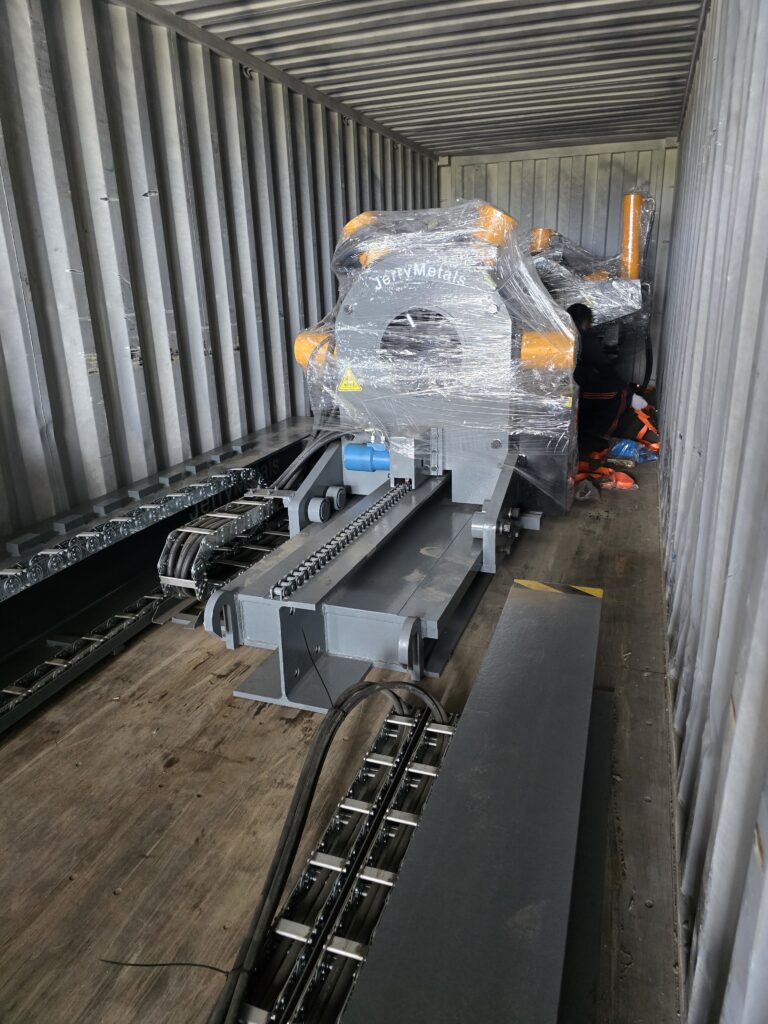
A continuous-rotation make-up head is designed to apply or release torque through continuous, controlled rotational movement, making it ideal for handling threaded connections in oilfield equipment. This machine ensures that each connection is properly tightened or loosened without damaging the threads, which is important for maintaining the integrity of oil and gas drilling and production equipment.
The head is powered by advanced hydraulic and servo motor systems, enabling precise control over the amount of torque applied. This precision minimizes the risk of over-torquing or under-torquing, both of which can lead to operational failures. These machines are equipped to handle a wide range of torque capacities and pipe sizes, making them versatile tools in the oil and gas industry.
Work out your own overshoot before you set a final speed
Take the shoulder slope off a real record rather than a data sheet. Pick two points on a logged curve after the shoulder and divide the torque difference by the turn difference in degrees. A joint that shoulders at 9,000 ft.lb and reaches 21,000 ft.lb fifteen degrees later has a slope of 800 ft.lb per degree. That single number sets everything below.
| Final speed | Degrees per second | Degrees past target at 0.15 s stopping time | Torque overshoot at 800 ft.lb per degree |
|---|---|---|---|
| 30 rpm | 180 | 27 | 21,600 ft.lb |
| 20 rpm | 120 | 18 | 14,400 ft.lb |
| 10 rpm | 60 | 9 | 7,200 ft.lb |
| 5 rpm | 30 | 4.5 | 3,600 ft.lb |
| 2 rpm | 12 | 1.8 | 1,440 ft.lb |
Stopping time is not printed on any spec sheet, so read it off the log. Find the sample where the torque target flag is set, then count how far the turn channel keeps moving before it goes flat. Valve response, motor and gearbox inertia and torsional wind-up in the joint all sit inside that number, and wind-up is the reason a recorded peak often relaxes by a few per cent once rotation stops.
Speed also decides whether the shoulder is visible at all. Slope-based shoulder detection needs roughly ten samples inside a 0.05 turn window, which is 18 degrees, so one sample every 1.8 degrees. The sampling rate you need in Hz is therefore rotation speed in degrees per second divided by 1.8: about 17 Hz at 5 rpm, and about 67 Hz at 20 rpm. Run 20 rpm through a 10 Hz log and each sample lands 12 degrees apart, wider than the shoulder event itself. The curve will look smooth and tell you nothing, and the operator will sign off a shut-off point the data never actually saw.
Six things speed changes on the curve
Continuous rotation versus stop and re-grip
Unlike traditional machines, which may require multiple steps to apply torque, a continuous-rotation make-up head offers continuous 360-degree rotation. This allows for a more efficient operation, as the machine can continuously rotate during both assembly and disassembly processes. The seamless rotation improves operational speed and reduces downtime, making the machine highly efficient for high-volume operations.
Control loop response and sampling rate
One of the standout features of a continuous-rotation make-up head is its ability to provide precise control over torque. Equipped with advanced sensors and servo motors, the machine ensures that the exact amount of torque is applied for each connection. The real-time feedback from the system allows operators to monitor torque levels and adjust as needed, preventing any damage to the threads or connections.
Feedback only helps if it arrives in time, which is why speed and galling are the same subject: see what actually starts galling on the last turns.
This precision is especially important in the oil and gas industry, where even minor variations in torque can compromise the safety and performance of equipment.
Slope is the part most operators skip, and it is the part that decides where the shut-off lands, so work through reading slope on a make-up curve before you fix a speed.
Where the stopping delay comes from
The integration of hydraulic systems with servo motors gives continuous-rotation make-up heads superior control and efficiency. Hydraulic systems provide the high power needed for torque application, while the servo motors ensure fine control over speed and torque. This combination allows the machine to deliver consistent results, even in demanding environments.
The servo motor’s ability to adjust torque dynamically based on real-time feedback enhances both safety and operational efficiency, ensuring that each connection is handled with care.
Speed, heat and hydraulic fluid condition
Energy efficiency is a major advantage of modern continuous-rotation make-up heads. These machines are designed to use power only when necessary, significantly reducing energy consumption. For instance, the machine’s motor only operates when torque is being applied, and it automatically powers down during idle periods.
This energy-saving feature can lead to significant cost reductions over time, particularly in large-scale operations. By using less energy and generating less heat, the machine also extends the lifespan of its components, further reducing long-term operational costs.
What the record must capture at speed
Fully continuous-rotation make-up heads come with real-time monitoring systems that track critical parameters such as torque, rotation speed, and clamp pressure. This data is displayed in real-time, allowing operators to make immediate adjustments if needed.
Additionally, many machines feature data logging capabilities, which record operational data for each connection. This provides a detailed history that can be used for quality control, compliance, and future reference. By having access to this information, operators can ensure that each connection meets industry standards and safety requirements.
A history is only useful if the fields are the right ones, so check what belongs in a joint record alongside the sampling rate it was captured at.
Noise and vibration as speed symptoms
Operating in high-noise environments can be challenging for workers, which is why continuous-rotation make-up heads are designed to operate with low noise levels. This makes the working environment safer and more comfortable, especially in noise-sensitive areas.
Moreover, the machine’s advanced hydraulic and motor systems produce minimal heat, preventing overheating and reducing the need for frequent maintenance. By keeping temperatures low, the machine preserves the quality of hydraulic fluids and other components, extending the overall lifespan of the system.
Speed bands by joint type
Fully continuous-rotation make-up heads are indispensable in various oil and gas applications, thanks to their precision and versatility. Here are some key areas where these machines are used:
Wellhead and pressure-containing joints
Wellhead equipment must withstand extreme pressures, making the accuracy of threaded connections crucial. A continuous-rotation make-up head ensures that each connection is properly torqued, preventing leaks and ensuring the integrity of the wellhead. The machine’s precision is particularly valuable when assembling or disassembling wellhead components that require exact torque specifications.
Downhole tool and tubular joints
In drilling operations, downhole tools and tubular goods are exposed to immense pressure and forces. Fully continuous-rotation make-up heads are used to make or break the threaded connections on these tools, ensuring they can withstand operational stresses. The machine’s ability to handle a wide range of pipe sizes makes it ideal for use in various drilling applications.
Release speed during teardown
Maintenance and repair operations often involve disassembling equipment for inspection and service. Fully continuous-rotation make-up heads make this process efficient by providing controlled torque that prevents damage to the threads during disassembly. This precision reduces the likelihood of equipment failures after reassembly, improving overall operational safety and reliability.
Teardown speeds need their own limits, because why release torque runs higher than make-up is the reason a joint can move suddenly once it lets go.
What you gain by slowing the last quarter turn
The advantages of using a continuous-rotation make-up head extend beyond its precision and efficiency. Here are some of the key benefits that oil and gas companies can expect:
- Reduced Downtime: With continuous rotation and real-time feedback, operators can complete tasks faster, reducing operational downtime.
- Improved Safety: The machine’s precision control and automation features ensure that each connection is handled safely, minimizing the risk of human error.
- Lower Operational Costs: By using energy only when needed and reducing maintenance requirements, continuous-rotation make-up heads can significantly lower long-term costs.
- Versatility: These machines are designed to handle a wide range of torque capacities and pipe sizes, making them suitable for various applications across the oil and gas industry.
Speed control and log rate are specification items, not settings you can add later, and they are the two we get asked about most on the make-up machines we build.
Setting speeds for a mixed workload
Investing in a continuous-rotation make-up head offers oil and gas companies numerous advantages, from improved operational efficiency to enhanced safety. With advanced features like real-time monitoring, precise torque control, and energy-efficient operation, these machines are designed to meet the rigorous demands of modern oilfield operations.
When choosing a bucking machine, it’s essential to partner with a reliable manufacturer. Galip Equipment, a leading bucking unit manufacturer, offers state-of-the-art continuous-rotation make-up heads designed to handle the toughest oilfield challenges. With customizable features and a commitment to innovation, Galip’s machines are trusted by oilfield operators worldwide.
Working rules for speed
The continuous-rotation make-up head represents the future of precision and efficiency in the oil and gas industry. By delivering continuous, controlled torque with real-time feedback and energy-efficient operation, these machines help companies improve productivity while reducing operational costs. Whether used in wellhead assembly, downhole tools, or equipment maintenance, continuous-rotation make-up heads are essential tools for ensuring the safety and reliability of oilfield operations.
Primary Bucking Unit Reference: For full specs, QA workflow, and model comparison, see the bucking unit page.
Expert Consultation
Need more information on optimizing your equipment performance? Our engineering team is available for technical consultations.
Request a Quote
Tell us about your requirements and our engineering team will prepare a detailed proposal with specifications, pricing, and delivery timeline.
