
How to Prevent Pipe Damage When Using a Bucking Unit
A bucking unit is more than a high-torque machine. In a serious oilfield service shop, it is also a pipe handling system, a gripping system, a torque-control system, and a quality record system. Customers buy a bucking unit because they need to make up and break out threaded tubular connections safely and repeatedly. But the real…
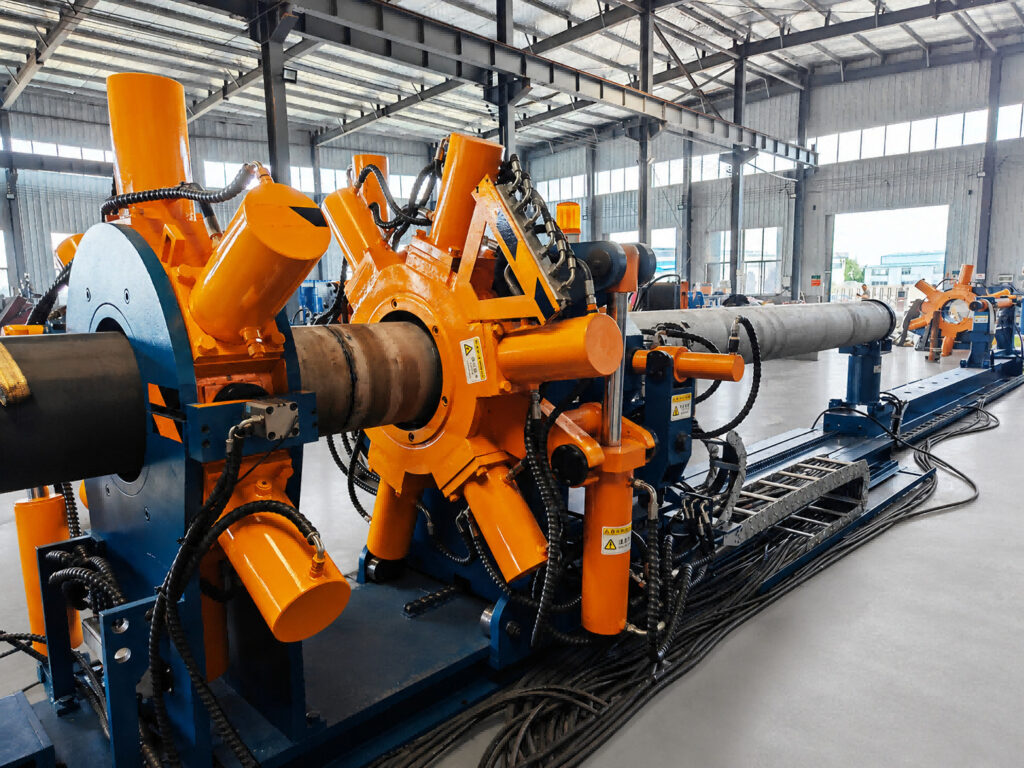
A bucking unit is more than a high-torque machine. In a serious oilfield service shop, it is also a pipe handling system, a gripping system, a torque-control system, and a quality record system. Customers buy a bucking unit because they need to make up and break out threaded tubular connections safely and repeatedly. But the real test is not only whether the machine can reach the target torque. The real test is whether it can reach that torque without damaging the pipe body, connection area, coating, thread, or sealing surface.
Pipe damage can be expensive. A visible clamp mark may lead to customer rejection. A deep tooth bite can become a stress concentration point. A scratch on CRA or stainless steel can create corrosion risk. Coating damage can destroy the purpose of the protective layer. Thread or seal damage can lead to failed pressure tests, rework, or costly tool replacement. That is why preventing pipe damage must be part of the bucking unit selection process, not only part of the operating manual.
This article explains how to prevent pipe damage when using a bucking unit, how to choose between non-marking dies and low-marking dies, what materials require the highest level of surface protection, and how torque-turn monitoring helps operators stop problems before they become failures.
Why Pipe Damage Happens During Bucking Unit Operation
During make-up or break-out, the bucking unit must grip the tubular strongly enough to transfer torque. If the grip is too weak, the pipe can slip in the jaws. If the grip is too aggressive, the dies can bite too deeply into the pipe surface. The correct setup is a balance between torque demand, material sensitivity, contact area, clamping pressure, die design, and surface condition.
Industry running guidance often emphasizes the same principle: use the lowest practical grip pressure while keeping the contact area as large as possible. The Tenaris IPSCO Connections Running Manual is a useful external reference for this general idea, especially where power tong grip pressure and non-marking wraparound dies are discussed. For bucking unit operators, this means that damage prevention starts before torque is applied. It starts with knowing the material, selecting the correct die, confirming the approved gripping area, and checking that the pipe is properly supported and aligned.
A common mistake is to think that reducing clamping pressure always protects the pipe. In reality, too little pressure may cause pipe slippage, which can create long scratches or spiral marks that are worse than a controlled shallow mark. Another mistake is using the same steel dies for every material. A die that works well on a carbon steel tool joint can be completely wrong for CRA tubing, stainless steel, coated pipe, or premium connections.
Common Pipe Damage Types to Avoid
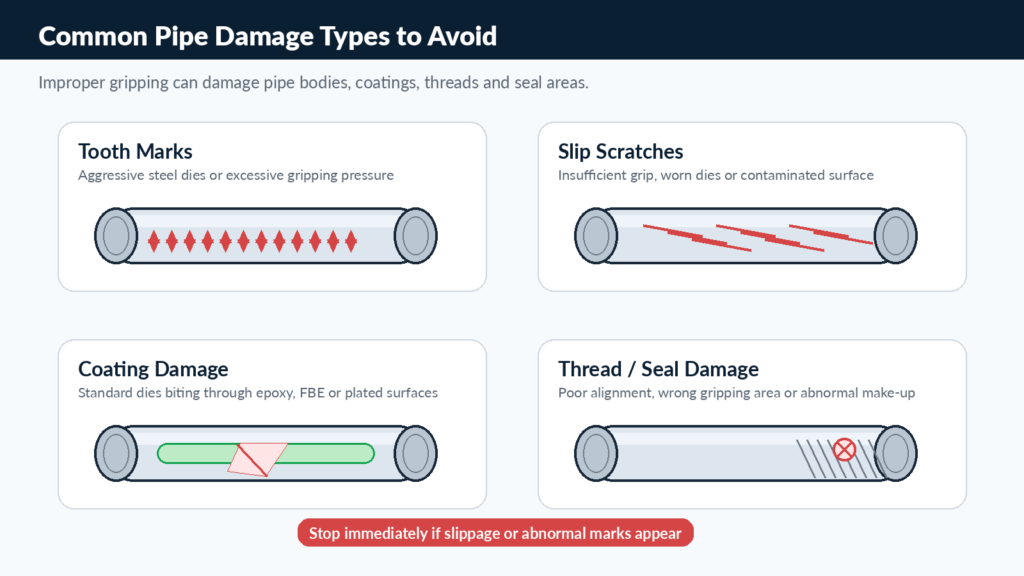
Figure 2. Common damage risks include tooth marks, slip scratches, coating damage, and thread or seal damage.
The most common pipe damage problems in bucking unit work are tooth marks, scratches, gouging, coating damage, thread damage, seal surface damage, and slip marks. Tooth marks are caused by aggressive dies biting into the pipe body. Scratches can be created by pipe movement inside the jaws or by hard particles trapped between the die and the pipe surface. Gouging is more severe than a normal scratch because it removes material from the surface. Coating damage occurs when the gripping system breaks through epoxy, FBE, chrome, or another protective surface layer. Thread and seal damage usually come from misalignment, poor stabbing, excessive speed, wrong lubricant practice, or applying torque before the connection is correctly engaged.
Not every visible mark has the same risk level. A light controlled mark on a robust carbon steel tool joint may be acceptable if the customer specification allows it. A deep linear scratch on a CRA pipe body, however, may be unacceptable even if the pipe still looks usable. This is why the purchasing question should not be only “What is the maximum torque?” A better question is “What gripping solution does this bucking unit provide for my pipe material and acceptance standard?”
What Materials Require Non-Marking Dies?
Non-marking dies are used when surface protection is critical. They may be made from non-metallic materials, soft inserts, wraparound pads, protected jaw systems, or other designs intended to prevent visible bite marks and reduce the risk of surface contamination. In some applications, the exact phrase may be non-marking jaws, non-marking inserts, non-marking wraparound dies, or soft-contact jaws. The purpose is the same: grip the pipe without aggressive metal-to-metal biting.
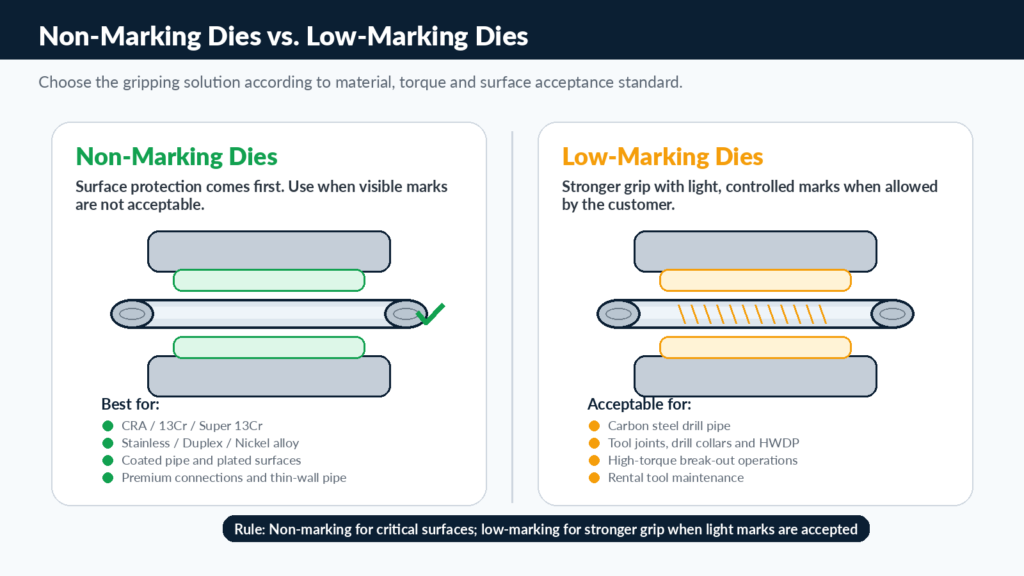
Figure 3. Non-marking dies are used when surface protection is critical; low-marking dies may be used when stronger grip is required and light marks are accepted.
CRA Pipe and Chrome Pipe
CRA stands for corrosion resistant alloy. Typical CRA and chrome materials include 13Cr, Super 13Cr, duplex stainless steel, super duplex stainless steel, nickel alloy, Inconel, and other high-corrosion-resistance tubular grades. These materials are expensive and often used in demanding wells where corrosion, sour service, high temperature, or high salinity is a concern. For this reason, surface damage is not a minor cosmetic issue. It can affect long-term reliability, corrosion resistance, and customer acceptance. The Tenaris Running General Guidelines are a useful external reference because they discuss low or non-marking non-ferrous dies for chrome and CRA pipe. In practical bucking unit selection, CRA and chrome pipe should be treated as damage-sensitive materials from the beginning of the RFQ.
External suppliers also offer dedicated systems for this application. For example, Expro describes the FLUID GRIP Tong as a non-metallic, non-marking gripping system for CRA tubulars. The specific equipment choice depends on the job, but the principle is clear: CRA tubulars require a gripping method designed to protect the surface, not a generic aggressive die.
Stainless Steel, Duplex, Super Duplex and Nickel Alloy
Stainless steel, duplex, super duplex, and nickel alloy components should normally use non-marking dies or a similarly protected gripping system. The risk is not only visible indentation. Embedded carbon steel particles, scratches, and gouging can create inspection issues and potential corrosion concerns. These materials are usually high-value, and customers often have strict acceptance criteria. If the customer says “no visible marks,” the bucking unit supplier should not offer standard steel dies as the main solution.
Coated Pipe and Plated Surfaces
Coated pipe requires special attention because the coating is part of the pipe protection system. Epoxy coating, FBE coating, internal coating, external anti-corrosion coating, chrome plating, and other protective layers can be damaged by aggressive dies. Once the coating is broken, the pipe may fail inspection even if the base metal is not damaged. For coated pipe, use non-marking dies, soft inserts, rubber or polyurethane pads, nylon inserts, or a customized gripping system designed for the coating type and torque requirement.
Premium Connections and Sensitive Machined Areas
Premium connections often include precision threads, torque shoulders, metal-to-metal seals, and machined faces. A bucking unit should not clamp randomly near these areas. The operator must confirm the approved gripping area from the customer procedure or connection owner guidance. Non-marking or low-damage gripping should be used when the jaws are close to a sensitive connection area. For premium connection work, torque control, alignment, thread compound discipline, and reporting are just as important as die material.
When Are Low-Marking Dies Acceptable?
Low-marking dies are not the same as non-marking dies. They may still leave a light visible mark, but the mark should be shallow, controlled, and acceptable under the customer specification. Low-marking dies can be useful when the pipe requires stronger grip than a soft non-marking system can provide, especially during high-torque break-out. The key is that the mark must remain controlled. A light mark is not the same as a deep bite, gouge, or slip scratch.
Low-marking dies are commonly acceptable for standard carbon steel drill pipe, drill collars, heavy-weight drill pipe, carbon steel subs, stabilizer bodies, mud motor housings, fishing tools, and other robust tool bodies when the approved gripping area allows light marking. These jobs often require reliable torque transfer. If a non-marking die slips during break-out, the resulting long scratch may be worse than a controlled low-marking impression.
High-torque break-out is one of the main cases where low-marking dies may be the practical choice. Break-out torque can be higher than make-up torque, especially for used tools, stuck connections, or components that have been in service for a long time. The decision should be based on material, surface standard, customer approval, and slippage risk. If the material is CRA, coated, stainless, or otherwise surface-sensitive, non-marking protection should remain the default. If the material is standard carbon steel and the customer accepts light marking, low-marking dies can offer a better balance between grip and protection.
Quick Die Selection Guide
| Material / Application | Recommended Die Type | Reason |
| CRA / 13Cr / Super 13Cr | Non-marking dies | Protect surface integrity and reduce corrosion or contamination risk. |
| Duplex / Super Duplex | Non-marking dies | High-value material with strict surface requirements. |
| Stainless steel | Non-marking dies | Avoid scratches and embedded carbon steel particles. |
| Nickel alloy / Inconel | Non-marking dies | Expensive severe-service components require careful handling. |
| Coated or plated pipe | Non-marking dies | Prevent coating damage and inspection rejection. |
| Premium connection area | Non-marking or low-damage dies | Protect threads, shoulders, seals, and machined faces. |
| Thin-wall tubulars | Non-marking or wraparound jaws | Reduce local pressure and deformation risk. |
| Carbon steel drill pipe | Low-marking dies may be acceptable | Good balance between grip and surface protection. |
| Drill collars / HWDP | Low-marking dies may be acceptable | High torque often requires stronger grip. |
| High-torque break-out | Low-marking dies may be better if approved | Prevent slippage under high torque. |
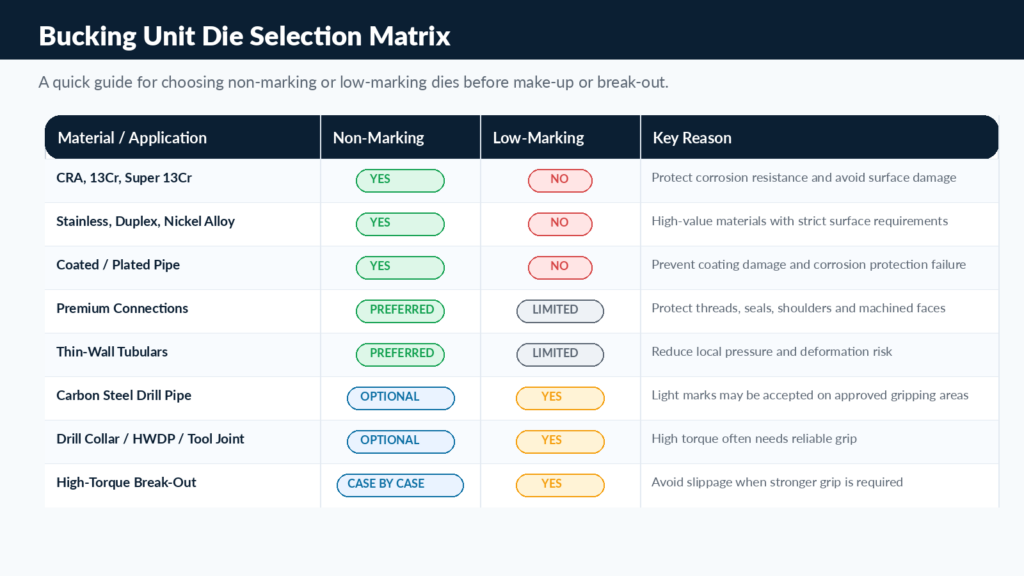
Figure 4. A quick matrix helps operators choose non-marking or low-marking dies according to material, surface standard, and torque requirement.
Best Practices to Prevent Pipe Damage
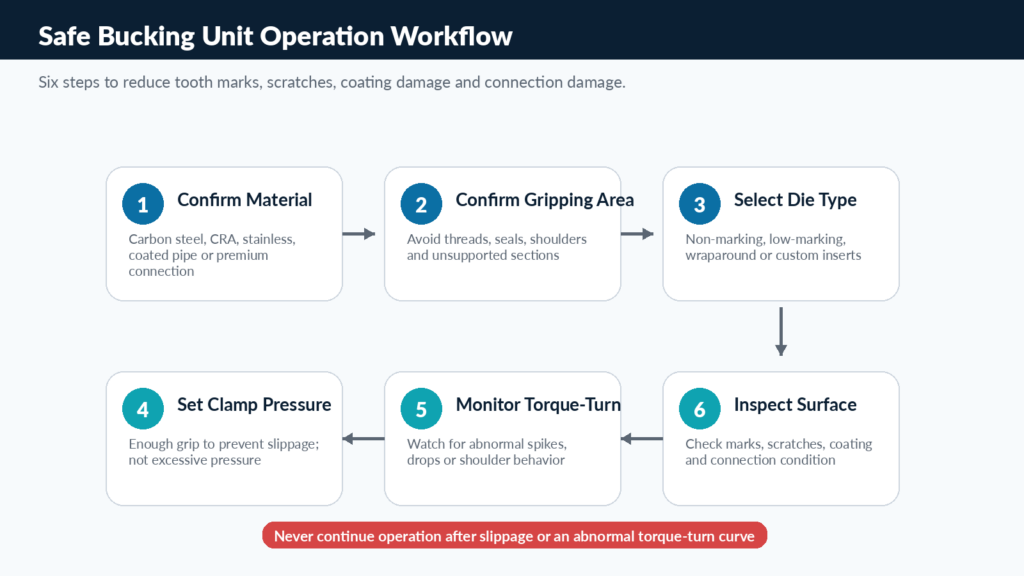
Figure 5. A safe bucking unit operation starts with confirming the material and ends with surface inspection after make-up or break-out.
The best way to prevent pipe damage is to combine the correct equipment configuration with disciplined operation. Before loading the workpiece, confirm the pipe material, OD range, wall thickness, connection type, coating status, target torque, break-out torque, and customer acceptance standard. If the job involves CRA, chrome, stainless steel, coating, thin-wall pipe, or premium connections, the die decision should be documented before the operator starts the machine.
Next, confirm the approved gripping area. The bucking unit should not clamp on threads, seal areas, torque shoulders, precision machined faces, or unsupported thin sections. For detailed process control, link this article internally to the Bucking Unit Operation Procedure page. That page can support the workflow sections covering pre-checks, clamping force, manual mode, torque application, and record saving.
The operator should inspect the dies before each job. Worn teeth, cracked soft inserts, embedded metal chips, sand, and oil contamination can all increase the risk of damage. A clean die surface and a clean pipe surface are basic but often overlooked. If a non-marking insert is hard, deformed, cracked, or contaminated, it may no longer protect the pipe properly. Replace worn inserts before they damage a customer part.
Clamping pressure must be adjusted carefully. More pressure is not always better, and less pressure is not always safer. The pressure must be high enough to prevent slippage and low enough to avoid unnecessary indentation. If slippage occurs, stop immediately. Do not keep applying torque. Release the pipe, inspect the surface, clean the jaws, check die condition, confirm alignment, and choose a more suitable gripping method if necessary.
How Torque-Turn Monitoring Helps Prevent Damage
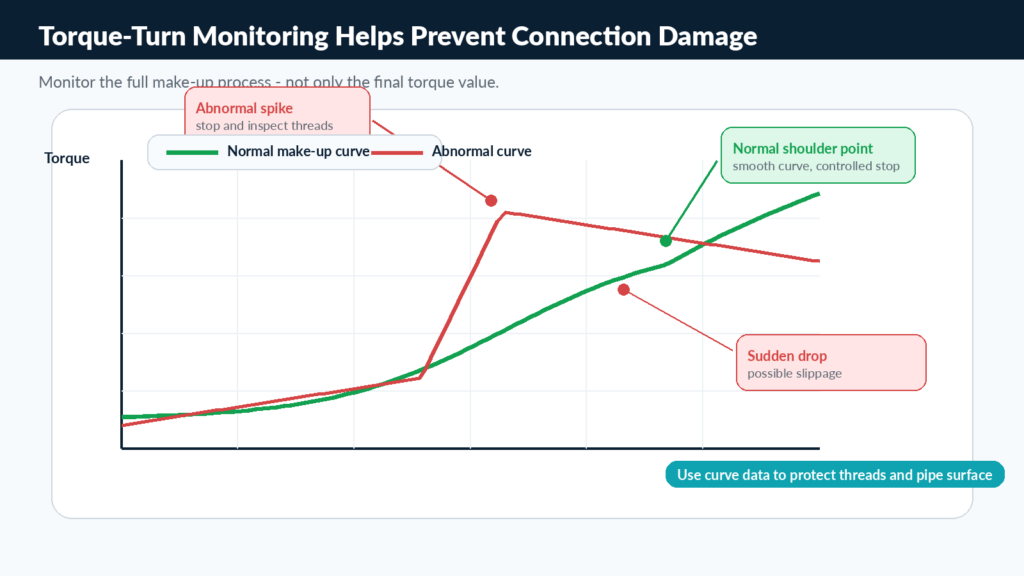
Figure 6. Torque-turn monitoring helps detect abnormal make-up behavior before thread, seal, or pipe surface damage becomes serious.
A torque-turn system does not replace proper handling, but it gives operators and QA teams a better view of the connection process. Final torque alone cannot prove that the make-up was clean. The curve can show abnormal torque rise, sudden drop, irregular shoulder response, possible slippage, poor alignment, galling risk, or incorrect thread engagement. For a deeper explanation, link to Torque-Turn Graph Interpretation from this section.
For premium connections, torque-turn monitoring is especially valuable because the connection may require controlled rotation speed, proper shoulder approach, and a clear record for witness review. If the curve shows an abnormal spike or sudden loss of torque, the operator should stop and inspect rather than forcing the connection to final torque. A clean report is not only a sales feature; it is part of damage prevention and customer traceability.
Bucking Unit Configuration Checklist for Damage-Sensitive Jobs
When a customer asks for a bucking unit for damage-sensitive pipe, the quotation should not be based only on maximum torque and pipe OD. The proposal should ask for and address the real work conditions.
- Pipe material: carbon steel, CRA, stainless steel, duplex, nickel alloy, chrome, or coated pipe.
- Pipe OD range, wall thickness, length, and weight.
- Connection type: API thread, premium connection, proprietary tool thread, mud motor connection, stabilizer, sub, jar, or other BHA component.
- Required make-up torque and expected break-out torque.
- Customer acceptance standard: no marks, light marks allowed, no coating damage, or approved gripping area only.
- Required jaw system: standard dies, low-marking dies, non-marking dies, wraparound jaws, or custom inserts.
- Need for torque-turn display, PDF report, Excel export, and job traceability fields.
- Operation frequency, shift output, operator training, spare inserts, and maintenance package.
For a technical configuration review, direct buyers to the Galip Bucking Unit page. If the job is mainly high-force disassembly, also connect readers to the Breakout Unit page. For CRA-specific handling habits, add a contextual internal link to CRA Connection Handling. These internal links help readers move from education to product selection without feeling pushed into a quote too early.
SEO Image Recommendations for This Article
Images should be uploaded with descriptive filenames and useful alt text. Avoid generic names such as IMG_001.png. A better filename helps both users and search engines understand the image context.
| Suggested Filename | SEO Alt Text |
| bucking-unit-pipe-damage-prevention-hero.png | Hydraulic bucking unit gripping a pipe with controlled pressure and torque to prevent pipe damage during make-up and break-out operations. |
| common-pipe-damage-risks-bucking-unit.png | Common pipe damage types caused by improper bucking unit operation including tooth marks, scratches, coating damage and thread damage. |
| non-marking-vs-low-marking-dies.png | Comparison of non-marking dies and low-marking dies for bucking unit pipe gripping applications. |
| bucking-unit-die-selection-matrix.png | Bucking unit die selection matrix showing which materials require non-marking dies and which can use low-marking dies. |
| safe-bucking-unit-operation-workflow.png | Best practice workflow to prevent pipe damage when using a bucking unit from material confirmation to final inspection. |
| torque-turn-curve-warning-signs.png | Torque-turn monitoring chart showing normal make-up curve and abnormal curve to help prevent thread and connection damage. |
FAQ: Preventing Pipe Damage When Using a Bucking Unit
Do all pipes require non-marking dies?
No. Standard carbon steel drill pipe and tool joints may use low-marking dies when light controlled marks are accepted. However, CRA, chrome, stainless steel, coated pipe, nickel alloy, and premium connection work should normally use non-marking or low-damage gripping solutions.
What is the difference between non-marking dies and low-marking dies?
Non-marking dies are designed to avoid visible marks and reduce surface damage. Low-marking dies may still leave shallow controlled marks, but they provide stronger grip than many soft systems. Low-marking dies are useful when slippage risk is higher and light marking is allowed.
Is pipe slippage worse than a light die mark?
Often yes. A controlled light mark on an approved carbon steel gripping area may be acceptable, but slippage can create long scratches, gouging, spiral damage, or coating failure. If slippage occurs, stop the operation and correct the setup before continuing.
How does a bucking unit protect premium connections?
It protects premium connections by combining proper alignment, approved gripping areas, correct die selection, controlled rotation speed, accurate torque delivery, torque-turn monitoring, and traceable report generation.
What information should a customer provide before ordering?
The customer should provide pipe material, OD range, torque range, connection type, coating status, approved gripping area, surface acceptance standard, report requirement, power supply, workshop space, and expected workload.
What is the most important rule for preventing pipe damage?
Choose the gripping solution according to the actual material and job condition. Non-marking dies should be used when surface protection is critical. Low-marking dies may be used when stronger grip is required and light controlled marks are acceptable.
Conclusion
Preventing pipe damage when using a bucking unit is not a single setting. It is a complete solution that includes die selection, gripping area, contact area, hydraulic clamping pressure, alignment, cleanliness, torque control, and operator discipline. Non-marking dies are the correct choice when the material or customer standard requires maximum surface protection. Low-marking dies are acceptable when the material is robust, the gripping area is approved, and the customer allows light controlled marks.
A professional bucking unit supplier should not ask only for pipe diameter and torque. The supplier should ask what the pipe is made of, how sensitive the surface is, whether coating or premium threads are involved, what acceptance criteria apply, and what record the customer needs after the job. To discuss a configuration for your pipe material and torque requirement, visit Galip Equipment Contact and share your OD range, torque range, material, connection type, and surface protection standard.
Expert Consultation
Need more information on optimizing your equipment performance? Our engineering team is available for technical consultations.
Request a Quote
Tell us about your requirements and our engineering team will prepare a detailed proposal with specifications, pricing, and delivery timeline.
