
CRA Connection Handling: 7 Expert Habits That Protect Premium Threads
A practical guide to handling chrome and CRA connections with slower speeds, cleaner gripping, and better thread protection.
A practical guide to handling chrome and CRA connections with slower speeds, cleaner gripping, and better thread protection.
CRA connection handling is less about horsepower and more about rhythm, grip quality, and contamination control.
Why ordinary habits become expensive on premium material
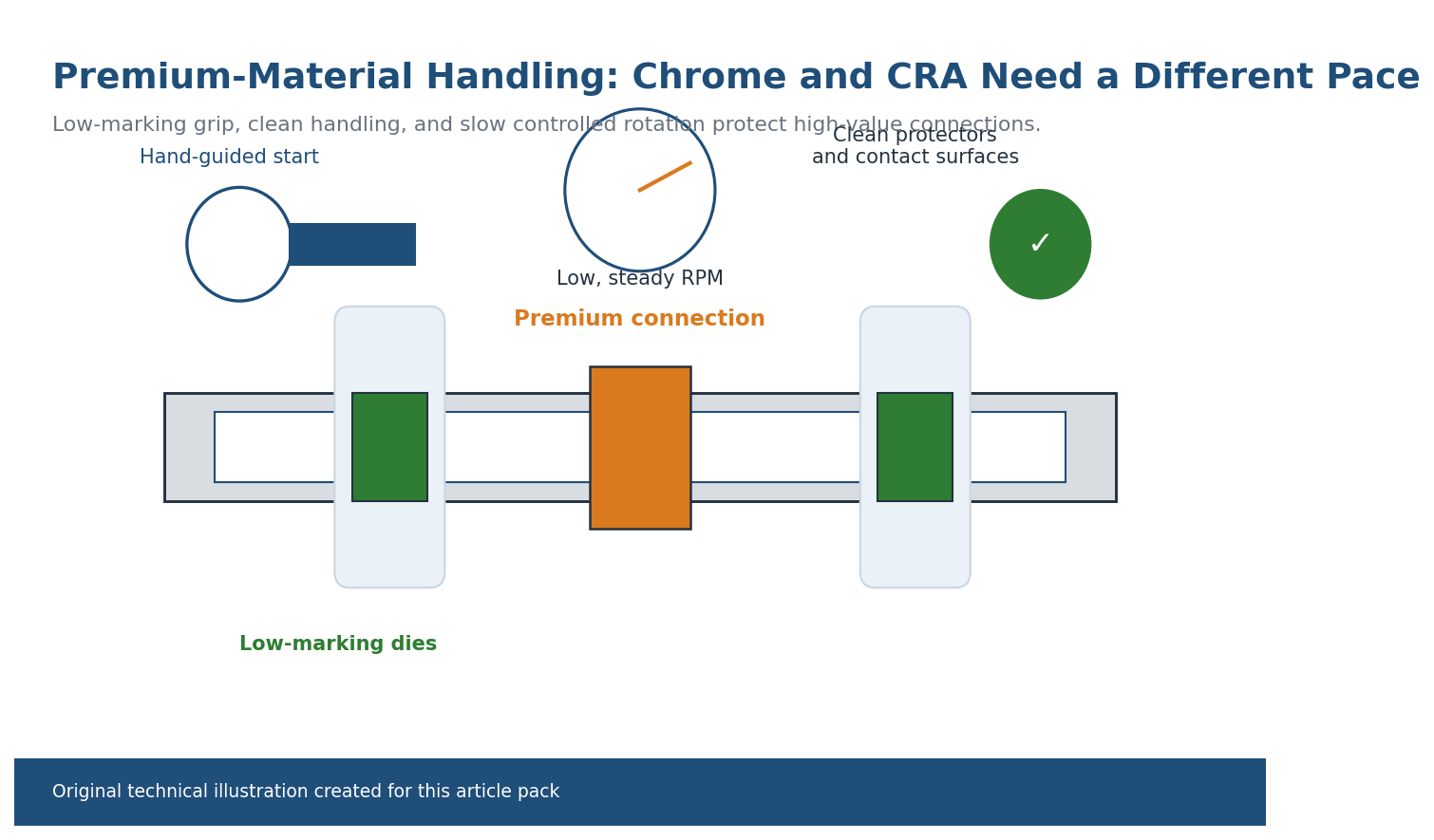
A workshop can get away with rough habits on ordinary jobs for longer than it should. Chrome and CRA connections shorten that grace period. Surfaces that look robust on paper quickly expose rushed handling, aggressive gripping, and dirty process habits in real use. That is why premium-material jobs often feel less forgiving. The machine may be the same, but the operating discipline cannot be.
Related reading: premium connection QA criteria.
Many problems begin with the wrong mindset. Crews assume the same pace that works on standard carbon-steel work will also work on chrome or CRA. It usually does not. Premium surfaces punish shortcuts. A little extra clamp pressure that might only leave a mark on a less sensitive joint can create a real problem here. A hurried spin-in that seems harmless on one product can become a reason to reject another. The lesson is not that the work must become slow and fearful. It is that the work must become cleaner, quieter, and more deliberate.
End users who run a mixed workshop should think about this as an operating mode, not merely a different consumable package. The safest premium-material jobs usually have a different rhythm from the moment the protectors come off. The crew handles the parts more carefully, confirms the contact surfaces, and keeps the connection centered through every step of entry and release.
CRA connection handling: grip, contact, and surface protection come first
If the connection is marking-sensitive, the grip system stops being a background detail. It becomes part of the product-protection plan. Low-marking or non-marking dies, clean contact surfaces, and a grip arrangement that spreads load instead of concentrating it all matter more when the material itself is less tolerant of bad handling. Operators should not wait until after the first visible marks to discover that the shop is effectively using the wrong grip philosophy for the job.
It also helps to understand how clamp pressure, contact area and die choice work together on marking-sensitive pipe, because reducing pressure on its own can cause slippage scratches that are worse than a controlled bite.
Related reading: connection quality scorecard.
This is why disciplined CRA connection handling starts with the obvious things that busy crews sometimes skip. Check the dies. Check the jaw surfaces. Make sure the protectors, guides, and support points are clean. Confirm the connection is not being dragged across metal edges or set down carelessly between steps. Premium jobs are not usually ruined by one huge mistake. They are worn down by a chain of ordinary handling decisions that would have been harmless on easier work.
The more valuable the connection, the less sense it makes to treat clean handling as optional. A shop that advertises premium service but uses rough contact practices is creating a mismatch between what it promises and what the machine is actually allowed to do.
Why slower and steadier almost always wins
Premium material rewards smoothness more than speed — that is the core of good CRA connection handling. Operators should think in terms of controlled engagement, constant low-speed rotation, and careful transition between hand-guided and powered movement. When a connection is prone to surface damage, the goal is not to prove how quickly the machine can finish the job. The goal is to maintain control while the threads, seals, and shoulders are still vulnerable.
Related reading: torque machines for premium connections.
One reason slower operation works better is that it gives the crew time to read the connection. A small alignment issue, early friction rise, or odd feel in the first turns can be detected and corrected while the joint is still salvageable. High pace hides those signals until the connection is already deeper into the problem. Low-speed work also reduces the chance of abrupt contact at breakout, where sensitive surfaces can be marked by bounce, whip, or careless separation.
This does not mean the workshop must become inefficient. In fact, the total job often moves faster when the connection is handled at the right pace the first time. Less rework, less cleaning after avoidable damage, fewer arguments during inspection, and fewer rejected parts all come from keeping the process stable. Premium work pays back patience.
Contamination control is part of material handling
When crews talk about premium handling, they often focus on grip marks and forget contamination. That is a mistake. Dirt, metallic fines, old compound, fluid residue, and contaminated protectors can all undermine the very surfaces the shop is trying to protect. On marking-sensitive material, contamination is not just a cleanliness issue. It is a performance issue and a confidence issue.
Good operators build contamination control into the handling routine instead of treating it as a last look before make-up. They keep protectors on until the connection is truly ready. They inspect the threads and shoulder carefully. They use clean tools and clean compound. They do not allow “almost clean” to pass simply because the joint looks usable from a distance.
This same discipline applies after breakout. The value of premium material is protected not only during make-up but also during cleaning, inspection, storage, and transport back to the next station. A premium connection that leaves the machine in good condition can still lose that condition in the next five minutes if the post-breakout routine is careless.
Training operators to make premium work look quiet
The best premium-material crews are not the ones who make the most dramatic saves. They are the ones whose jobs look calm from the outside. The connection enters cleanly. The rotation stays steady. Breakout does not turn into a jolt. The pipe never seems to be fighting the machine. That quiet appearance is not luck. It is the result of training operators to respect surface sensitivity before damage happens.
For end users, this is a useful way to judge equipment and procedures. Ask whether the setup supports low-marking gripping. Ask how easy it is to control speed at the low end. Ask how the workshop prevents contamination between stations. Ask whether operators can slow the move without losing visibility or control. A machine that can only look impressive at full force is not necessarily the best machine for premium work.
Turning that into a purchase test is easier with a list of the machine capabilities to verify for damage-sensitive pipe, from soft-contact jaws and proportional clamp control through to the report each joint leaves behind.
Chrome and CRA connections do not need special treatment because they are fragile. They need special treatment because they are valuable, less forgiving, and expected to come out of service with their quality intact. Operators who understand that do not just run the machine differently. They protect the economics of the whole job.
Key takeaways
- Premium-material jobs need a different operating rhythm, not just different consumables.
- Grip quality, clean handling, and contamination control matter as much as torque.
- Low-speed, steady movement protects sensitive surfaces better than rushed efficiency.
- A good premium-material job should look quiet, controlled, and uneventful.
Related Products
- Explore our Bucking Unit and Breakout Unit product pages.
- Read more on premium connection QA criteria and connection quality scorecard.
- Ready to discuss your setup? contact our team.
Frequently asked questions about CRA connection handling
Why does CRA connection handling need a slower pace than carbon steel?
CRA and chrome surfaces are less tolerant of rushed handling, aggressive gripping, and dirty process habits. A rough behavior that only leaves a mark on a carbon-steel joint can cause a rejection on CRA. Slowing down protects the surface while the connection is most vulnerable.
Which dies are safest for CRA connection handling?
Low-marking or non-marking dies that spread clamp load rather than concentrate it. On marking-sensitive material, the grip system stops being a background detail and becomes part of the product-protection plan.
How does contamination affect CRA connection handling?
Dirt, metallic fines, old compound, fluid residue, and contaminated protectors undermine the very surfaces the shop is trying to protect. On CRA, contamination is not only a cleanliness issue — it is a quality and audit issue.
What rotation speed is safe for CRA connection handling?
Think in terms of controlled engagement with constant low-speed rotation and a careful transition between hand-guided and powered movement. The goal is to maintain control while threads, seals, and shoulders are still vulnerable — not to prove the machine can finish quickly.
How do you train operators for CRA connection handling?
Train crews so the job looks quiet from the outside: clean entry, steady rotation, controlled release, no wrestling. Quiet work on premium material is not luck — it is a culture that respects surface sensitivity before damage happens.
Talk to our team
Invite readers to request a bucking-unit recommendation based on premium threads, chrome material, and marking tolerance. For broader context on threaded-connection care, see API standards for oilfield threaded connections. When you are ready to specify or upgrade, review our Bucking Unit options or contact our team.
Expert Consultation
Need more information on optimizing your equipment performance? Our engineering team is available for technical consultations.
Request a Quote
Tell us about your requirements and our engineering team will prepare a detailed proposal with specifications, pricing, and delivery timeline.
