
Third-Party Torque Turning: What the Service Covers, What the Report Must Prove, and When to Bring It In-House
What third-party torque turning delivers, the fields a defensible torque-turn report must show, how to vet a crew, and the point where owning the machine wins.
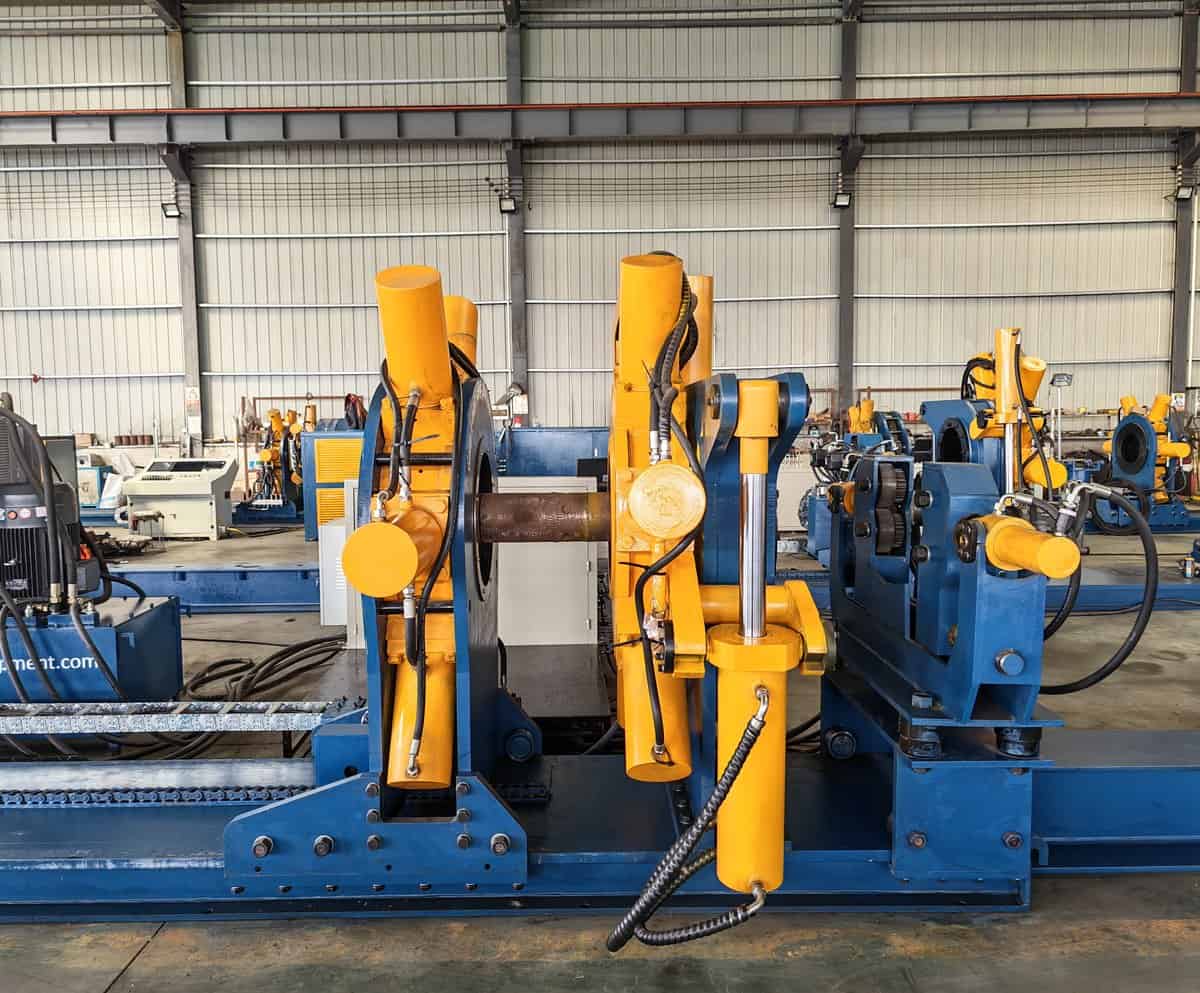
Third-party torque turning is contracted make-up and break-out of threaded connections on a calibrated, torque-turn-recording machine, delivering a signed record for every joint. It suits shops with occasional or overflow work. Once connection volume is steady, or the record itself is your deliverable, running the work in-house on your own bucking unit is usually the stronger position.
At a glance
| Service type | Contracted make-up, break-out and verification of threaded connections, in the vendor’s shop or on your site |
| Best for | Overflow work, one-off repair campaigns, connection families your own equipment cannot clamp, and jobs where the customer demands an independent record |
| The deliverable | A torque-turn record per joint: curve, landing values, pass/fail against the governing acceptance window, exported as PDF and Excel |
| Typical equipment behind it | A rotational bucking unit with logged torque and turns. Our frames run from 10″ to 32″ maximum pipe OD, with smaller tubing and accessories clamped on jaw inserts, and torque to 199,000 ft-lb on the largest builds |
| Decision this page supports | Whether to keep buying the service, and the point where owning the machine wins |
What a third-party torque turning crew does
Vendors sell this work under several names — bucking services, torque-turn services, third-party make-up — but the scope is the same, and it is narrower than the names suggest. A competent vendor takes your tubulars, your connection specification and the governing acceptance window, and returns made-up or broken-out joints with a record you can hand to your customer.
Where the torque values come from depends on the connection. For premium and proprietary threads, the licensor’s data sheet at its current revision governs, with the applied target legitimately adjusted for the thread compound’s friction factor. For API connections such as STC, LTC and buttress, values come from API RP 5C1, and buttress is accepted on make-up position against the triangle stamp, with torque recorded rather than used as the acceptance criterion. What a crew never gets to do is invent a value for a premium thread. An offer to “work out” a torque for one is a reason to use another crew.
In practice the scope covers four kinds of work:
- Production make-up — couplings onto casing or tubing after threading, accessories onto pup joints, float equipment, crossovers.
- Break-out and inspection support — backing out connections after a failed pressure test or before re-cut, without chewing up the thread you are trying to save.
- Verification runs — re-making a sample of joints under instrumentation because an end user wants evidence independent of the mill.
- Repair-shop support — a thread shop that re-cuts casing threads still has to make up the coupling afterwards, to the correct torque, with proof. Repaired threads with no way to close the joint properly is one of the most common reasons shops first call a torque-turning vendor, and later buy a machine.
The report is the product
Strip away the crew and the truck, and what you are buying is a defensible record. If the record is thin, the service was cheap for a reason. A real torque-turn record reads like the log below. The numbers come from a logged joint on one of our own machines, and they are the level of detail worth demanding from anyone you pay:
| Field on the record | What it looked like on a real logged joint | Why a buyer should insist on it |
|---|---|---|
| Acceptance window and its source | 10,000–12,500 ft-lb, from the connection data sheet | Proves the crew worked to the governing figure, not a habit |
| Final landing value | 11,234 ft-lb, inside the window | A single number your customer’s QA can check in seconds |
| Shoulder point, where the design has one | Detected at 0.033 turns before landing, slope factor 26.752 | Shows the machine measured the approach instead of the operator estimating it. API 8-round and buttress have no torque shoulder, and a compliant record for those carries none |
| Turns-to-land vs the reference joint | Spread of 0.014 turns against the reference | Flags thread damage and cross-threading that torque alone hides; acceptance still follows the licensor’s absolute turn window |
| Clamp and material handling | 860 psi tailstock pressure on a 13Cr CRA run, lubricant batch and expiry recorded | CRA surfaces are unforgiving; the record should prove the settings were used |
| Cycle traceability | Job number, timestamps, 1 min 53 s cycle, exported as PDF and Excel | Makes every joint findable a year later, when the well asks questions |
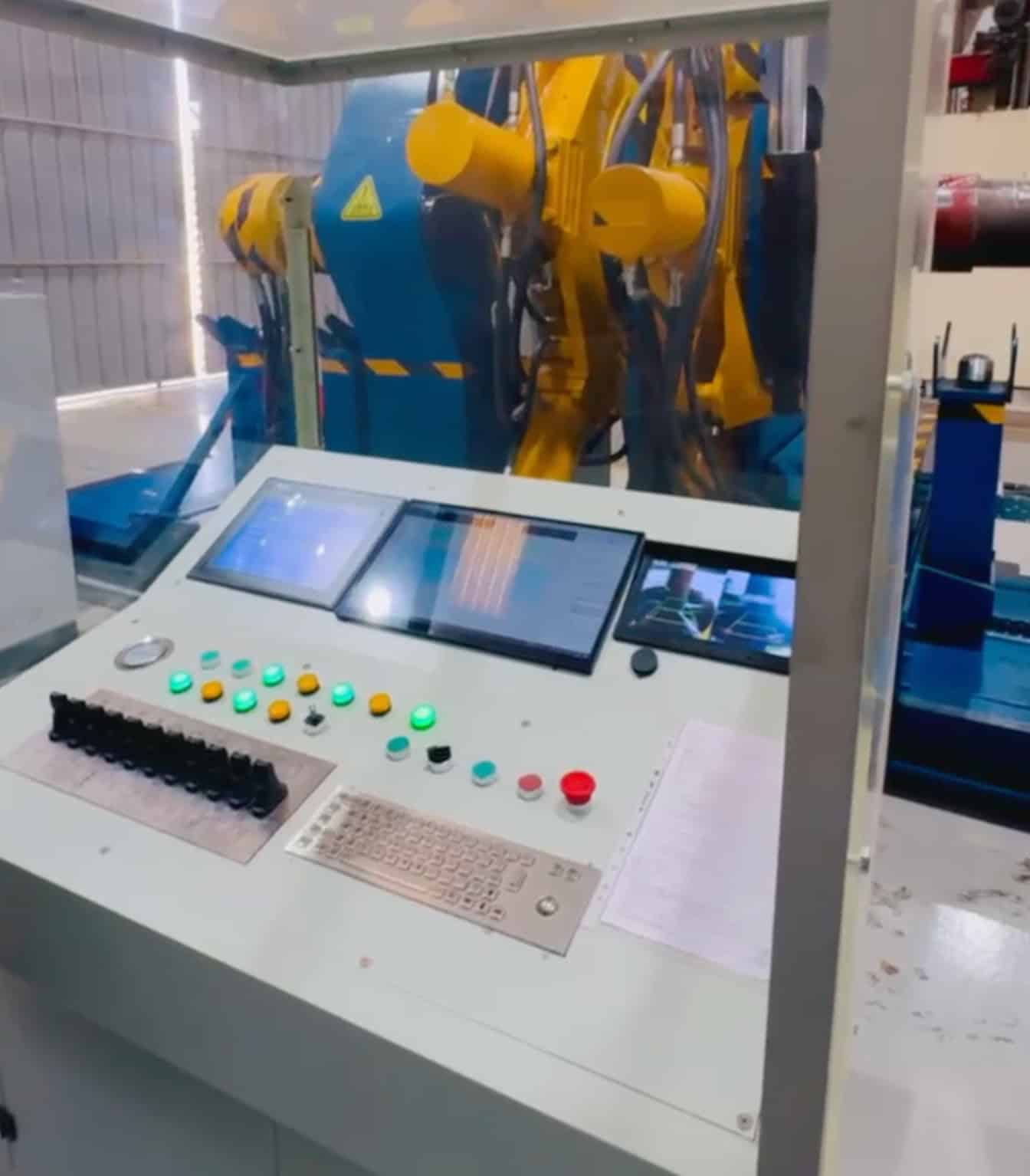
Buyers have caught up with this. Scope-of-work documents we receive now routinely specify automated PDF reporting and searchable job databases before any vendor or machine is chosen; one recent scope from a Gulf trading house went as far as naming turn resolution to a ten-thousandth of a turn, and more of its two pages concerned the record than the machine.
When paying a third party is the right call
| Situation | Effect to consider | What the team should use for a decision |
|---|---|---|
| Occasional work — a few joints a month | Machine ownership cannot amortise; a crew that does this daily will beat your setup time | Count joints over the last six months, honestly, before deciding anything |
| A connection family outside your clamp range | One 24″ job does not justify a 24″ frame | Hire the service for the outlier; size any future machine on the work you actually repeat |
| Customer demands an independent record | Some end users treat the asset owner’s own record as self-certification | Ask the customer in writing whether an in-house record with full traceability is acceptable; often it is |
| Peak overflow with a deadline | Your machine is booked and the vessel will not wait | Use the vendor for the spike; keep the baseline in-house |
Where it stops making sense
There is no honest universal joints-per-month threshold, because rates, distances and connection families differ too much. What a buyer can do is put four numbers side by side for the last six months:
- total paid to the vendor, including transport and standby;
- schedule cost — days lost waiting for a slot in someone else’s shop;
- handling risk — every extra loading, trucking and unloading cycle is an opportunity to damage a thread, and receiving-inspection work consistently finds handling damage at the yard rather than the mill;
- what the same volume costs through a machine you own: the purchase, an operator you already employ, periodic traceable calibration, jaw and die sets per OD and connection family (non-marking sets for CRA are extra), and maintenance.
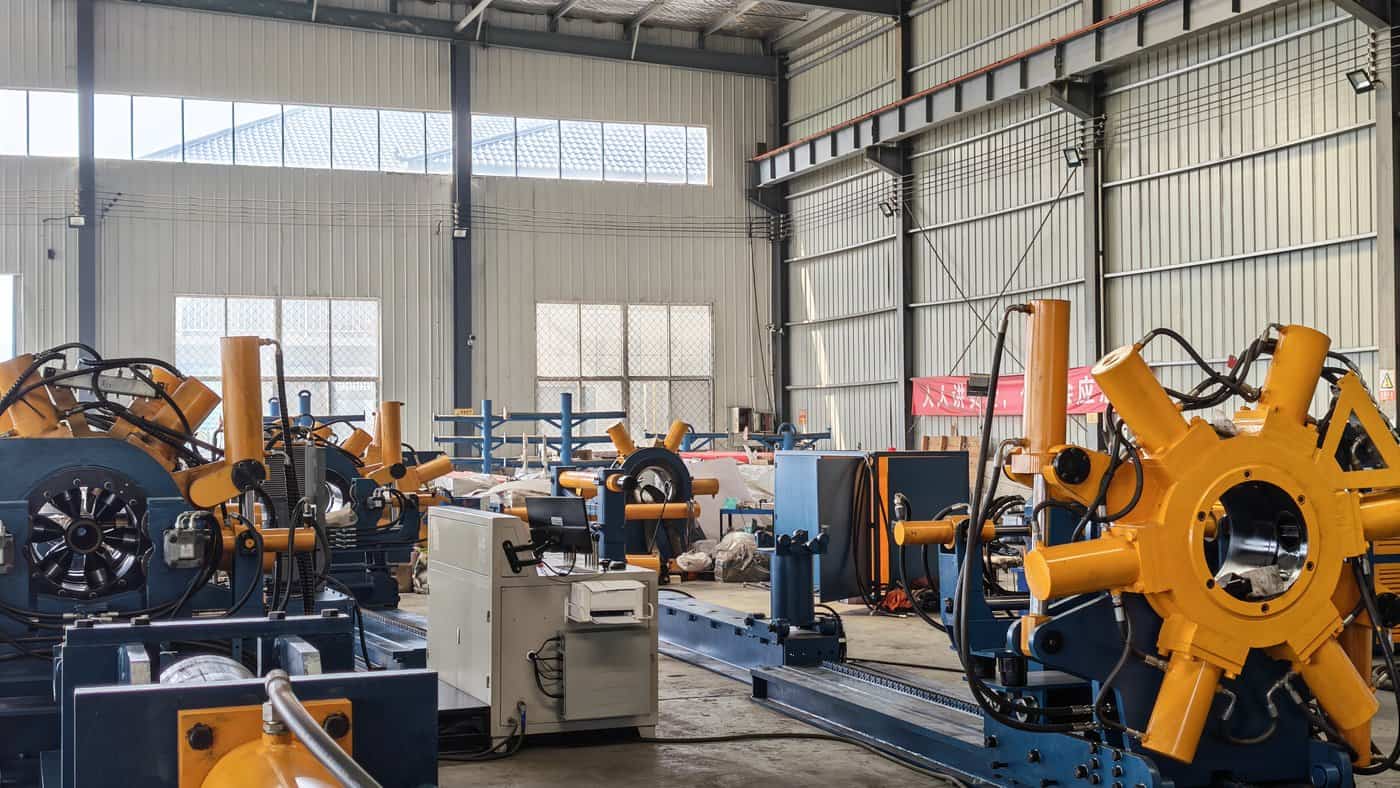
When the first three lines start to rival the fourth, the argument is over. A thread-repair shop we quoted this year had reached exactly that point: every repaired casing string still needed its couplings made up, the outsourced round trip had become the bottleneck, and the machine paid for itself on schedule alone. Most shops follow the same sequence: they outsource the work, volume grows, and eventually they buy.
Vetting a vendor: the questions that separate crews
| Check | What to confirm | Action when it does not match |
|---|---|---|
| Calibration traceability | Torque measurement calibrated against a documented reference, certificate in date, certificate number on the report | No certificate, no job — an uncalibrated record is decoration |
| Whose torque figures | Licensor data sheet at current revision for premium threads; API RP 5C1 for API connections; friction-factor adjustments documented | A crew quoting premium-thread torques from memory gets that work refused |
| Curve retention | Full curve stored per joint and handed over, not just the landing number | Ask for a sample report from a past job before committing pipe |
| CRA and chrome practice | Non-marking or low-marking jaw options, controlled clamp pressure, lubricant control with batch records | 13Cr and CRA strings go elsewhere until they can show this |
| Witness rights | Your inspector may watch make-up and see the live curve, not only the paperwork | If witnessing is resisted, treat the record as unverifiable |
| Rejection handling | Out-of-window landings dispositioned per the connection manufacturer’s guidelines, which cap re-makes and can require re-cut or a new coupling; each step documented | A vendor without a written answer will improvise one on your pipe |
Bringing the work in-house: what changes
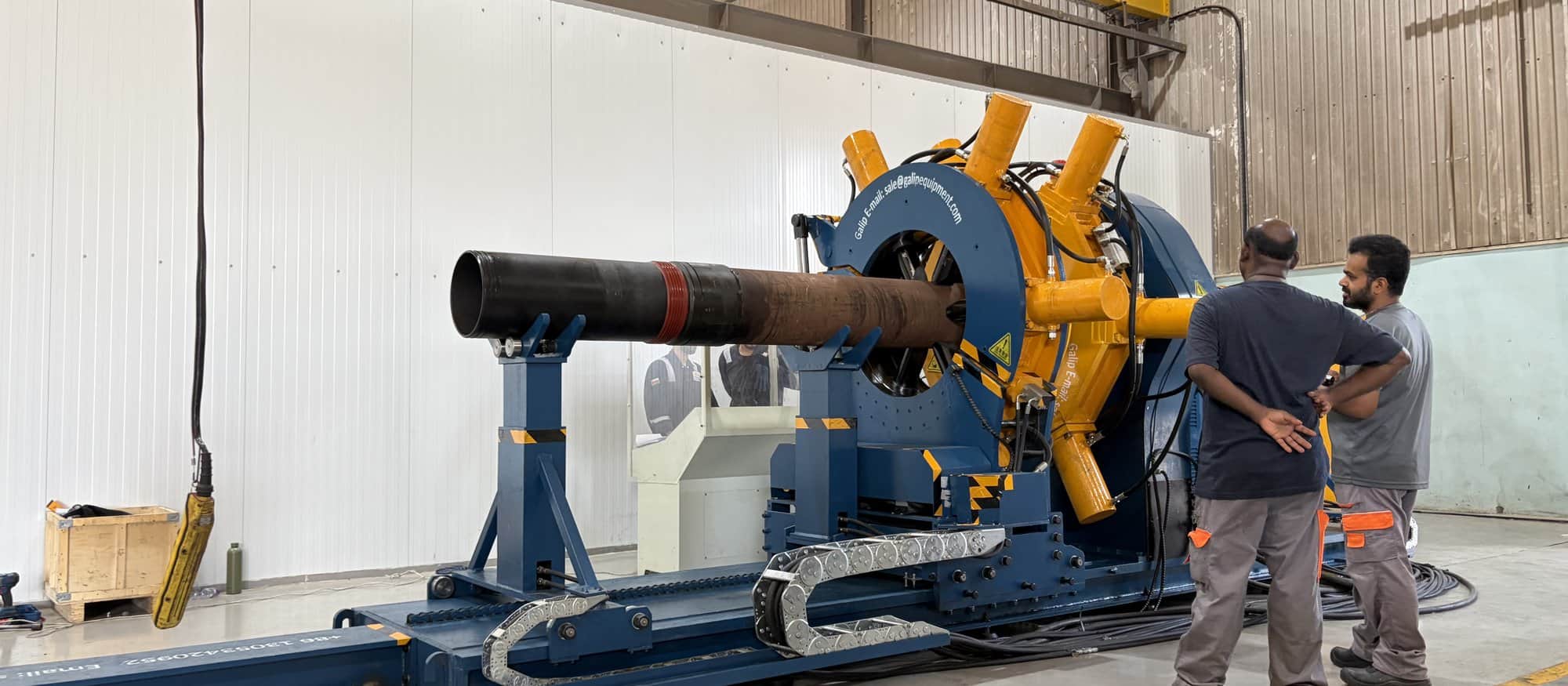
Owning the machine does not just delete the vendor’s invoice. Three things change outright.
The record becomes yours. Every joint’s curve sits in your own database, searchable by job number, exportable when a customer audits you. You stop being a company that buys evidence and become one that produces it.
The schedule flips: the joint gets made up the hour the thread is cut, not the week the vendor has a slot. For repair shops the coupling make-up stops being the tail that wags the whole delivery date.
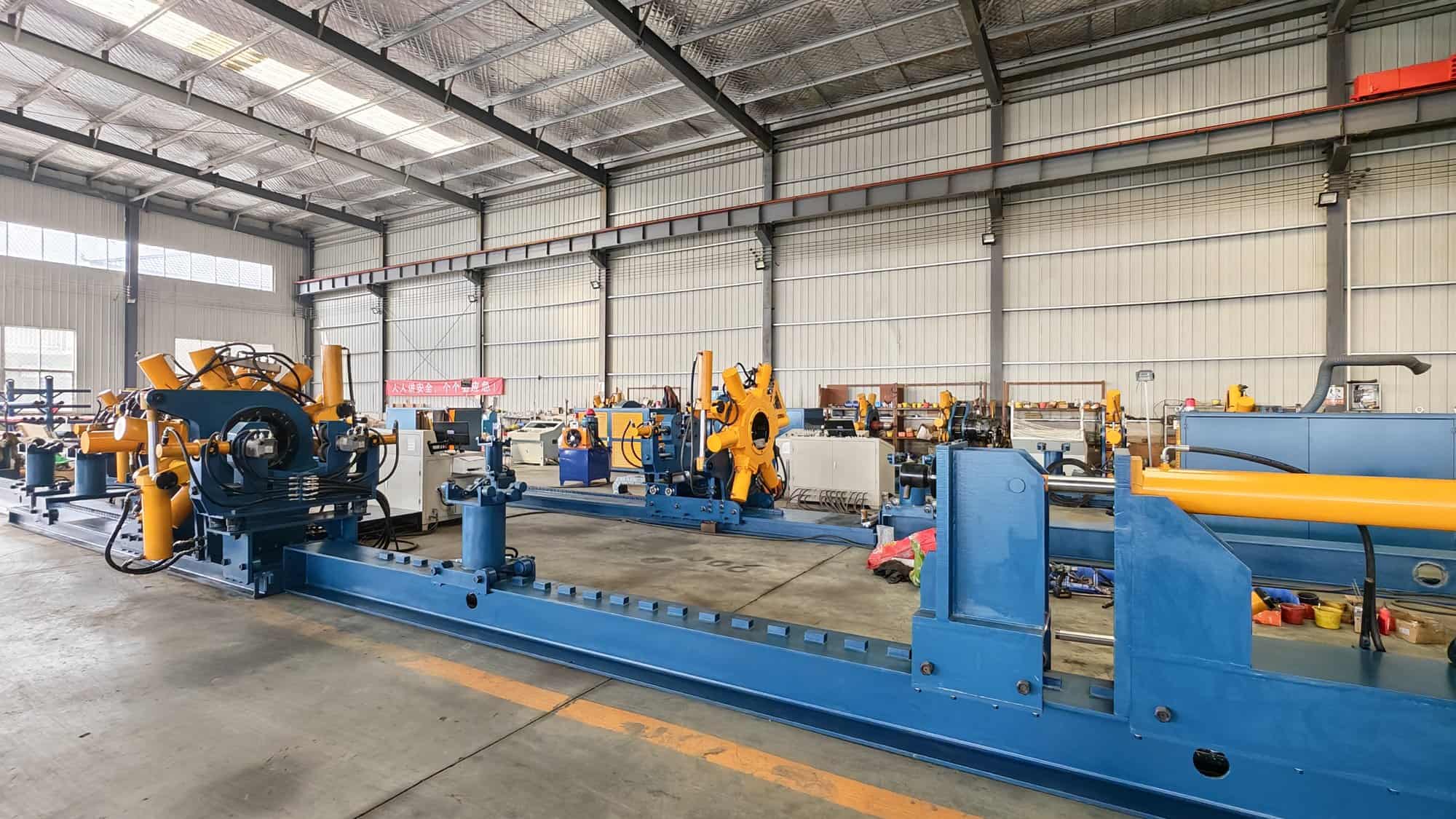
And the same machine picks up work you used to decline: break-out for inspection, re-make verification runs, the odd job outside the usual programme. The bucking unit that closes production joints covers all of it, and shops running mud motor and downhole tool service tend to pair it with a breakout unit sized for tool joints rather than casing.
What does not change is where torque values come from. The connection’s governing document ruled the vendor, and it rules you. The machine enforces the window; it does not invent one.
Proof, not brochure claims
Vet a machine builder the same way you vet a crew: ask for the record, not the reference list. On our side that means published, checkable material — a 32″ factory acceptance case from Oman with the inspection certificate reproduced, an acceptance checklist a buyer can bring to any FAT (ours included), and the torque-turn record format shown above, which ships as PDF and Excel with every machine. The torque-turn monitoring system behind that record is documented separately, as is torque monitoring for OCTG pipes more broadly and the receiving inspection that should happen before any joint is made up at all.
Frequently asked questions
What does a third-party torque turning service deliver?
A third-party torque turning service delivers made-up or broken-out connections plus a per-joint record: the torque-turn curve, the landing value against the governing window, and traceability fields such as job number and timestamps. The physical work matters, but the record is what your customer’s QA department will actually read.
Are bucking services the same as third-party torque turning?
Yes. Bucking services, torque-turn services and third-party make-up are vendor and regional names for the same contracted scope: making up or breaking out threaded connections on a torque-turn-recording bucking unit and handing over the per-joint record. Read any quotation for the scope and the record format, not the label.
How is third-party torque turning different from a torque-turn monitoring system?
The monitoring system is the instrumentation; the service is someone else operating it on your pipe. A vendor’s crew brings a machine with monitoring built in. When you buy your own bucking unit, the same monitoring becomes part of your shop and the records accumulate in your database instead of theirs.
What should a third-party torque-turn report contain?
At minimum: the acceptance window and its source document, final torque and turns, the full curve, shoulder point where the connection design has one, operator and machine identity, calibration certificate number, and timestamps per joint, exported in a format your customer can archive. A landing number on its own is not a report.
Can a third-party crew handle premium and CRA connections?
Some can, and the difference shows in three details: non-marking or low-marking jaws, documented clamp-pressure control, and lubricant batch records. CRA is galling-prone, and marks that would be tolerable on carbon steel are rejectable on 13Cr because they breach the corrosion-resistant surface, so ask for evidence of chrome-safe practice from a past job.
At what volume does owning a bucking unit beat outsourcing?
There is no universal number. Add up six months of vendor invoices, transport, and days lost to someone else’s schedule, then set that against a machine sized for your real OD range together with its calibration, jaw sets and maintenance. When the recurring lines rival the ownership line, ownership wins, and the record library is yours from then on.
Who sets the make-up torque, the crew or the connection manufacturer?
Never the crew. Premium and proprietary threads follow the licensor’s data sheet at its current revision, adjusted for the thread compound’s documented friction factor. API connections follow API RP 5C1, with buttress accepted on make-up position. The crew’s job, or your machine’s once the work is in-house, is to land inside the governing window and prove it.
Ready to price the in-house option?
Send the job envelope and you will get a specification and a quotation back: pipe OD range · required make-up and break-out torque · connection families · jaw or surface requirement (standard, low-marking, non-marking) · joints per day or per month · report format your customers demand · workshop bay dimensions · power available. Write to the contact page or sales@galipequipment.com.
Before you sign either contract: the checklist
- Six-month joint count, pulled from job records.
- Governing documents on hand for every connection family: licensor data sheets at current revision, API RP 5C1 for API threads.
- Vendor’s calibration certificate: number, date, reference standard.
- Sample per-joint report from a past job, with the full curve visible.
- Written rejection procedure that follows the connection manufacturer’s re-make limits.
- Witness rights agreed before pipe moves.
- CRA jaw practice and lubricant batch control confirmed for chrome strings.
- Vendor spend, transport and schedule loss totalled against ownership cost, calibration and jaw sets included.
Expert Consultation
Need more information on optimizing your equipment performance? Our engineering team is available for technical consultations.
Request a Quote
Tell us about your requirements and our engineering team will prepare a detailed proposal with specifications, pricing, and delivery timeline.
