
Pipe Rotation Wobble: 5 Warning Signs Every Operator Must Not Ignore
See why wobble, unstable speed, and uneven rotation deserve immediate attention during breakout and make-up work.
See why wobble, unstable speed, and uneven rotation deserve immediate attention during breakout and make-up work.
Pipe rotation wobble is the earliest, clearest warning a connection can give.
Why irregular motion is useful information
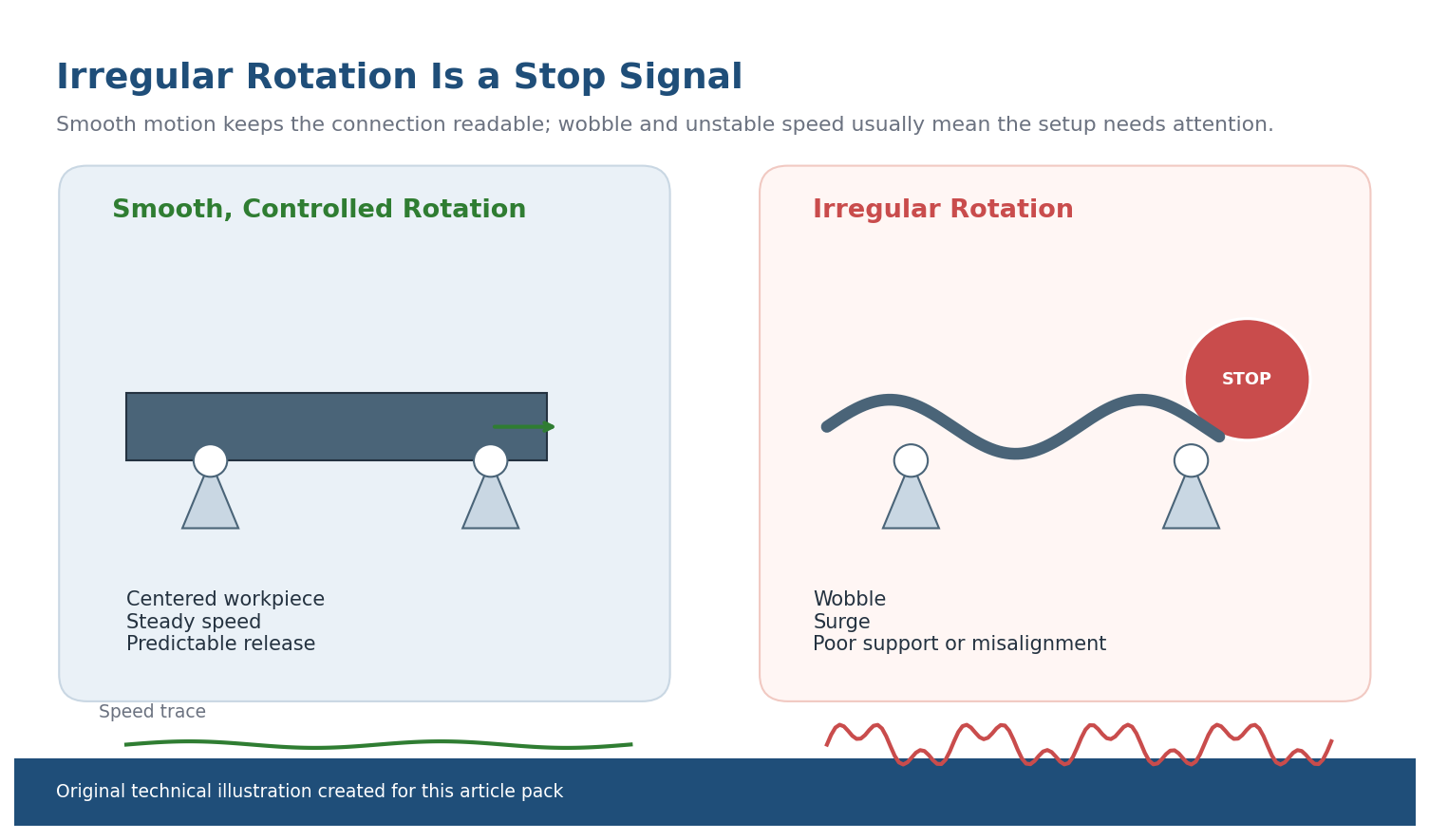
Experienced operators usually know a job is drifting out of control before the data record catches up. The machine starts sounding different. The pipe seems to hunt for position. Rotation no longer feels even. Instead of a steady, readable movement, the joint begins to look nervous. Some crews treat that as normal workshop noise. It is not. Irregular rotation is one of the clearest early warnings a connection can give.
Related reading: rotating bucking unit controls.
In make-up, unstable speed often means the thread engagement is not seeing a clean, centered load path. In breakout, it can mean the joint is not being supported honestly during release, the reaction point is not where it should be, or the assembly is moving in a way that will mark the connection on the way out. Either way, irregular motion deserves respect. A machine can still turn while the job is going wrong. The question is whether the operator is willing to believe what the motion is already saying.
This is why good shops train operators to read the feel of the job, not only the end result. A clean connection process rarely looks dramatic. The smoother the movement, the more trustworthy the setup usually is. When a job starts wobbling, surging, or changing rhythm, the machine is asking for a decision. The right decision is usually to slow down and investigate, not to finish the move quickly and hope the problem goes away.
Pipe rotation wobble: what causes wobble, surge, and uneven motion
Irregular rotation often comes from geometry before it comes from power. A long assembly may not be supported well enough, so the pipe sags and then corrects itself during turning. The centerline may be visually close but still not true under load. The gripping surfaces may be uneven, worn, or dirty, which makes the tool alternate between holding and slipping. The joint may also be entering with side load because the previous step was rushed.
Related reading: hydraulic bucking unit stability.
Breakout adds another layer. Once the joint begins to release, the stored friction and strain energy can make the first movement look sharper than the crew expected. If the machine, backup point, or support rollers are not set up to guide that release calmly, the connection can jump from static resistance into unstable motion. That is where thread damage, shoulder impact, and ugly spin-out behavior start showing up.
Operators sometimes misread these symptoms because the machine still appears strong enough to continue. But strength is not the issue. Control is. A connection that turns under irregular motion is not proving the setup is acceptable. It is proving only that the machine can overpower a poor condition for a little longer. In shops that handle reusable tools and premium threads, that is a bad trade.
What to do during make-up when the motion changes
The first response to irregular rotation during make-up should be to reduce the pace and watch more closely. If the pipe is wobbling, the job should not speed up. Slowing down gives the operator time to decide whether the motion is a minor support issue or a sign that the connection should be backed out. If the wobble continues, or if the thread entry never looks settled, stop the powered turn and restart the connection instead of trying to smooth it out on the fly.
Related reading: why drill pipe connections seize.
Operators who do this well avoid turning the event into a battle of confidence. They do not keep adding small corrections while insisting the job is still fine. They ask a simple question: does this connection look like it is rotating on axis? If the answer is no, they act early. That may mean correcting support height, checking the guide, cleaning the connection, or walking the joint in more carefully before using powered rotation again.
The important point is that irregular speed is not just a nuisance. It is a sign that the system has become less predictable. Once predictability is gone, the later torque number and the visual condition of the connection both become harder to trust.
Why breakout deserves the same discipline
Breakout is where some crews relax too early. The joint breaks free, everyone hears the first release, and the job suddenly feels “done enough.” In reality, the connection is still vulnerable at that moment. The first movement after release can become violent if the support, backup position, or spin-out speed are wrong. That is when the pin can come out uncentered, the threads can catch, and the assembly can bounce or whip.
A controlled breakout should look deliberate from start to finish. The torque rise into first release should be readable. The first movement should not surprise the crew. After the jump, the connection should spin out at a speed that still protects the threads and keeps the pipe centered. If the release turns rough, the operator should stop and correct the support rather than treating rough motion as a normal part of separation.
This matters because breakout is not just a disassembly event. It is also the beginning of inspection and reuse. A connection that comes apart badly may lose value before anyone even gets a flashlight on it. Smooth breakout protects both the metal and the information the metal still carries about previous use.
Building a culture that treats motion as evidence
The best workshops treat motion the way good mechanics treat noise: as evidence. They do not wait for a failure to admit that something felt wrong. They give operators permission to stop when the movement stops making sense. That habit sounds simple, but it changes outcomes. It reduces the number of joints that are pushed through doubtful conditions. It also makes troubleshooting more honest because the crew begins discussing support, alignment, and grip quality instead of blaming “bad threads” after the fact.
For end users, this is one of the most practical ways to judge a breakout or bucking setup. Ask whether the machine allows the operator to see and respond to unstable motion early. Ask how long workpieces are supported. Ask how backup points are chosen. Ask whether the job can be slowed without losing control. Those questions are closer to real workshop performance than headline torque ratings.
A calm machine does not just feel better to run. It helps the crew protect value. When rotation stays smooth, the connection stays readable. When rotation gets irregular, the safest move is usually the least dramatic one: stop, correct the condition, and continue only when the movement makes sense again.
Key takeaways
- Irregular rotation is a diagnostic signal, not background noise.
- Most wobble problems come from support, alignment, or grip quality before they come from lack of power.
- Slow down and correct the condition early instead of powering through unstable movement.
- Breakout should stay controlled after first release, not just until first release.
Related Products
- Explore our Bucking Unit and Breakout Unit product pages.
- Read more on rotating bucking unit controls and why drill pipe connections seize.
- Ready to discuss your setup? contact our team.
Frequently asked questions about pipe rotation wobble
What does pipe rotation wobble indicate during make-up?
Pipe rotation wobble indicates that the connection is not seeing a clean, centered load path. It usually means alignment, support, or grip quality has drifted out of tolerance — not that the machine lacks power. Operators should treat it as diagnostic information, not workshop noise.
How do you tell normal motion from a pipe rotation wobble warning?
Normal motion looks calm: the pipe sits centered, rotation is steady, and the machine sounds uniform. A wobble warning shows as hunting position, surging speed, uneven rhythm, or a connection that seems to "grab" and release. If you are correcting position every second, the setup is already telling you to stop.
What causes pipe rotation wobble during breakout specifically?
Stored friction and strain energy release sharply at first break. If the backup point is wrong, the support rollers are not guiding the release, or the spin-out speed is too high, the connection can jump from static resistance into unstable motion — which is where thread catch and shoulder impact show up.
Can pipe rotation wobble damage premium connections permanently?
Yes. Premium and CRA connections are less forgiving of side load and uneven contact. Wobble during the last turns of breakout is a frequent cause of marking that shows up later at inspection and gets blamed on "service wear" when the real event happened on the machine.
How should operators respond to pipe rotation wobble?
Slow down, do not speed up. Investigate support height, centerline, and grip condition. If the wobble continues through the first correction, back the joint out and restart rather than powering through it. Predictability is the goal; an unpredictable rotation is already a failure mode.
Talk to our team
Invite readers to ask for a breakout or bucking setup review if their shop sees wobble, pipe sway, or erratic speed during service work. For broader context on threaded-connection care, see API 5C1 care and handling guidance. When you are ready to specify or upgrade, review our Breakout Unit options or contact our team.
Expert Consultation
Need more information on optimizing your equipment performance? Our engineering team is available for technical consultations.
Request a Quote
Tell us about your requirements and our engineering team will prepare a detailed proposal with specifications, pricing, and delivery timeline.
