
Hydraulic Bucking Unit Stability: Pressure Control, Clamp Consistency, and QA Confidence
Hydraulic systems can deliver excellent make-up consistency, but only when pressure control and clamp behavior are managed as quality variables. This page focuses on hydraulic stability in daily operations and ties each control to the BU process benchmark. Set Hydraulic Baselines Before Production Confirm target pressure ranges, response behavior, and recovery thresholds at shift start.…
Hydraulic systems can deliver excellent make-up consistency, but only when pressure control and clamp behavior are managed as quality variables. This page focuses on hydraulic stability in daily operations and ties each control to the BU process benchmark.
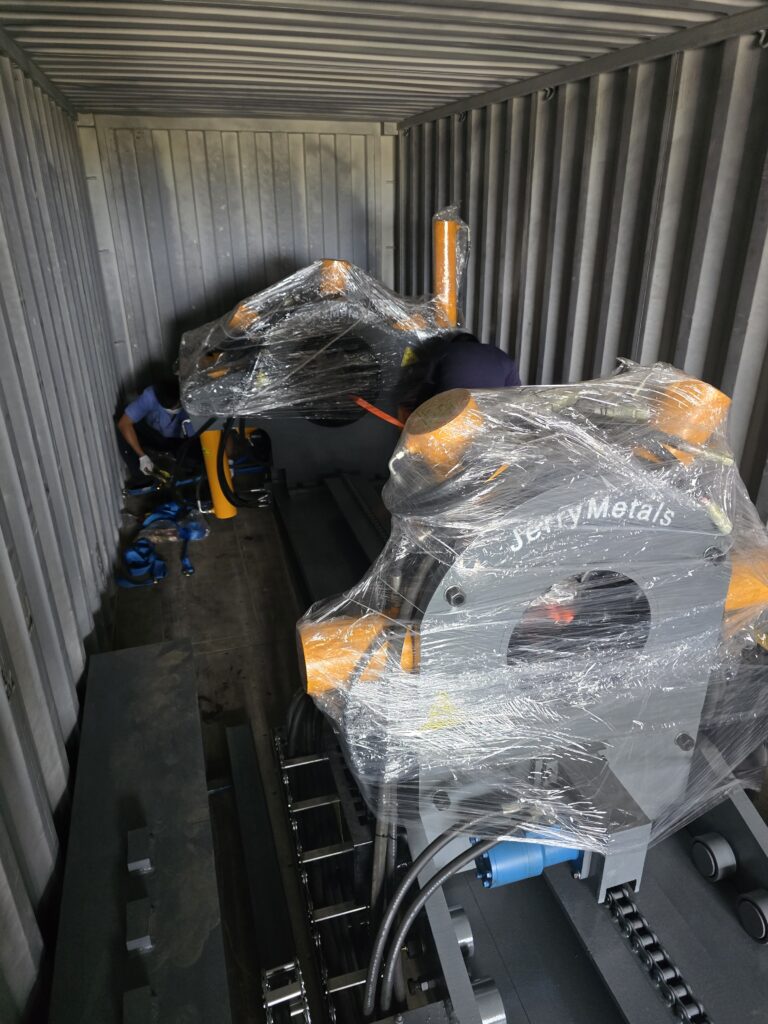
Set Hydraulic Baselines Before Production
Confirm target pressure ranges, response behavior, and recovery thresholds at shift start. Running without baseline verification makes drift hard to detect. A documented baseline transforms troubleshooting from guesswork to evidence.
Clamp Consistency as a Quality Gate
Clamp instability can generate misleading curve signatures and hidden surface risk. Validate clamp repeatability across sample joints before full production mode. Consistent clamp behavior is a prerequisite for trustworthy QA decisions.
Monitor Thermal and Viscosity Effects
Hydraulic performance shifts with temperature and fluid condition. Include periodic thermal checks and adjust control expectations accordingly. Ignoring thermal drift can silently degrade make-up repeatability over long runs.
Define Alarm Response and Escalation
Each pressure anomaly should map to a known response path: operator action, supervisor review, and QA decision. Standard escalation reduces downtime and avoids inconsistent field decisions. Response quality matters as much as alarm detection.
Use Daily Stability Reports for Continuous Improvement
Summarize pressure incidents, recovery time, and related quality outcomes at shift close. This turns raw operating data into practical improvement actions. Over time, stability reporting reduces both defect volatility and maintenance surprises.
Implementation Checklist
- Validate title/H1/focus alignment before publish.
- Keep three contextual BU-hub links where relevant.
- Use intent-specific FAQ only.
- Document deviations in cluster control sheet.
FAQ
Why can good torque results still hide hydraulic issues?
Because short-term acceptable outcomes may mask unstable system behavior that raises future defect risk.
How often should hydraulic baselines be checked?
At shift start, after major interruptions, and whenever connection profile changes materially.
What should trigger immediate supervisor review?
Repeated pressure oscillation, clamp inconsistency, or unexplained curve instability.
Cluster governance: this page is rewritten to reduce overlap and reinforce BU cluster hierarchy.
Expert Consultation
Need more information on optimizing your equipment performance? Our engineering team is available for technical consultations.
Request a Quote
Tell us about your requirements and our engineering team will prepare a detailed proposal with specifications, pricing, and delivery timeline.
