
Casing and Tubing Drift: What the Test Proves and What It Cannot
Drift diameter is a guarantee, not a measurement. The API 5CT allowances, standard vs alternative drift, how the shop check runs, and what a hung-up mandrel means.
A casing or tubing drift test passes a hard mandrel of specified diameter and length through the full bore of every joint to prove the guaranteed minimum inside clearance. It certifies that completion tools sized against the published drift diameter will pass. It does not measure the pipe: a drift proves clearance, nothing more, and reads nothing about roundness or wall.
At a glance
| What drifting is | A go/no-go bore check: a cylindrical mandrel of API-defined diameter and length must pass freely through the whole joint under its own weight or light hand pressure |
| Why buyers care | Everything that runs inside the string later — plugs, packers, gauges, guns — is sized against the drift diameter, not the nominal inside diameter |
| Governing document | API 5CT sets the mandrel diameters and lengths for casing and tubing; the purchase order can specify a larger alternative drift where the completion demands it |
| When it happens | At the mill, and again as the last check after threading, coupling make-up and handling — because damage after the mill is what the field actually meets |
| Decision this page supports | Writing drift requirements into an OCTG order correctly, and judging what a hung-up drift is really telling the shop |
Drift diameter is a guarantee, not a measurement
Every tubular has three inside numbers that get confused. The nominal inside diameter is arithmetic: outside diameter minus twice the nominal wall. The actual bore of any one joint wanders around that figure with the mill’s wall tolerance. The drift diameter is smaller than both, and it is the only one of the three the standard promises: a mandrel of that size will pass, joint after joint, whatever the wall tolerance did.
That is why completion engineers design against drift and ignore nominal ID. A packer sized to the nominal bore will hang up in a legal, in-tolerance joint sooner or later. A tool sized to drift passes every joint the standard accepts. The drift test exists to keep that promise honest on each physical length of pipe, which is also why the check is pass or fail with no measurement recorded — the mandrel either falls through or it does not.
The API 5CT drift numbers
API 5CT builds the drift diameter by subtracting an allowance from the calculated inside diameter, and the allowance steps with product and size group. The commonly applied figures:
| Product and size group | Drift allowance below calculated ID | Mandrel length |
|---|---|---|
| Tubing | 3/32 in (2.38 mm) | 42 in (1,067 mm) |
| Casing below 9-5/8 in | 1/8 in (3.18 mm) | 6 in (152 mm) |
| Casing 9-5/8 to 13-3/8 in | 5/32 in (3.97 mm) | 6 in (152 mm) |
| Casing above 13-3/8 in | 3/16 in (4.76 mm) | 6 in (152 mm) |
Treat the table as orientation, not authority: the edition of API 5CT named on your purchase order governs, and the long tubing mandrel against the short casing mandrel is not a detail. A 42-inch cylinder finds gentle bore restrictions — ovality over a length, a shallow dent, a bow — that a 6-inch mandrel glides through. Two joints with identical minimum bores can drift differently because the mandrel lengths ask different questions.
Standard drift or alternative drift: say which, in writing
Heavy-wall strings and tight completions often need more clearance than the standard drift guarantees, and API 5CT allows the order to specify an alternative drift — a larger mandrel the mill must then honour. This is where orders go wrong in both directions. Specify only “API drift” on a heavy-wall casing order and the completion may not pass through pipe that is fully compliant. Specify an aggressive alternative drift casually and the mill’s rejection rate, and your price, climb for clearance the well never needed.
The rule is unglamorous: the completion designer names the largest tool the string must pass, the order names the drift that clears it, and the words “alternative drift” appear explicitly with the diameter. A drift requirement that lives in an email thread instead of the purchase order does not exist. The same discipline applies to the accessories premium-thread buyers order alongside — drift mandrels for the yard, and test plugs and caps cut to the connection’s own thread form for pressure testing, of the kind buyers of VAM and Tenaris connections specify against the licensed gauge data rather than generic forms.
How the check actually runs in a shop
| Step | What to confirm | Action when it does not match |
|---|---|---|
| Mandrel condition before the shift | Diameter within gauge tolerance, surface free of scores and picked-up metal, identification legible | A worn or dinged mandrel drifts nothing — quarantine it and verify the joints it recently passed |
| Bore preparation | Joint clean and free of compound, debris and standing water; thread protectors handled per the yard’s discipline | Blow the bore clear and re-run; a drift stopped by grease proves only that the pipe was dirty |
| The pass itself | Full length, mandrel moving under its own weight or light manual effort — never driven | A drift that needs force is a failed drift. Hammering a mandrel through converts a reject into hidden damage |
| After threading and make-up | The final drift runs after the last hot work and the last handling step, through the made-up coupling where one is fitted | A joint drifted only at the mill carries no promise about what threading, bucking-on and transit did afterwards |
| Recording | Pass/fail per joint against its number on the tally, drift size stated, date and operator identified | An unrecorded drift is a rumour. The tally line is what the rig and the customer’s QA will read |
| Rejects | Marked, segregated and quarantined immediately, cause investigated before the batch continues | A reject returned to the rack unmarked will be run in the well — treat segregation as part of the test |
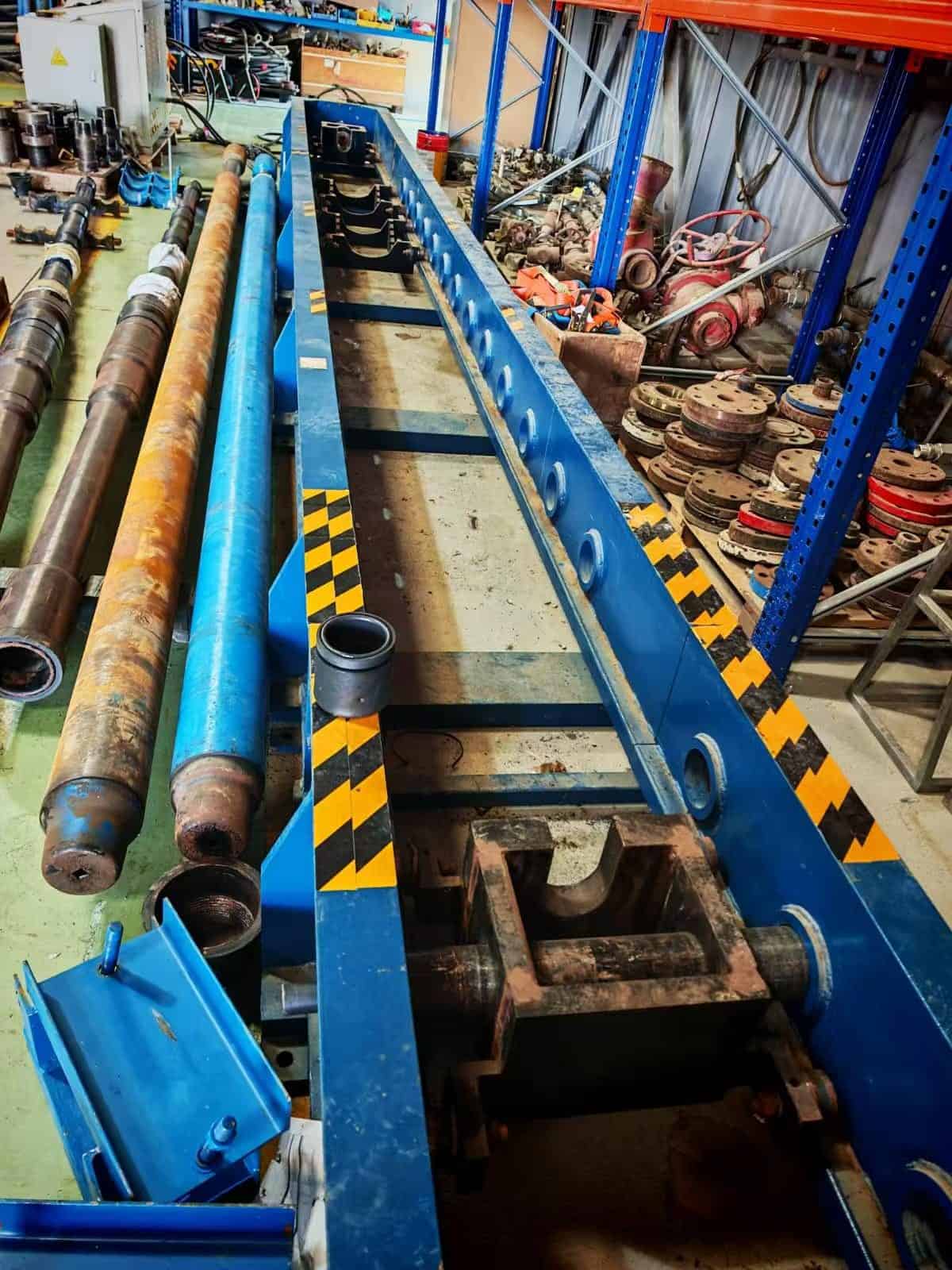
What a hung-up drift is telling you
A mandrel that stops is information, and the location of the stop is most of the diagnosis.
| Where the drift hangs | Possible contributing factors | What to verify first |
|---|---|---|
| At either pipe end | Handling damage: stabbing dings, protector strikes, crushed ends from slings or forks | Visual and gauge check of the end area; review of handling and storage practice if it repeats across a batch |
| Mid-length, one joint only | A local dent from impact, or a wall anomaly that survived the mill | Lay the joint out, locate the restriction, and inspect outside surface at the same station for the matching mark |
| Mid-length, across a batch | Ovality rather than a dent — the bore is legal in area but not in shape | An ovality measurement across the flagged joints; long tubing mandrels find shape problems short casing mandrels forgive |
| At or just past the coupling | Make-up geometry, a doped-up thread relief, or coupling damage | Break the connection out and drift pipe and coupling separately before condemning either |
| Everywhere, suddenly, many joints | The mandrel, not the pipe: picked-up metal or a swollen gauge surface | Re-gauge the mandrel before rejecting another metre of pipe |
What drifting cannot prove
The test’s honesty is its narrowness, and pretending otherwise causes real failures. A passed drift says nothing about wall thickness, cracks, thread condition or seal integrity — a joint can drift perfectly and still fail a hydrotest. It reads only the minimum clear envelope: a bore can be measurably oval and still pass a short mandrel. And it is one moment in time; pipe drifted at the mill and then trucked, craned and racked twice has an unproven bore until it is drifted again, which is why drifting belongs on the receiving inspection checklist rather than filed under the mill’s paperwork.
Drift sits in a family of checks that each answer one narrow question — visual thread inspection, gauging, wall verification, pressure testing — and the string is only as proven as the narrowest check skipped. Where the string carries premium connections, the licensor’s own field-running requirements sit on top of all of it; the API 5CT grade and dimension system is the floor, not the whole building.
Frequently asked questions
What is a casing drift test?
A go/no-go check in which a hard cylindrical mandrel of API-specified diameter and length is passed through the entire bore of a casing joint. Free passage proves the joint provides its guaranteed minimum internal clearance, so tools sized against the published drift diameter will run through it.
What is the difference between drift diameter and inside diameter?
Nominal inside diameter is calculated from outside diameter and nominal wall, and any single joint’s real bore varies around it within tolerance. Drift diameter is deliberately smaller and is guaranteed: a mandrel of that size must pass every compliant joint. Completion tools are sized against drift, never against nominal ID.
What size is an API drift mandrel?
API 5CT subtracts an allowance from the calculated inside diameter: commonly 3/32 in for tubing and 1/8 to 3/16 in for casing depending on size group, with a 42 in mandrel for tubing and a much shorter one for casing. The edition named on your purchase order governs the exact figures.
What is an alternative drift?
A larger-than-standard drift diameter the purchaser specifies on the order, used when the planned completion needs more clearance than the standard drift guarantees — typical for heavy-wall strings. It must be named explicitly with its diameter; the mill then manufactures and tests to that requirement.
Should pipe be drifted again after threading and coupling make-up?
Yes. The mill’s drift proves the bore as it left the mill. Threading, coupling make-up, transport and yard handling all happen afterwards, and end damage from handling is a leading cause of drift failure. The drift that protects the completion is the last one, run after the last operation.
Why would a drift hang up in pipe that passed at the mill?
Usually damage added since: stabbing dings and protector strikes at the ends, a transit dent mid-length, or coupling-area interference after make-up. A batch-wide pattern points at ovality or at the mandrel itself. The location of the hang-up is the first diagnostic, before any joint is condemned.
Does a passed drift test mean the joint is good?
It means one thing: the bore clears the drift envelope. Wall thickness, cracks, thread condition and pressure integrity are separate checks. A joint can drift cleanly and still fail elsewhere, which is why drifting is one line on a receiving inspection, not a substitute for it.
Put the drift requirement in the order, not the email
Drift problems are cheapest at the purchase-order stage. State these and the arguments disappear: governing standard and edition · standard or alternative drift, with the diameter written out · largest tool the completion must pass · where the final drift runs and who records it · per-joint tally format · drift mandrels, and test plugs and caps for the connection type, included in the accessory scope. Write to the contact page or sales@galipequipment.com and the reply will address the drift and accessory scope against your connection list.
Before the string ships: the drift checklist
- Standard and edition named on the order; alternative drift stated explicitly with its diameter where the completion needs it.
- Largest tool OD the string must pass confirmed with the completion designer, in writing.
- Mandrels gauged, undamaged and identified before each shift of drifting.
- Bores cleaned before the pass; a drift stopped by debris re-run, not recorded.
- Mandrel never driven — a drift that needs force is a fail.
- Final drift run after threading, make-up and the last handling step, through fitted couplings.
- Pass/fail recorded per joint against the tally, with drift size, date and operator.
- Rejects marked, segregated and investigated before the batch continues.
- Hang-up locations logged — ends, mid-length or coupling — and patterns across the batch reviewed.
- Drifting entered as a line on receiving inspection at every custody change, not treated as the mill’s job alone.
Expert Consultation
Need more information on optimizing your equipment performance? Our engineering team is available for technical consultations.
Request a Quote
Tell us about your requirements and our engineering team will prepare a detailed proposal with specifications, pricing, and delivery timeline.
