
Thread Protector Discipline: The 5 Critical Minutes After Every Breakout
Protect reusable connections after breakout with better cleaning, drying, inspection, and thread-protector discipline.
Protect reusable connections after breakout with better cleaning, drying, inspection, and thread-protector discipline.
Thread protector discipline is where most reusable-connection value is quietly lost.
Why the job is not finished when the joint comes apart
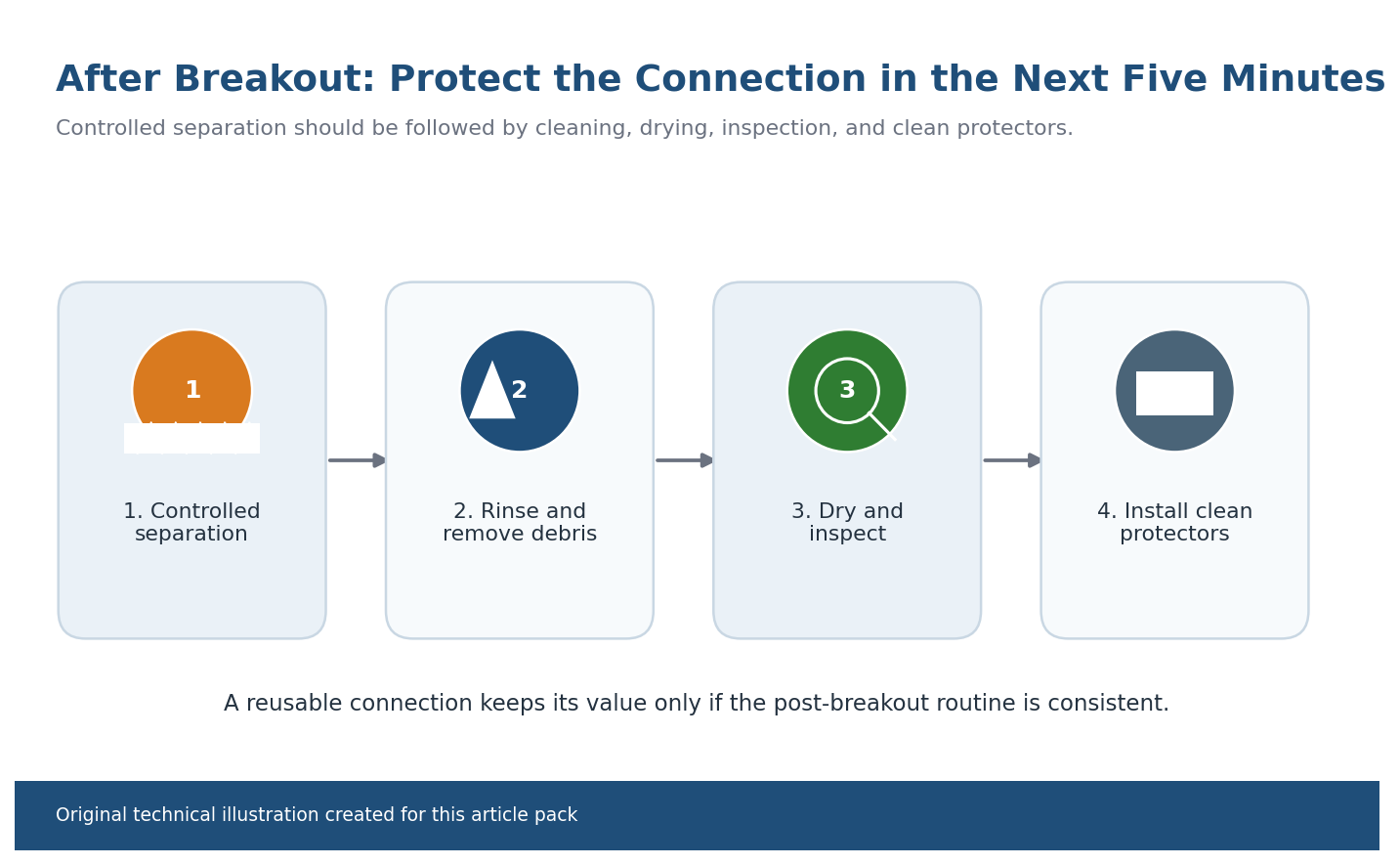
A surprising amount of connection value is lost after breakout, not during it. Crews focus so hard on separating the joint that they treat the moment of disassembly as the finish line. In real workshop life, that moment is only the handoff. What happens next determines whether the connection goes to inspection in reusable condition, sits on a rack collecting contamination, or becomes a preventable reject.
Related reading: connection quality scorecard.
This matters because breakout is often followed by a rush. The next job is waiting. The pipe is already free. Someone assumes the remaining steps are housekeeping. That is exactly when a good connection can be spoiled. Threads that were serviceable can be exposed to dirt. Shoulder surfaces can sit wet. Protectors can be installed dirty or damaged. The joint can be set down roughly because the “important” mechanical step is already over. Five careless minutes can undo the benefit of an otherwise well-controlled breakout.
Operators who think one station ahead usually avoid this trap. They do not judge breakout success only by whether the connection came apart. They judge it by the condition in which the pin and box leave the machine. That is the standard that protects reusable value.
Controlled separation still matters at the very end
The final turns during breakout deserve more attention than they usually get. Once the connection breaks free, it becomes vulnerable to poor spin-out habits. If the operator lets the joint separate too quickly, the pin can exit uncentered, the threads can catch, and the connection can bounce or scrape during the last part of disengagement. These are not glamorous mistakes, but they are common. The connection has already survived the hardest torque event, only to get marked during the easy-looking part at the end.
Related reading: torque-turn logging guide.
Good operators avoid that by treating the release and the exit as two different control problems. First, they make the initial release readable and calm. Then they keep the spin-out slow enough to protect alignment and thread condition. They do not let the pipe drop its weight onto the last few engaged threads. They do not rush the final separation just because the joint is already loose. They stay in control until the members are completely apart and stable.
That extra discipline pays off immediately because a clean exit makes inspection easier. The crew gets to inspect the connection that actually came out of service, not a connection that was freshly marked during removal.
Thread protector discipline: clean, dry, and inspect before the joint disappears
The safest post-breakout routine is also the simplest: clean the connection immediately, dry it properly, and inspect it before it drifts to the next station. Waiting too long creates two problems. First, contamination gets a chance to settle into the threads, seals, or shoulders. Second, the memory of how the joint behaved at breakout starts fading, which makes later inspection less useful.
Related reading: why drill pipe connections seize.
A proper look should go beyond a quick glance at the crest of the thread. Operators or inspectors should look at the entire functional area: thread flanks, roots, shoulder faces, seal surfaces where applicable, and any visible coating condition. The goal is not to turn the operator into a lab. It is to catch obvious service damage while the part is still in front of the people who handled it. Fresh observations matter. If the crew saw irregular release, unexpected torque, wobble, or contamination during the job, that information should stay connected to the inspection.
Drying matters more than many workshops admit. Moisture left on the connection can interfere with preservation, encourage corrosion, or trap debris under the protector. A connection that is technically clean but not properly dried is not ready for storage or rerun.
Choose protection based on what happens next
Not every disconnected joint needs the same post-breakout treatment. Some connections are going back into service quickly. Others are headed for storage, transport, or a longer inspection cycle. The preservation routine should match that reality. If the joint is expected to be reused soon, the focus is on clean temporary protection and keeping contamination out. If it will sit longer, the focus shifts toward storage compound, dry protectors, and handling that prevents moisture and debris from coming back in.
This is where many shops become inconsistent. One crew uses clean protectors and the right compound. The next crew grabs whatever protector is nearby because it “fits well enough.” That kind of inconsistency does not show up as a dramatic process failure. It shows up as declining confidence in the condition of stored connections. Operators who care about reusable value should treat protector quality the same way they treat thread cleanliness: as part of the connection, not as packaging.
Good workshops also control what happens between stations. A clean connection should not be dragged across dirty surfaces, left uncovered on a busy bench, or stacked in a way that invites accidental impact. Protection is a continuous process, not a single act of screwing on a cap.
Why this routine matters to end users and service shops
For end users, post-breakout care is where a lot of hidden cost lives. If the shop handles expensive tools, premium connections, or reusable assemblies, a weak post-breakout routine gradually eats margin and confidence. The loss rarely arrives as one dramatic event. It arrives as more rejected connections, more re-cleaning, more doubt during inspection, and more arguments about whether damage happened in service or in the shop.
That is why operators should be trained to think beyond the mechanical success of separation. The joint coming apart is only the first win. The real win is handing the next step a connection that is clean, dry, protected, and honestly assessed. When that becomes the normal routine, the workshop starts getting more useful life out of the same hardware.
A good breakout unit helps because it allows the release and the final spin-out to stay calm. But the machine is only part of the answer. The rest is discipline: clean immediately, dry thoroughly, inspect while the event is still fresh, and protect the connection according to what happens next. In reusable-thread work, those five minutes are never just cleanup. They are asset protection.
Key takeaways
- Breakout is not finished until the connection is clean, dry, and protected.
- Final spin-out can still damage a reusable joint if separation becomes rough.
- Inspection is most useful when it happens immediately and stays tied to what the crew observed.
- Protectors, storage compound, and rack handling should match the connection’s next use.
Related Products
- Explore our Bucking Unit and Breakout Unit product pages.
- Read more on connection quality scorecard and why drill pipe connections seize.
- Ready to discuss your setup? contact our team.
Frequently asked questions about thread protector discipline
What is thread protector discipline?
Thread protector discipline is the habit of treating the minutes immediately after breakout as asset-protection time: cleaning, drying, inspecting, and reinstalling clean protectors before the connection drifts to the next station and gets contaminated or mishandled.
How soon after breakout should protectors be reinstalled?
As soon as the connection has been cleaned and dried. Waiting allows contamination to settle into threads, seals, or shoulders, and it lets the memory of how the joint behaved at breakout fade — which makes later inspection less useful.
What cleaning happens before protector installation?
Remove compound, debris, and fluid; dry the connection properly; inspect thread flanks, roots, shoulder faces, and seal surfaces; and note any service-time observations while they are still fresh. Cleanliness without drying is not ready for storage.
How do you choose between storage-grade and rerun-grade protectors?
Match the protector to the next use. If the joint goes back into service quickly, focus on clean temporary protection. If it will sit in storage or transport, use storage compound and dry protectors that keep moisture and debris out over time.
What are common mistakes in thread protector discipline?
Grabbing the nearest protector because it fits "well enough," skipping drying, installing a dirty protector onto a clean connection, stacking connections in ways that invite impact, and treating protector quality as packaging rather than part of the connection.
Talk to our team
Invite readers to contact your team for breakout-unit recommendations that support thread protection and reusable tool service work. For broader context on threaded-connection care, see API 5C1 care and handling guidance. When you are ready to specify or upgrade, review our Breakout Unit options or contact our team.
Expert Consultation
Need more information on optimizing your equipment performance? Our engineering team is available for technical consultations.
Request a Quote
Tell us about your requirements and our engineering team will prepare a detailed proposal with specifications, pricing, and delivery timeline.
