
Rotating Bucking Units for Tool Connections: Operational Controls That Cut Rework
Tool-connection make and break jobs often fail due to process inconsistency rather than machine limits. This guide narrows the topic to rotating-unit control points that directly reduce rework and protect schedule reliability. For broad commercial intent, keep the Bucking Unit hub as the primary entry point. Rotational Bucking Units Execution note: maintain one clear sub-intent…
Tool-connection make and break jobs often fail due to process inconsistency rather than machine limits. This guide narrows the topic to rotating-unit control points that directly reduce rework and protect schedule reliability. For broad commercial intent, keep the Bucking Unit hub as the primary entry point.
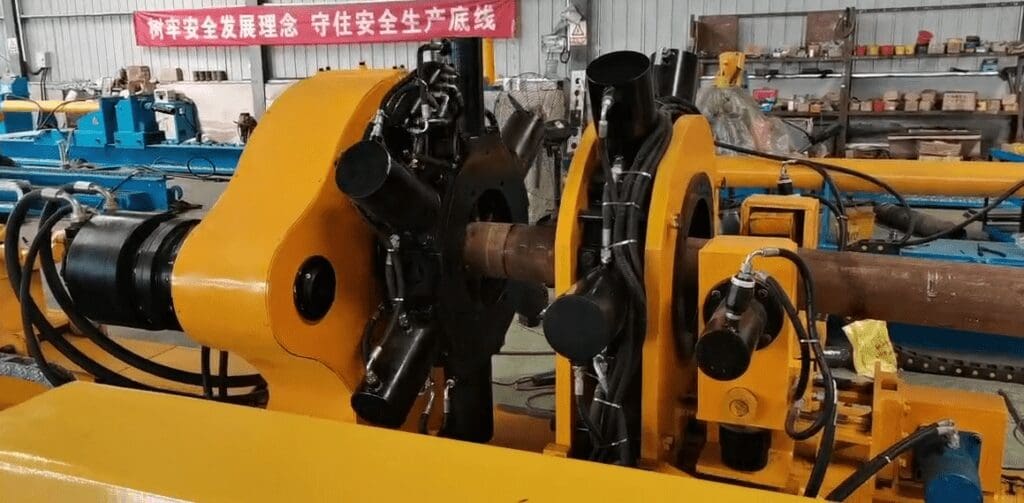
Execution note: maintain one clear sub-intent per article and route broad BU intent to the main BU page to avoid cannibalization.
Define Connection-Specific Make/Break Windows
Set acceptable torque and turn behavior by connection class before operations begin. Generic windows create false passes and late rework. A connection-specific window table is the foundation of stable tool-connection handling.
Control Start Alignment and Grip Stability
Most early-curve anomalies come from inconsistent alignment or grip behavior. Verify positioning and clamping state before initiating rotation. A 20-second setup check can prevent costly curve distortion later.
Use Real-Time Curve Triggers for Hold Points
Create explicit triggers for pause/review when slope, shoulder approach, or noise exceeds expected behavior. Operators should not rely on subjective judgment alone. Trigger-based hold points reduce escalation delays.
Standardize Break-Out Safety Sequence
Break-out operations need controlled release logic to avoid sudden load shifts and damage risk. Include step-by-step safety sequence and role assignment for each crew member. Repeatability here protects both equipment and people.
Track Rework Causes by Connection Type
Capture defect causes in a structured log and summarize by connection family each shift. Pattern visibility allows targeted corrections instead of broad retraining. Rework reduction should be managed as a measurable operational KPI.
Implementation Checklist
- Validate title/H1/focus alignment before publish.
- Keep three contextual BU-hub links where relevant.
- Use intent-specific FAQ only.
- Document deviations in cluster control sheet.
FAQ
What is the biggest reason tool-connection rework repeats?
Usually inconsistent setup and missing trigger-based hold points, not lack of machine power.
How should teams react to noisy torque-turn curves?
Pause, classify the anomaly, and validate alignment, grip, and prep before continuing.
Can one standard checklist fit all connection types?
No. Core checks are shared, but acceptance windows should be connection-specific.
Cluster governance: this page is rewritten to reduce overlap and reinforce BU cluster hierarchy.
Expert Consultation
Need more information on optimizing your equipment performance? Our engineering team is available for technical consultations.
Request a Quote
Tell us about your requirements and our engineering team will prepare a detailed proposal with specifications, pricing, and delivery timeline.

Send your inquiry
Use the existing contact workflow so the section stays editable inside Bricks without a custom HTML form block.