
How to Improve Premium Threaded Connection Seal Integrity
How to improve premium threaded connection seal integrity with torque-turn analytics, acceptance windows, and field QA workflows.
If you are evaluating how to improve premium threaded connection seal integrity, the most reliable path is controlled torque-turn execution, verified shoulder behavior, and full-joint traceability from make-up to breakout.
If your team is asking how to improve premium threaded connection seal integrity, the answer is to control torque-turn behavior from first engagement to final shoulder rather than relying on endpoint torque alone.
This guide focuses specifically on premium threaded connections: how to improve make-up consistency, how to detect early failure signatures, and how to build a repeatable field workflow that scales across crews and rigs. We include one compact section on fully rotational torquing machines as a supporting validation tool, while keeping the core focus on connection engineering and field execution.
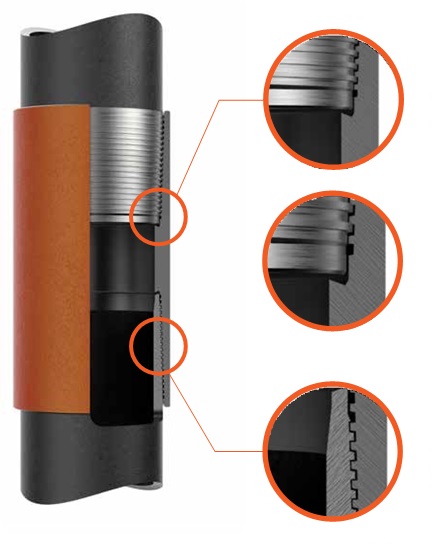
How to Improve Premium Threaded Connection Seal Integrity in Field Operations
This section answers the practical question of how to improve premium threaded connection seal integrity under real rig constraints. Teams using a bucking unit setup for premium connections can use these controls to stabilize seal performance before rejection rates rise.
Why Premium Threaded Connections Fail Even When Final Torque Looks Correct
Premium threaded connections require controlled make-up, traceable torque-turn analytics, and acceptance windows to ensure gas-tight seal performance.
A premium threaded connection can pass a final torque check and still underperform in service. Most field failures are caused by path instability, not just endpoint error. In practical terms, teams hit a correct final value but miss warning signals during the torque-turn path, such as shoulder drift, friction spikes, or micro-slip near final turn.
That means quality control should stop relying on a single-point pass/fail model. A better model evaluates the entire make-up signature: engagement behavior, shoulder recognition, final turn window, and breakout response. This is where strong connection programs separate themselves from basic procedural compliance.
The Connection Signature Window (CSW): A Better Control Model
To improve repeatability, define a Connection Signature Window (CSW) for each premium connection family. Instead of one acceptance number, this window tracks a small but high-impact parameter set:
- Initial engagement pattern: smooth entry versus erratic load pickup
- Shoulder approach slope: rising behavior before shoulder contact
- Shoulder recognition point: expected angle + torque range
- Final make-up torque: endpoint control
- Turn after shoulder: controlled deformation zone
- Critical-zone RPM: rotational speed during final 15–20% make-up
- Breakout ratio: breakout torque versus final make-up torque
When these values remain coherent as a group, premium threaded connections are significantly more stable under load. When one drifts, it usually signals a process issue before leaks happen.
Field Acceptance Matrix (Template You Can Calibrate)
| Parameter | Green (Accept) | Yellow (Review) | Red (Reject) |
|---|---|---|---|
| Final torque deviation | ±5% | ±5–8% | >±8% |
| Shoulder point drift (angle) | ≤6° | 6–10° | >10° |
| Critical-zone RPM | 1.0–3.0 rpm | 3.0–4.0 rpm | >4.0 rpm |
| Breakout / final torque ratio | 0.85–1.05 | 0.75–0.85 | <0.75 |
| Re-make attempts per joint | 0–1 | 2 | ≥3 |
This matrix is intentionally practical. Start with these limits, then tighten them by connection type, lubricant behavior, and historical performance. Premium threaded connections benefit most from process capability tracking, not static “universal” limits.

Friction Stability Is the Hidden Variable
Friction behavior is the least controlled and most influential variable in premium threaded connections. Two joints may land at similar final torque but through different friction pathways, producing very different long-term seal behavior.
To improve friction consistency in real operations:
- Standardize thread compound quantity per joint (mass-based, not visual guessing)
- Enforce pre-make-up cleaning and contamination checks
- Track torque noise and slope variance, not just final value
- Flag sawtooth loading or sudden torque spikes as early galling indicators
Teams that monitor these “in-between” indicators usually reduce rework and improve first-pass acceptance without increasing cycle time.
Small Supporting Section: Fully Rotational Torquing Machine
A fully rotational torquing machine should be treated as a precision support tool rather than the center of the workflow. Its highest value appears in three targeted scenarios:
- Procedure qualification: confirming make-up repeatability before field rollout
- Anomaly replication: reproducing suspicious torque-turn patterns under controlled conditions
- Crew calibration: aligning operators on what a healthy signature looks like
In short: the machine is your controlled validation environment; the field process remains your production engine.
Build a Failure-Signature Library (High-Value, Indexable Insight)
Many teams store records, but few create a reusable failure-signature system. This is where technical content becomes genuinely differentiated and Google-indexable: show a repeatable logic model.
- Late shoulder + steep final slope: likely contamination or abnormal friction escalation
- Early shoulder + low final torque: possible misalignment or cross-thread onset
- High torque noise near final turn: elevated risk of galling progression
- Low breakout ratio after short dwell: possible insufficient energy retention
By mapping each nonconformance to a pattern, premium threaded connection quality becomes predictive instead of reactive.

30-60-90 Day Implementation Plan
Days 1–30: Baseline
- Standardize one make-up data template per joint
- Define first-pass CSW limits from recent operations
- Train crews on yellow/red triggers and stop-work criteria
Days 31–60: Stabilize
- Run weekly variance reviews by crew, shift, and connection batch
- Correlate signature drift with rejects, leaks, and re-make frequency
- Add breakout ratio checks for loop-closure quality validation
Days 61–90: Optimize
- Tighten green-zone limits where process capability is proven
- Create playbooks for top five failure signatures
- Use rotational torquing validation only for recurring edge cases
Frequently Asked Questions
How to improve premium threaded connection seal integrity in practice?
The most valuable metric is full torque-turn signature coherence, not final torque alone. Endpoint compliance without pathway stability is not enough.
Why do some premium threaded connections leak despite “passing” make-up?
Because hidden instability can occur during shoulder approach and final turn. These issues are often invisible if only final torque is monitored.
How often should acceptance windows be recalibrated?
Recalibrate whenever you change connection type, lubricant, crew profile, or environmental conditions. Quarterly review is a practical baseline.
Reference Links for Engineers
- Internal: Pipe connection integrity workflow guide
- Internal: More technical connection articles
- External: Vallourec VAM TOP premium connection reference
- External: TMK premium threading connection portfolio
Conclusion
How to improve premium threaded connection seal integrity starts with a measurable engineering system. Premium threaded connections perform best when managed as a measurable engineering system. With a Connection Signature Window, friction-stability discipline, and failure-signature intelligence, teams can materially improve first-pass success and long-term seal reliability. Add a focused fully rotational torquing machine workflow for qualification and diagnostics, and your connection program becomes both technically robust and operationally scalable.
If your team needs a field-ready seal-integrity workflow, contact Galip about bucking units.
Expert Consultation
Need more information on optimizing your equipment performance? Our engineering team is available for technical consultations.
Request a Quote
Tell us about your requirements and our engineering team will prepare a detailed proposal with specifications, pricing, and delivery timeline.
