
Bucking Unit vs Power Tong: Which One Belongs in a Workshop?
Bucking unit vs power tong is one of the most common equipment questions from service shops, premium-connection teams, OCTG yards, and repair workshops: when is a mobile field torque tool enough, and when does the job belong in a fixed workshop make-up system? Bucking unit vs power tong: the quick answer A power tong is…
Bucking unit vs power tong is one of the most common equipment questions from service shops, premium-connection teams, OCTG yards, and repair workshops: when is a mobile field torque tool enough, and when does the job belong in a fixed workshop make-up system?
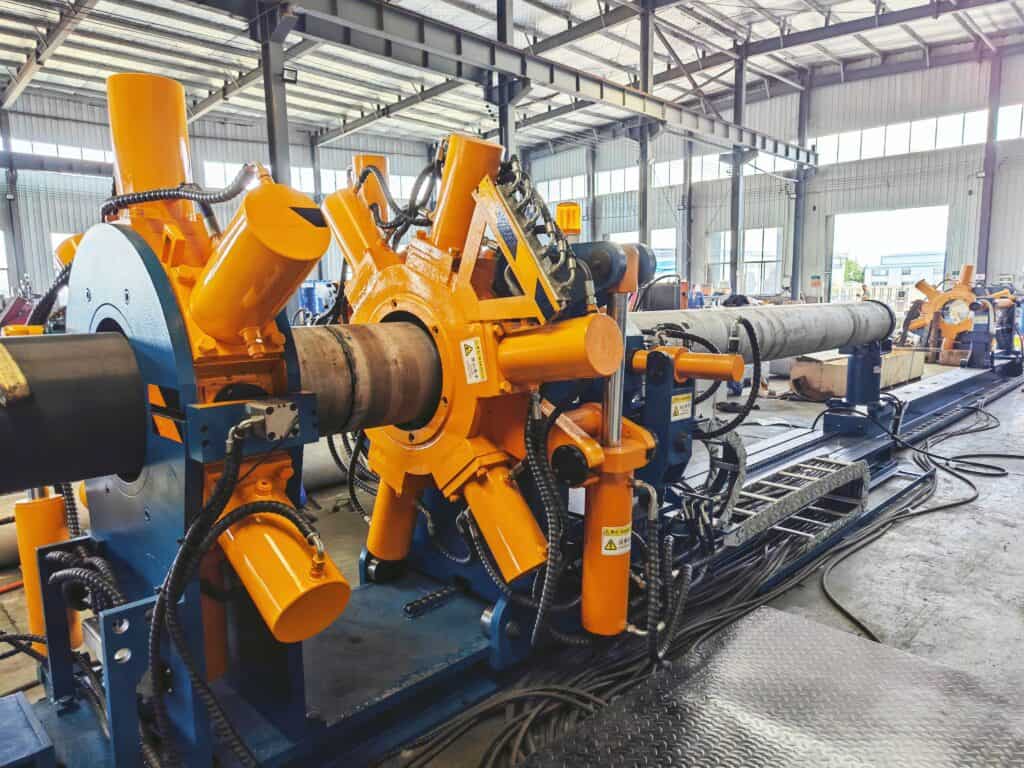
Bucking unit vs power tong: the quick answer
A power tong is usually the better fit when the work is mobile, field-side, and mainly focused on making up or breaking out tubulars quickly at the rig or yard. A bucking unit is usually the better fit when the work is workshop-based and the buyer needs stable support, controlled alignment, repeatable make-up, torque-turn records, and a clean report package for QA or customer witness review.
That does not mean one machine is universally “better” than the other. They solve different problems. The mistake is comparing only maximum torque. In real workshops, the better question is: what must be controlled, documented, and defended after the job is finished?
For Galip, this comparison matters because the bucking unit is not just a torque source. The public product page positions the machine around 360-degree continuous rotation, torque/turn recording, automated reporting, and PDF/Excel exports for premium connections and API tubulars. The comparison below explains when those features become more valuable than a mobile tong setup.
Why this comparison gets misunderstood
Many buyers start by asking a simple question: “Can a power tong reach the torque?” If the answer is yes, they assume the tong is enough. That approach can work for some jobs, but it misses the bigger workshop picture.
A threaded connection is not only a torque number. It is a process. The pipe or tool body has to be supported. The connection must enter straight. The clamping method must hold without creating avoidable damage. The rotation needs to be smooth enough for the connection family. The operator needs to know when to pause. The supervisor may need a record. The customer may ask for evidence later.
Once those requirements appear, the comparison changes. The machine is no longer being judged only by output torque. It is being judged by the total make-up workflow. That is the real bucking unit vs power tong comparison.
What a power tong does well
Power tongs are valuable because they are practical, familiar, and mobile. They are common in rig operations and field tubular handling because they can be moved to the work rather than forcing every job into a fixed machine cell.
A power tong can make sense when the job is field-side, when the pipe handling setup already exists, when the work changes location frequently, or when speed and mobility are more important than a fixed workshop record system.
- Mobile rig-side or yard-side tubular running where equipment must move with the job.
- Jobs where the connection program is routine and already covered by existing operating procedures.
- Work scopes where final torque control is required but full workshop-style reporting is not the main buying driver.
- Operations where the customer already accepts the existing tong workflow and documentation package.
This is why the right comparison should be fair. A power tong is not a poor tool. It is the right tool for many field jobs. Problems begin when a field-style tool is expected to behave like a fixed workshop QA system.
Where a workshop unit does earn its place is in repeat work, and the everyday jobs a bucking unit is put to show how varied that workload becomes once the machine is on the floor.
What a bucking unit is designed to do
A bucking unit is built around a different job environment. It is normally placed in a workshop, service base, manufacturing line, repair cell, or inspection facility where the workpiece can be supported, clamped, rotated, recorded, reviewed, and released under a controlled process.
That makes a bucking unit more useful when the job is not only to “turn the connection,” but to control the make-up path and keep proof of the result. This is especially important for premium connections, OCTG service work, BHA components, mud motor repair, customer witness jobs, and repeated high-volume make-up in a service shop.
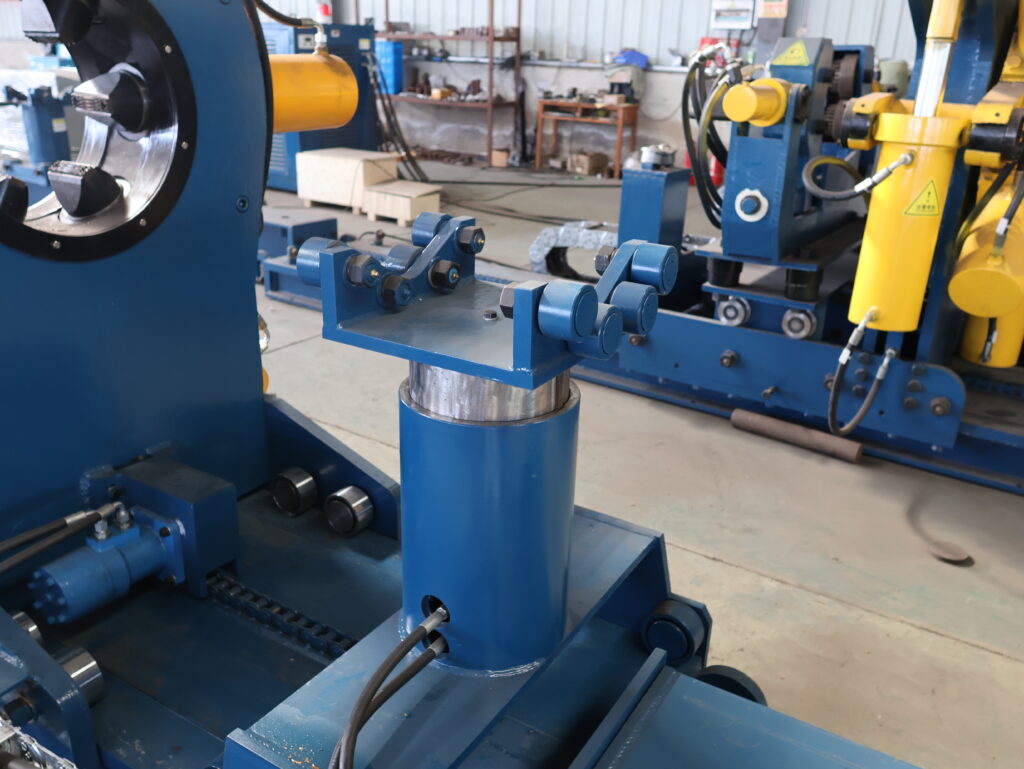
Main difference: mobility vs controlled work cell
The easiest way to understand the difference is to think about where the work happens.
A power tong follows the job. A bucking unit organizes the job around a controlled work cell. That one difference affects almost everything: pipe support, operator position, safety zones, reporting habits, tool staging, rework handling, and supervisor review.

Bucking unit vs power tong comparison table
| Decision point | Power tong | Bucking unit |
| Best environment | Field, rig, yard, mobile work | Workshop, service cell, repair base, production line |
| Main advantage | Mobility and familiar handling | Repeatability, support, controlled workflow, records |
| Pipe support | Depends heavily on field setup | Built into the work-cell layout with supports and alignment checks |
| Operator workflow | Often job-to-job and location-dependent | More standardized across shifts and operators |
| Premium connections | Can be used when procedure and tooling support it | Stronger fit when curve review, controlled rotation, and QA records matter |
| Data and reports | Depends on system package and job setup | Designed around torque-turn record and export workflow |
| Buyer question | Can it do the job where the pipe is? | Can it repeat and prove the job in the workshop? |
Do not choose by maximum torque alone
A high torque number can look impressive in a quote, but it does not answer the buyer’s real question. A workshop should ask whether the machine can handle the normal job envelope every day without forcing operators into bad habits.
The job envelope includes typical torque, peak torque, OD range, connection family, pipe or tool length, surface sensitivity, reporting requirement, floor space, lifting method, shift pattern, and customer witness needs. A machine that looks strong on paper can still be wrong for the shop if it slows pipe handling, creates awkward access, or fails to produce records the customer expects.
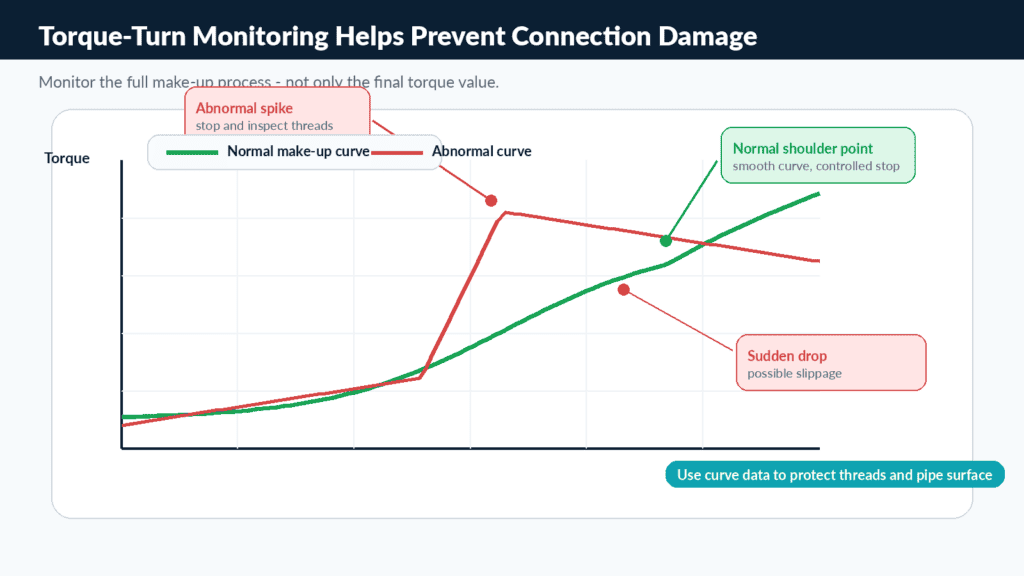
For premium connection make-up, the risk is even clearer. Final torque may be inside the target range while the make-up behavior still shows warning signs. A fixed bucking unit with torque-turn review gives the supervisor more information than final torque alone. The value is not simply the number at the end. The value is the controlled path to that number and the record that remains after the joint leaves the machine.
When a power tong may be enough
A power tong can be enough when the work is clearly field-oriented and the job does not require a fixed workshop process. For example, a contractor may need to run tubulars at the wellsite, handle routine connections in a yard, or move equipment between locations. In those cases, portability and speed can matter more than a permanent cell.
A power tong may also be acceptable when the customer’s acceptance criteria are simple, the connection family is familiar, the support equipment is already in place, and the operator team has a stable procedure that has been accepted by the client.
The honest rule is this: if the work changes location often and the buyer mainly needs mobility, start with the tong conversation. If the work repeatedly comes into the shop and the buyer needs controlled records, start with the bucking-unit conversation.
When a bucking unit becomes the better fit
A bucking unit becomes the better fit when the workshop needs to reduce variation, not just apply torque. This is common in service centers that process multiple tools per shift, connection shops that handle premium threads, and repair teams that need a record before releasing tools back to the customer.
- The same connection family is made up repeatedly and should follow a consistent process.
- Operators work across different shifts and the supervisor wants the same setup discipline every time.
- The customer asks for torque-turn records, report exports, or witness documentation.
- The workshop handles damage-sensitive tubulars, premium connections, CRA, chrome, or customer-owned tools where preventable marks create disputes.
- The workpiece is heavy enough that support, alignment, and stable clamping become part of the quality process.
Premium connections: the comparison becomes stricter
Premium connections are where this decision often becomes serious. The connection owner’s procedure, compound discipline, alignment, shoulder behavior, make-up speed, clamp stability, and final record all matter. A buyer should not assume that reaching target torque means the connection is acceptable.
In a premium-connection workshop, the bucking unit’s advantage is the controlled environment around the connection. The pipe is supported before torque is applied. The operator can use a defined setup. The supervisor can review a curve. The report can be saved with the job identity. If a customer asks what happened, the workshop has something better than memory.
This is also why the comparison should avoid aggressive claims like “one machine prevents all damage.” No machine can replace correct procedure (aligned with API recommended practices where applicable), clean threads, correct compound, proper jaw selection, and trained operators. The stronger claim is more credible: a properly configured bucking unit helps the workshop control the variables that usually create rework and disputes.
High-volume workshop jobs: repeatability becomes money
For a shop that makes up a few connections per week, the decision may be simple. For a service base running repeated jobs every day, small variations become expensive. A slightly different clamp setup, a rushed support adjustment, or a missing report name can create delays that nobody notices until the customer asks for evidence.
A bucking unit supports a production rhythm. Workpieces can be staged. Operators can follow the same approach. Reports can be created at the end of each joint or batch. Supervisors can review abnormal events before the next shift repeats the same mistake.
That is why bucking units often make sense in shops handling BHA components, mud motors, completion tools, casing accessories, and repeated OCTG work. The machine is not only the torque step. It becomes the center of the make-up cell.
When a workshop may need both
Some shops should not treat bucking unit vs power tong as either/or. A power tong can remain useful for field jobs or mobile handling, while a bucking unit handles controlled shop make-up, rebuild work, and report-driven customer jobs. The right combination depends on where revenue is earned.
A rental company may use power tongs for mobile service work and a bucking unit for base maintenance. A mud motor repair workshop may need a breakout unit for teardown, a bucking unit for controlled rebuild, and additional test equipment for final release. A premium connection shop may use a bucking unit as the main QA-controlled make-up system and keep other tools for support tasks.
The buyer should map the workflow before choosing equipment. If the work starts in the field and ends in the workshop, both tool types may have a role. If the work is almost entirely workshop-based, the bucking unit usually deserves first attention.
Practical buyer checklist
Before choosing between a power tong and a bucking unit, ask these questions internally. The answers will usually make the decision obvious.
| Question | Why it matters |
| Where does most make-up work happen? | Mobile field work points toward power tongs. Fixed shop work points toward a bucking unit. |
| Do customers ask for torque-turn records? | If yes, reporting workflow becomes a buying requirement, not an optional feature. |
| How sensitive are the connections and pipe surfaces? | Premium threads, CRA, chrome, and customer-owned tools need stronger setup discipline. |
| How often does the same job repeat? | Repeated work benefits from saved routines, consistent support, and supervisor review. |
| Will the result be audited later? | If yes, the machine should support clear job records and traceability. |
| What information will procurement compare? | Torque range alone is not enough; include OD range, connection family, report format, accessories, and layout. |
How to position this decision on a Galip RFQ
When sending a bucking-unit inquiry, do not only ask for a price. Send the job envelope. A useful RFQ should include the product type, OD range, torque range, connection family, make-up and break-out needs, expected daily output, report format, power supply, floor space, lifting method, jaw or insert requirements, and any customer witness requirement.
That information allows Galip to recommend a configuration for the real workshop instead of quoting a generic torque machine. It also helps the buyer compare proposals more intelligently. Two machines may look similar if the only comparison is torque. They can be very different when the comparison includes support, alignment, operator access, reporting, serviceability, and long-term spare parts.
Final recommendation
Choose a power tong when the work is mobile and the job needs a practical field-side torque tool. Choose a bucking unit when the work belongs in a controlled workshop cell and the buyer needs repeatable make-up, stable support, torque-turn records, and QA-ready documentation.
For premium connections and audit-sensitive workshop jobs, the safer buying question is not “Can this tool reach torque?” It is “Can our team repeat this job, review it, and prove what happened later?”
That is where a hydraulic bucking unit earns its place in the shop.
Need a Bucking Unit, a Breakout Unit, or a Complete Make/Break Cell?
Need help deciding whether your shop needs a bucking unit, a breakout unit, or a complete make/break cell? Send Galip your OD range, torque range, connection family, report requirements, daily workload, and workshop layout. Galip can recommend a Galip hydraulic bucking unit with torque-turn recording configuration matched to your real job envelope.
FAQ
Is a bucking unit better than a power tong?
Not always. A bucking unit is usually better for fixed workshop make-up where repeatability, support, and records matter. A power tong is often better for mobile field work where portability matters most.
Can power tongs be used for premium connections?
They can be used when the tool package, procedure, operator training, support setup, and customer requirements allow it. For premium-connection workshop work, many buyers prefer a bucking unit because the process can be controlled and documented more consistently.
Should a workshop buy a bucking unit only by torque rating?
No. Torque rating is only one part of the decision. The shop should also define OD range, connection family, support method, report requirements, daily output, safety zones, accessories, and the type of work being repeated.
Does a bucking unit replace operator judgment?
No. The machine supports the process, but operators still need correct setup, clean threads, proper compound discipline, correct jaw selection, and supervisor review when the job does not look right.
What should I send Galip before asking for a quote?
Send OD range, torque range, connection family, product type, typical and peak workload, report requirements, workshop floor space, power supply, lifting method, and any special surface-protection requirements.
Expert Consultation
Need more information on optimizing your equipment performance? Our engineering team is available for technical consultations.
Request a Quote
Tell us about your requirements and our engineering team will prepare a detailed proposal with specifications, pricing, and delivery timeline.
