
Bucking Unit Pre-Shipment Photo Review: 10 Essential Checks
This bucking unit pre-shipment photo review checklist helps buyers verify machine identity, working envelope, accessories, FAT evidence and packing readiness before the machine leaves the factory.
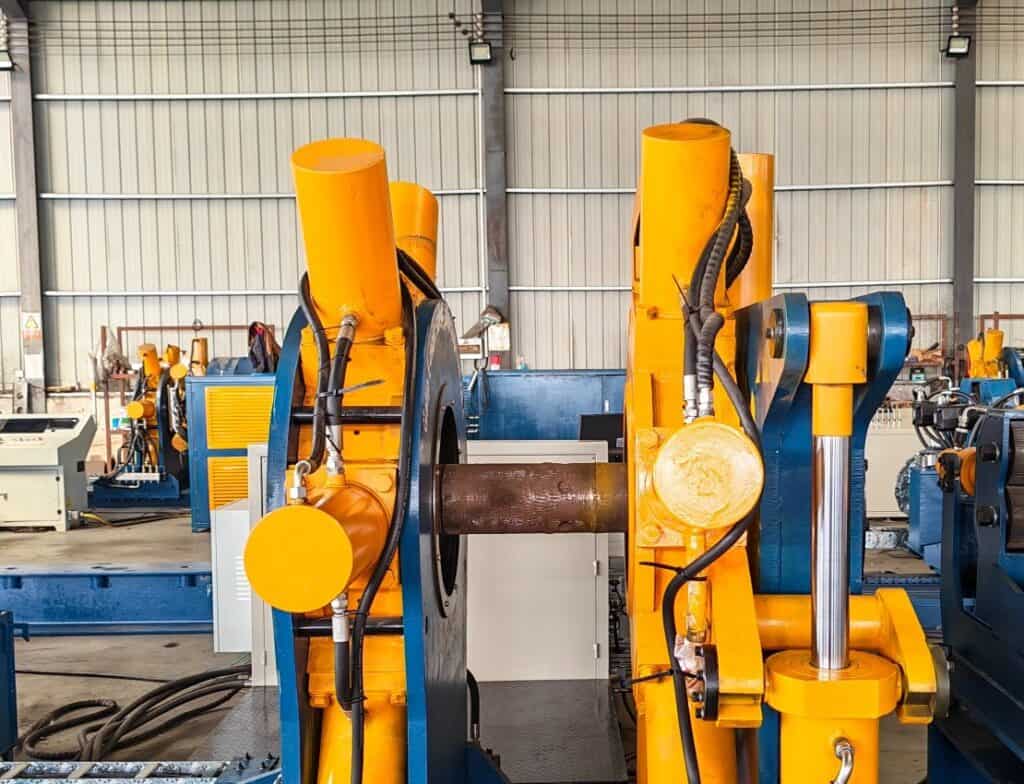
A bucking unit pre-shipment photo review checklist helps buyers confirm the machine identity, working envelope, accessory package, FAT evidence, packing readiness, and shipment details before the machine leaves the factory. Buyers may spend weeks discussing torque range, pipe size, connection type, control package, reporting format, delivery schedule, and price, but this final visual review is often treated too lightly.
This is not a replacement for factory acceptance testing, commissioning, or operator training. A photo review cannot prove every function, and it should never be used as the only acceptance method for a high-value torque machine. But it can prevent many avoidable problems before the machine leaves the supplier’s floor: missing accessories, unclear shipping marks, poor hose routing, wrong support arrangement, wrong jaw package, insufficient maintenance access, and uncertainty about what has actually been built.
For international buyers, this step matters even more. Once the bucking unit is packed, shipped, customs-cleared, unloaded, installed, and powered, a small missing item can delay the first job. A clear photo package gives the buyer, QA team, maintenance team, and workshop supervisor the same visual baseline before the machine arrives. For shipment responsibility wording, buyers can also review the ICC Incoterms rules as general trade-term guidance.
For buyers still comparing machine configuration, see the Galip hydraulic bucking unit page for torque range, clamping structure, report export, and workshop application details.
Key idea for buyers: a good pre-shipment photo review does not ask the supplier to expose proprietary engineering. It asks for clear visual proof that the ordered machine, accessories, control area, support system, and shipment package are ready for the buyer’s real workshop.
1. Ask for the photo set before the machine is wrapped
The best time to review a bucking unit is after factory assembly and basic checks, but before final wrapping, boxing, or container loading. At that stage the buyer can still see the main structure, control cabinet, hydraulic power unit, clamping areas, support components, cables, hoses, nameplates, and loose accessories.
A practical photo package should not be limited to one attractive side view. Marketing photos are useful for promotion, but acceptance photos should answer workshop questions. Can the pipe approach be seen? Are the support points visible? Are the clamping areas clear? Is the control area included? Are the accessories shown separately? Does the unit look like the configuration that was approved in the quotation and technical agreement?
For a large machine, ask for a simple photo sequence: front view, rear view, left side, right side, top/oblique view, control console, hydraulic power unit, clamping area, support stands, accessory package, spare parts package, and packing preparation. If the unit has project-specific options, ask for separate close-ups of those options before shipment.
2. Confirm the machine identity, not only the machine appearance
One of the most useful pre-shipment checks is also one of the simplest: confirm that the images match the actual project. The buyer should ask for a photo showing the machine nameplate, project tag, serial number, or customer order reference where applicable. This reduces confusion when a factory has several similar machines under construction at the same time.
The goal is not to create extra paperwork. The goal is to avoid a situation where a buyer receives a beautiful photo of a bucking unit but cannot tell whether it is the exact machine being shipped. This is especially important when multiple machines have similar colors, frames, heads, control cabinets, or pipe ranges.
If the supplier cannot show a project tag or serial identification in the photo, the buyer should at least request a dated photo set with the purchase order reference written in the email or file name. Later, that photo set can be stored in the job folder together with the quotation, FAT report, packing list, and commissioning record.
3. Review the working envelope visually
The machine may pass a quotation review on paper, but the workshop team still needs to understand how it will physically work in their bay. Pre-shipment photos help them visualize the working envelope: the head and tail arrangement, the rail or support structure, the pipe approach direction, the operator side, and the maintenance side.
This review should stay practical. The buyer does not need confidential design calculations. The buyer needs to see whether the machine layout matches the application that was discussed. For example, if the workshop handles long BHA components or heavy completion tools, the team should look at support arrangement, access around the workpiece, and whether the machine will fit the planned crane or forklift movement.
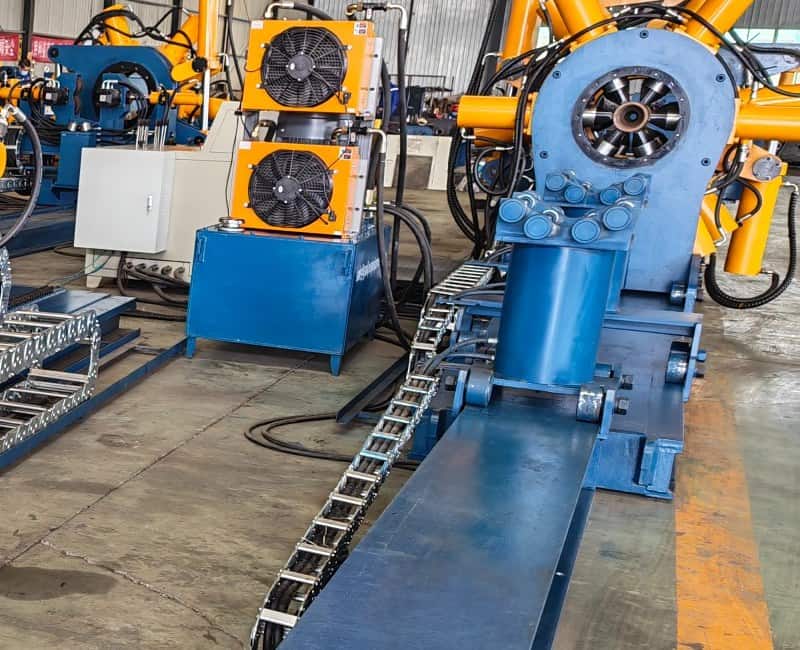
A single wide photo can show the overall footprint, but close-up photos are better for the areas that operators touch every day. Ask for details of the clamping side, support stands, traveling components, chain or rail areas, hose management, and control station. These photos help the receiving team prepare unloading, installation, and first-job planning before the container arrives.
4. Check hose, cable, and service access without asking for internal design details
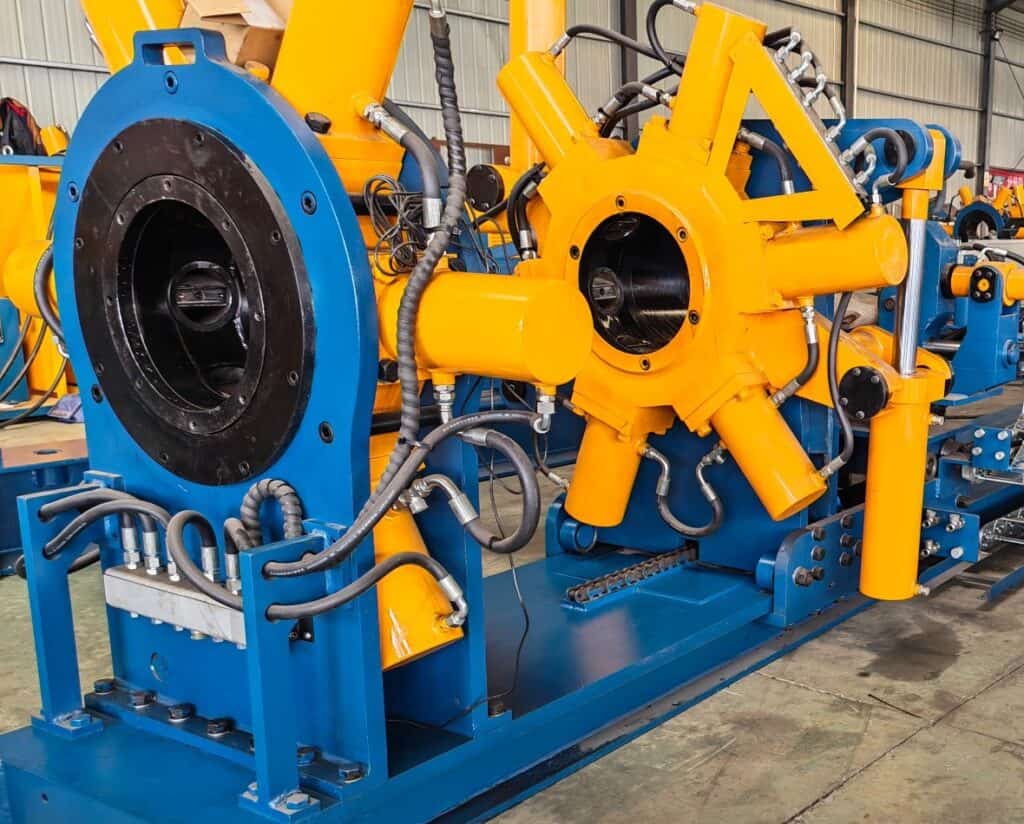
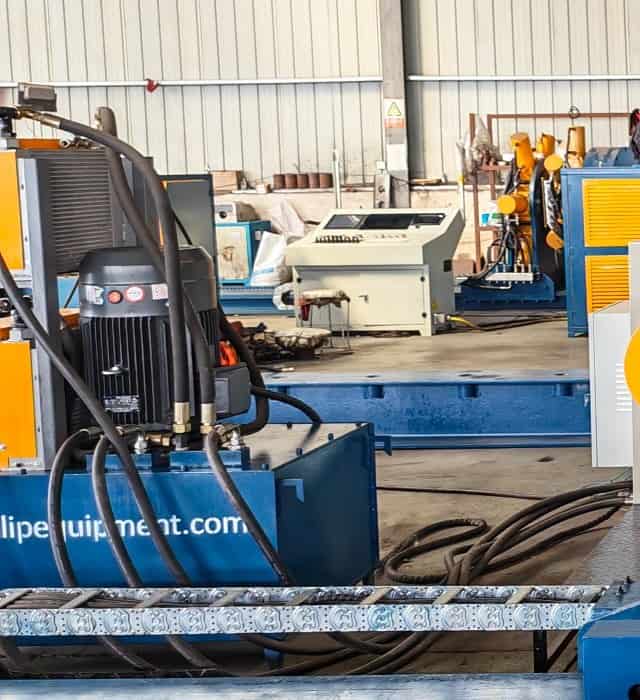
A photo review should not ask the supplier to reveal proprietary hydraulic, electrical, or measurement design. It should focus on practical service access. Can the maintenance team reach the main inspection areas? Are hoses and cables routed so they are not casually dragging across walking zones? Are bends, supports, and protective routing visually reasonable for transport and installation?
The buyer does not need to know how every signal is processed. The buyer needs to know whether the visible installation is organized enough for safe handling, troubleshooting, and long-term maintenance. A messy visible layout can become a maintenance problem even when the machine performs well in a short demonstration.
For this reason, ask for photos of the power unit, hose entry areas, cable chain or routing areas, control cabinet exterior, and the floor around the machine. The buyer should not publish those photos if they show customer-sensitive details, but they are useful inside the buyer’s project folder.
5. Ask for the accessory package to be photographed separately
A bucking unit is not only the main frame and torque head. Real use depends on the correct accessory package: jaws, inserts, support stands, tools, adapters, spare seals, documents, cables, hydraulic hoses, remote components if supplied, and any project-specific handling parts.
Before shipment, ask for the accessories to be laid out and photographed separately. This is a simple habit that prevents many arguments later. The packing list may say the item is included, but a photo helps the buyer and supplier confirm what is actually being packed.
The photo should be clear enough that the receiving team can compare it against the packing list after arrival. If the buyer has multiple machines or multiple configurations, label the accessory groups by machine serial number or project reference. This is especially useful when a workshop orders multiple jaw sets for different product families.
6. Verify operator visibility and control-station position
The control station is where the machine becomes a production tool rather than a static piece of equipment. A buyer should ask for photos that show the control position relative to the machine, workpiece area, and expected operator standing zone.
A good photo review asks practical questions. Can the operator see the workpiece approach? Can the operator see the clamping area clearly enough to notice abnormal movement? Is the emergency stop visible and reachable from the normal operating position? Is the console protected from the most obvious traffic, oil, and impact hazards?
These questions do not require confidential software or internal data details. They focus on human operation. A machine may have advanced controls, but if the operator cannot see the job clearly or the control station is placed in a poor location after installation, the workshop will struggle to get repeatable results.
7. Look for signs that the unit was tested as a working system
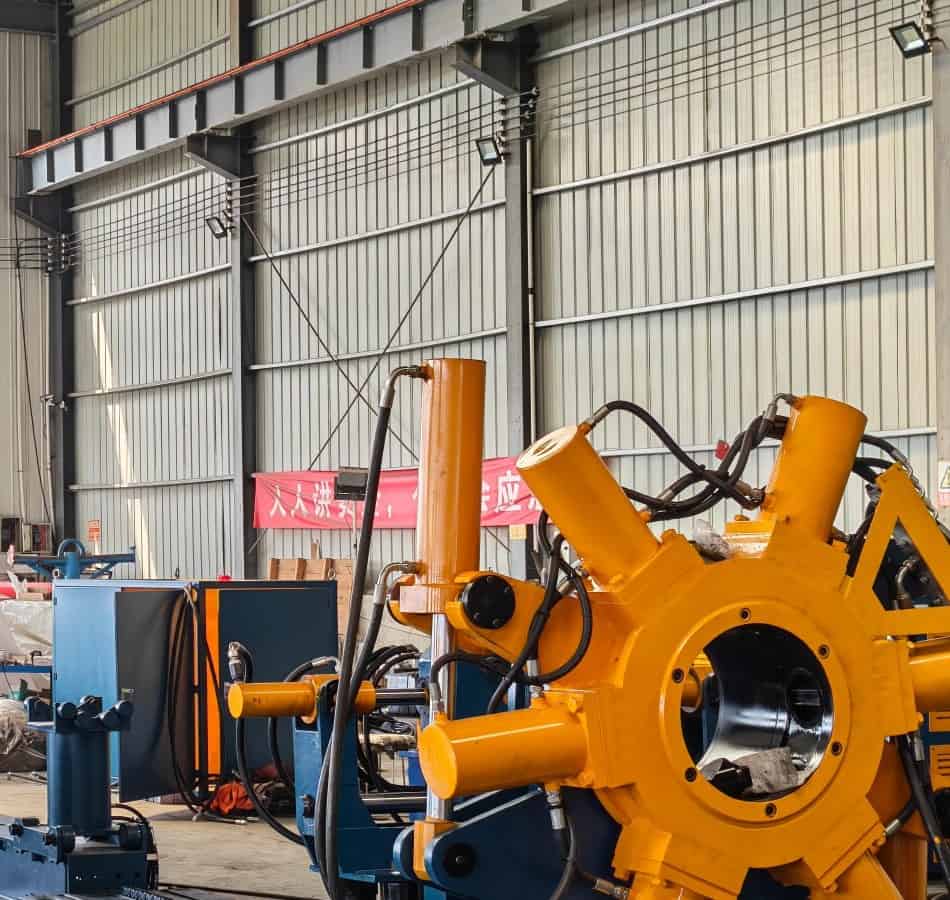
The buyer should not accept only polished beauty photos. Ask for photos that show the unit as a working system: pipe or test piece loaded where appropriate, support points in position, control area active if safe to show, and the unit connected to its power and hydraulic infrastructure during test preparation.
The purpose is not to expose the supplier’s internal test method. The purpose is to confirm that the machine has moved beyond paint and assembly. The buyer wants to see that the unit is being prepared as a working make/break system: mechanical structure, hydraulic system, support arrangement, control station, and reporting workflow all brought together.
If the order requires report export, the buyer can ask for a sample report with non-sensitive test information or anonymized fields. The goal is simply to verify the output record is usable for the buyer’s QA process before the machine ships.
8. Review packing readiness before the container is closed
A machine can leave the factory in good condition and still arrive with avoidable problems if packing is rushed. Before the container is closed, ask for packing photos. These should show the main unit, loose accessories, protective wrapping, wooden cases or crates, shipping marks, lifting points if marked, and the final loaded position where applicable.
For large bucking units, the receiving team may need to plan cranes, forklifts, rigging, temporary storage, foundation positioning, and unloading sequence before the shipment arrives. Packing photos help them understand what will arrive first and what must be kept with the machine during unloading.
The buyer should store these photos with the commercial documents. If something is missing or damaged later, the pre-shipment and packing photos provide a practical reference. They also help the maintenance team identify accessories that may be packed separately from the main machine.
9. Build a simple photo-review checklist
A pre-shipment photo review works best when the buyer uses a short checklist instead of random questions. The supplier should not have to guess which photos are important. The buyer should list the expected views and the purpose of each view before final shipment.
This saves time for both sides. It also makes the review repeatable. The same checklist can be used for every future bucking unit order, with small changes for torque range, machine size, optional features, and customer-specific requirements.
Bucking Unit Pre-Shipment Photo Review Checklist for Buyers
| Photo view | What it helps verify | Who should review it |
|---|---|---|
| Full machine front and rear | General configuration, machine identity, visible condition | Buyer, workshop manager |
| Left and right sides | Operator side, maintenance side, access space | Operations, maintenance |
| Clamping and head areas | Visible engagement area, jaw/accessory compatibility, guarding | Supervisor, QA |
| Support and rail areas | Pipe handling path, support arrangement, floor-space planning | Workshop manager |
| Control station | Operator visibility, emergency access, report workflow readiness | Operations, QA |
| Power unit and visible hose/cable routing | Service access and transport readiness | Maintenance |
| Accessory package | Jaws, inserts, supports, tools, spare parts, optional items | Buyer, warehouse |
| Packing and crate photos | Shipping marks, loose items, container loading plan | Logistics, receiving team |
10. What should not be requested in a photo review
A buyer can be thorough without asking for protected engineering information. The review should not request internal calculation methods, unpublished internal methods, proprietary software logic, or machine-specific design details that the supplier does not publish. Those details belong in engineering control, not in public buyer content.
The buyer-facing review should stay focused on visible readiness: machine identity, configuration, accessories, service access, safety visibility, packing, and whether the output documentation is usable. This protects both sides. The buyer gets the evidence needed for project control, and the manufacturer protects the technical know-how that makes the machine valuable.
11. How this helps after the machine arrives
The best photo package does not end its value at shipment. It becomes part of the receiving and commissioning record. When the machine arrives, the workshop can compare the unpacked condition against the pre-shipment photos. The receiving team can confirm accessories. The maintenance team can compare visible routing and equipment condition. The QA team can keep the file with FAT and first-job documents.
This is especially useful when the machine will be installed by a different team from the one that purchased it. Procurement may understand the contract, but the operators need the practical details. A good photo package gives them a visual starting point before they stand in front of the equipment.
It also helps future support. If the buyer contacts Galip or another manufacturer for service questions, the project team can send the original photo set and current photos side by side. That makes troubleshooting more efficient because both sides can see what changed after shipping, installation, and use.
12. Final recommendation for buyers
Before shipment, ask for a photo set that proves the machine is real, identifiable, configured as ordered, connected as a working system, packed with the correct accessories, and ready for the receiving team. Keep the request simple, practical, and respectful of the manufacturer’s confidential design.
For a bucking unit, the strongest purchase process is not only a quotation and a final invoice. It is a chain of evidence: specification, build confirmation, FAT, photo review, packing record, receiving inspection, commissioning, operator handover, first-job sign-off, and ongoing maintenance records.
That chain is what protects the buyer’s money, the workshop’s schedule, and the customer’s trust. A pre-shipment photo review is only one step, but it is one of the easiest steps to do well before the machine is already on the water.
Need a bucking unit configured for your real workshop?
Send Galip your OD range, torque range, connection family, daily output target, reporting requirements, workshop layout, power supply, and accessory needs. Galip can recommend a hydraulic bucking unit configuration and provide the photo/FAT documents your team needs before shipment. After installation, the same documentation can support your bucking unit operation procedure and bucking unit shift handover checklist.
FAQ
What should be included in a bucking unit pre-shipment photo review?
A bucking unit pre-shipment photo review should include machine identity, nameplate or project tag, clamping area, hydraulic power unit, control station, support structure, accessory package, spare parts package, FAT evidence, packing readiness, and shipment marks.
Is a pre-shipment photo review the same as FAT?
No. FAT checks function, safety, torque-turn monitoring and reporting workflow, and agreed acceptance items. Photo review is a practical visual confirmation before packing and shipping.
Should the buyer ask for unpublished internal methods?
No. The buyer should verify the output records and workflow, not protected engineering methods.
How many photos are enough?
For a large bucking unit, ask for a practical set: full views, sides, clamping areas, support areas, control station, power unit, accessories, and packing views.
Who should review the photos?
Procurement, QA, maintenance, workshop supervision, and logistics should all review the parts that affect their work.
What is the biggest mistake buyers make?
They only review polished beauty photos and forget accessories, packing marks, service access, control-station position, and receiving-team needs.
Expert Consultation
Need more information on optimizing your equipment performance? Our engineering team is available for technical consultations.
Request a Quote
Tell us about your requirements and our engineering team will prepare a detailed proposal with specifications, pricing, and delivery timeline.
